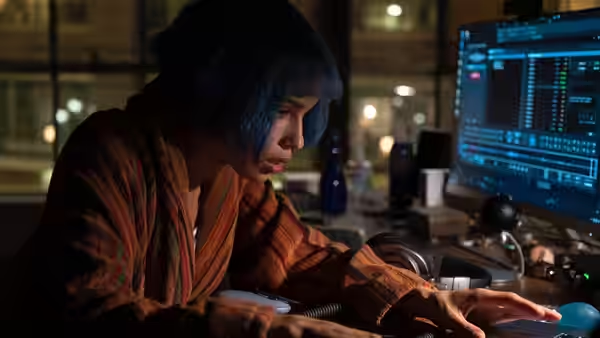
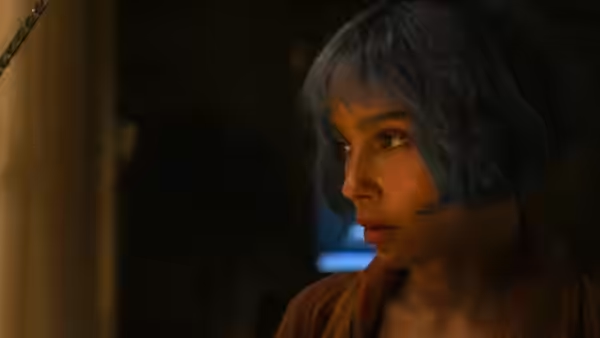
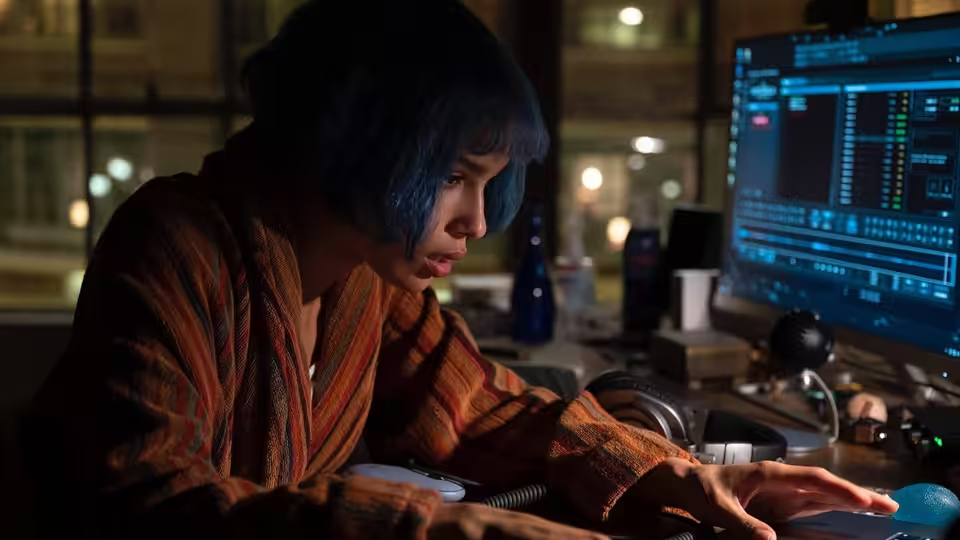
Angela Childs (Zoë Kravitz) working at her computer desk at night
Film review

Kimi

2022 · Directed by Steven Soderbergh · 1h 29m · MPA R

In a sentenceEighty-nine minutes, one flat, and a woman who really did not want to go outside

Angela Childs (Zoë Kravitz) works from her loft in Seattle for the company that makes Kimi, a smart speaker that answers questions and plays music. Her job is to listen to recordings where Kimi misunderstood someone and teach it to do better. She does not leave the flat, and the film, set during the pandemic, is in no hurry to explain why. Her neighbour Terry (Byron Bowers) keeps asking her out to lunch; her mother (Robin Givens) keeps calling. Then a recording arrives with something under the music that should not be there. Written by David Koepp and directed, shot and edited by Steven Soderbergh, it runs 89 minutes.

Plays from YouTube when you press play; nothing loads from them until then.

Fi1m review

Soderbergh and Koepp build a lean, old-fashioned thriller around a smart speaker and a woman who cannot cross her own doorstep, and Zoë Kravitz carries it easily. The first half is close to perfect; the second is a chase we have seen before.

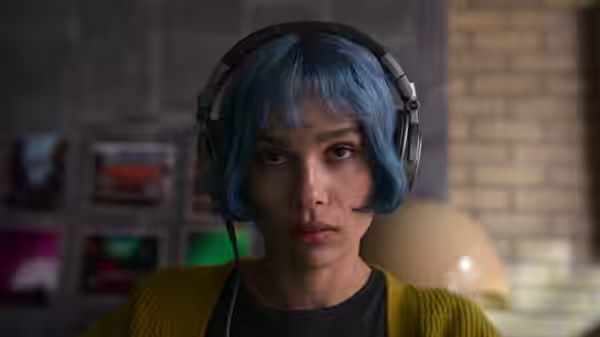
Angela Childs (Zoë Kravitz) has a good job, a large flat and no intention of leaving it. She works for the company behind Kimi, a smart speaker, and her days are spent with headphones on, listening to the recordings where the machine got something wrong and correcting it. She has rules for herself, and the film shows them rather than explaining them. Then a recording comes through with a noise under the music, and she cannot stop listening to it. That is the whole idea. Steven Soderbergh and writer David Koepp get it done in 89 minutes, and for the first half of them this is as good a small thriller as we have seen in some time. The second half is more ordinary, and we will come to it.

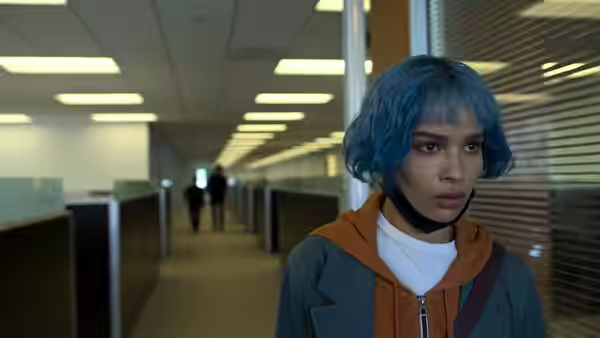
Soderbergh shoots and cuts the film himself, as he tends to, and the choices are simple and right. Inside the flat the camera is steady and the light is warm. Philip Messina’s production design makes the flat look like somewhere a person could plausibly choose never to leave, which is the point. When Angela finally steps outside, the lenses go wide, the camera tilts and the pavement seems to lean at her. It is an old trick. Soderbergh does not oversell it, which is why it works.

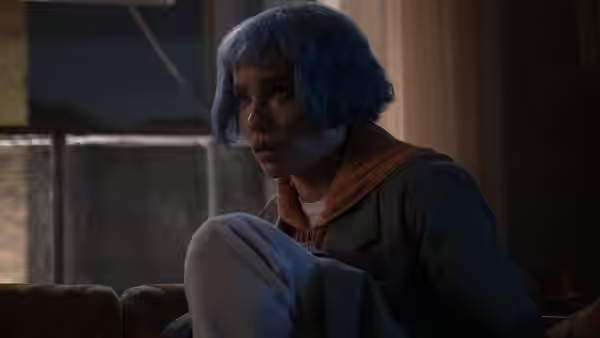
The scene we will remember is the one where nobody moves. Angela at her desk, headphones on, going through the recording piece by piece, playing it again and again. Koepp writes it as procedure and Soderbergh lets it run. We felt sick, quietly, when the noise resolved into a voice, partly because the film had made us wait for it and partly because Kravitz does not react. She just listens harder, and then she plays it again. It is the best piece of suspense in the film and it is a woman sitting in a chair.

Kravitz holds the whole thing together. Angela is prickly and precise, and the script gives her a set of rituals, the checking, the wiping, the sequence at the door, without ever giving her a speech about them. There is a scene where Terry, played by Byron Bowers with a patience that is starting to fray, asks her to walk with him to a food truck across the street, and she gets as far as the threshold. Bowers plays the hurt small, and Kravitz plays the failure smaller. Rita Wilson has one scene as Natalie Chowdhury, a manager who is friendly right up to the moment she is not, and one scene is all she needs. Robin Givens, as Angela’s mother, is a voice on the phone and one of the film’s warmer notes.

Cliff Martinez, who has scored for Soderbergh since Sex, Lies, and Videotape, gives the flat a low electronic hum and saves the strings for the street, where they swell in a way that owes an open debt to Hitchcock. Ellen Mirojnick’s costumes draw the same line between indoors and out, and she never overplays it. Small choices, made by people who knew what the film was.

What does not work is the plot, once it gets going. Angela leaves the flat, the film turns into a chase, and the men chasing her are the least interesting thing in it. Charles Halford and Jacob Vargas are billed as Tall Thug and Glasses Thug, which tells you roughly how much Koepp has given them to play. Derek DelGaudio’s Bradley Hasling, the company’s boss, is seen mostly on a screen and stays there. The conspiracy behind the recording is off the shelf, and we will say nothing about the last twenty minutes except that they arrive faster than we expected; we checked the time thinking there must be another reel.

Most critics have been warmer about this than we are, and we understand why: it is brisk, it is intelligent about how people live through their devices, and it never wastes a minute. Set beside Soderbergh’s other quick, small pictures it is one of the most polished. Set beside Rear Window and Blow Out, which every review including this one has now mentioned, it is a slighter thing, and it knows it.

Watch it at home, in a flat, with the door locked. It is 89 minutes long and you will not look at your phone, mostly because you will be watching hers.

Critical consensus AI synthesised

82
Positive
11
Mixed
0
Negative
0

The reviews for Kimi are uniformly positive and the spread is narrow: nobody dislikes it, and nobody claims it is more than a small film done well. Praise clusters on two things. The first is Zoë Kravitz, whose agoraphobic tech worker most critics find resourceful and likeable enough to carry a film that is often just her and a flat. The second is Soderbergh’s direction, described again and again as lean, efficient and quick, with the camera work and the tense second half singled out. Nearly every critic notes the debt to Rear Window, Blow Out and Hitchcock generally, and most treat it as a compliment.

The reservations are mild. The Guardian calls it a minor entry, /Film finds it not among Soderbergh’s more memorable films, Paste thinks the ending abrupt and the ideas about surveillance shallower than they look, and The AV Club enjoys it as an entertainingly dumb thriller. Nobody argues that it fails.

The Telegraph
17 February 2022 · ★★★★★
100

The review calls Kimi a modern Rear Window updated for the work-from-home age, with Zoë Kravitz magnificent in a techno-thriller about technology and surveillance. It highlights the film's pin-drop suspense and contemporary spin on paranoia.

Read the full review →
The New Yorker
9 February 2022 · Richard Brody
85*

The critic calls it one of Soderbergh’s best recent films, a killer thriller that seethes with rage at tech companies’ civic failures while delivering physical, visually intense direction. It singles out the metaphors of agoraphobia and surveillance for praise as well as Kravitz’s graceful performance.

Read the full review →
Variety
9 February 2022 · Critics Pick
85*

The critic lauds the nimble, sinister cyber-age thriller as an object lesson in modest, sparkling filmmaking, crediting Soderbergh’s direction and the script’s standard-issue elements executed with ingenuity. It singles out the camera work, framing, and satisfying action payoff for praise.

Read the full review →
Empire
18 February 2022 · Chris Hewitt
80*

The review finds Kimi a solid, character-driven cerebral thriller that showcases Soderbergh’s continued creative punch after his supposed retirement. It singles out Zoë Kravitz’s excellent central performance and the expertly tense second half for praise.

Read the full review →
Los Angeles Times
9 February 2022 · Justin Chang
80*

The critic describes it as a nifty micro-thriller and a paranoid ‘Parallax View’ for the pandemic era, hailing Soderbergh’s efficient, intelligent direction and Kravitz’s enormously likable, resourceful lead performance. It singles out the film’s focus on isolation and surveillance for praise.

Read the full review →
The AV Club
10 February 2022 · B · Mike D'Angelo
77

The critic finds it an entertainingly dumb techno-thriller with clever plotting and a fun if over-the-top conspiracy, effective as a Rear Window/Blow Out homage that kicks into high gear in the second half.

Read the full review →

Straight answers AI written, from our review

Is Kimi worth watching?
Kimi is worth watching for anyone who wants a lean, well-made thriller that is over in 89 minutes, and we scored it 77. Zoë Kravitz carries it easily and the first half, mostly a woman at a desk listening to a recording, is close to perfect. The second half turns into a chase we have seen before, with villains given very little to play.
How long is Kimi, and what is it rated?
Kimi runs 1h 29m and is rated R by the MPA in the US. It is a thriller and mystery film.
Where can I watch Kimi in the US?
Kimi is streaming on HBO Max, Hulu, The Roku Channel and Amazon Prime Video in the US, and it is also available to rent from Amazon Prime Video from $3.99. Availability is checked daily; the links above go straight to each service.
How violent or frightening is Kimi, and is it suitable for children?
Kimi is a 15 in the UK and R in the US, so it is not for children. The frightening parts are mostly suspense rather than gore: a long, quiet scene of a woman replaying a recording until a voice emerges is the one that unsettled us, and the later chase is tense rather than graphic. Older teenagers who can take a thriller should be fine.
What should I watch after Kimi?
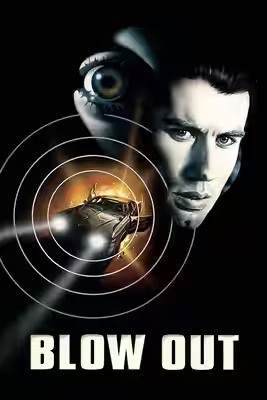
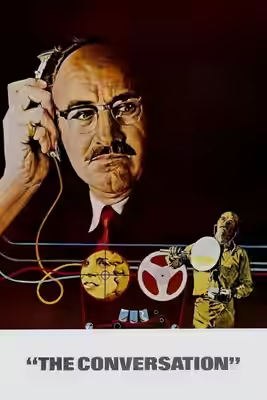
After Kimi, try Rear Window (1954, Fi1m 94): The film Kimi is politely rewriting; one window, one wheelchair, one very bad neighbour. Then Blow Out (1981, Fi1m 88): A sound man hears a murder on tape; De Palma at his most paranoid and most precise; and The Conversation (1974, Fi1m 92): Gene Hackman listens for a living and wishes he had not; the sad, slow original.

Cast

If you liked this, try…

  1. Rear Window (1954, Fi1m 94)The film Kimi is politely rewriting; one window, one wheelchair, one very bad neighbour.

  2. Blow Out (1981, Fi1m 88)A sound man hears a murder on tape; De Palma at his most paranoid and most precise.

  3. The Conversation (1974, Fi1m 92)Gene Hackman listens for a living and wishes he had not; the sad, slow original.

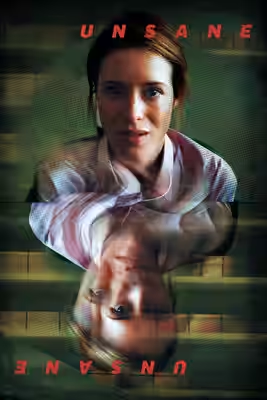
  4. Unsane (2018, Fi1m 64)Soderbergh’s other small, quick thriller about a woman nobody will believe, shot on a phone.

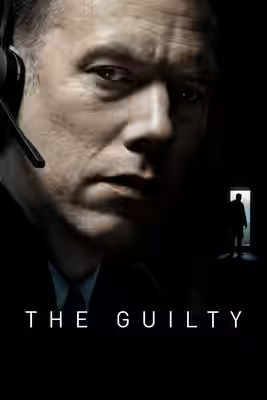
  5. The Guilty (2018) · not reviewed yetA Danish police dispatcher and a phone call; ninety minutes in one room, no relief.

Free account

Know what to watch tonight

Two lists that know where things are streaming, collections you can share, your own score beside ours, and Discover that remembers what you have seen.

  • Want to see, sorted by what is streaming now
  • Seen, with your score out of ten
  • No adverts, ever