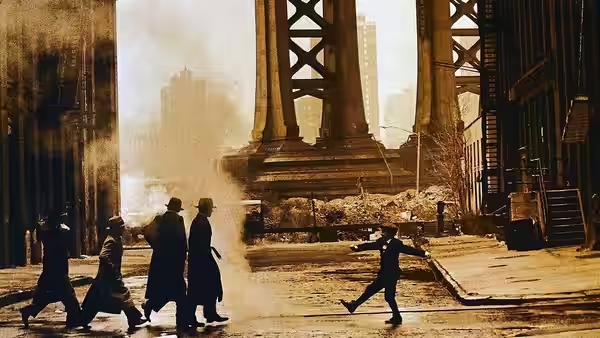
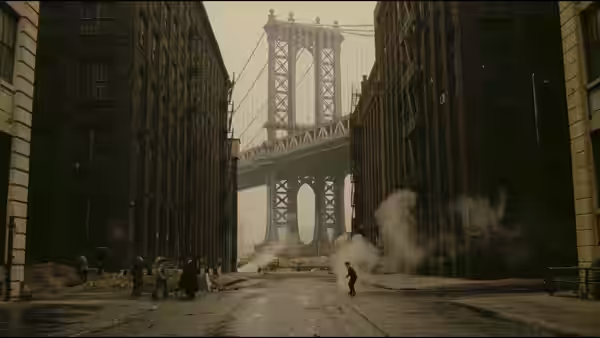
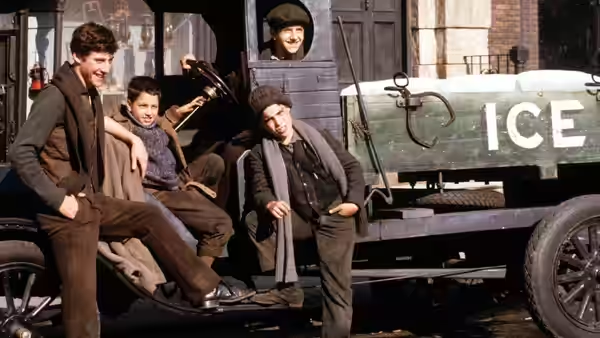
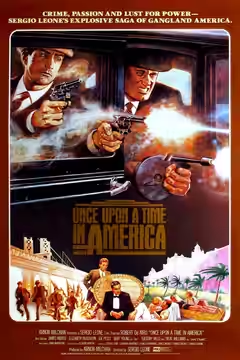
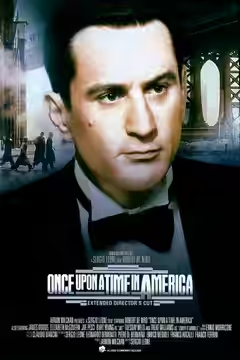
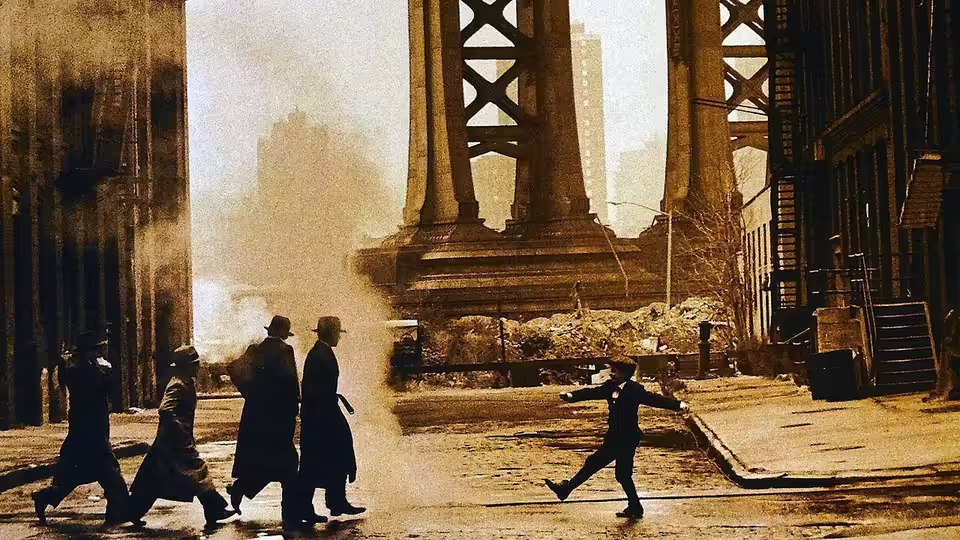
Men in coats and hats walking on a street under a large bridge, one gesturing
Film review

Once Upon a Time in America

1984 · Directed by Sergio Leone · 2h 19m · MPA R

In a sentenceA lot of sorrow for men we would cross the street to avoid

Noodles (Robert De Niro) and his friend, played by James Woods, are gangsters in New York’s Jewish underworld, bound by a friendship that extends across decades. Their criminal ambitions bring questions of loyalty and betrayal, while the passing years change the way their shared lives are understood. Sergio Leone’s drama moves between different periods, approaching their history through flashbacks and recollection. Elizabeth McGovern plays Deborah, Tuesday Weld plays Carol and Joe Pesci plays Frankie. Adapted from a novel by Harry Grey, the film follows men whose past continues to shape their present.

Plays from YouTube when you press play; nothing loads from them until then.

Fi1m review

Sergio Leone’s crime drama is absorbing and deeply sad, with Robert De Niro and Ennio Morricone giving it much of its feeling. The plotting can be arbitrary, and we wish Leone were less fond of his gangsters.

Once Upon a Time in America asks us to spend a long time considering men we might prefer to dismiss. Sergio Leone follows the friendship of two New York gangsters across decades, allowing recollection and regret to slow the progress of their criminal story. The result is absorbing and often moving, though the plotting can be arbitrary and the affection for these men excessive. Leone wants us to feel the weight of the years they have spent together.

Robert De Niro gives that ambition its strongest support as Noodles. His performance makes regret feel like something a man has lived with for years, and we keep watching him even when there is little reason to hope he has learnt anything. James Woods brings an abrasive force to their friendship that keeps it from settling into comfortable reminiscence. These are substantial performances, and they make the bond between the men worth following through the story’s less convincing turns.

Nino Baragli’s editing gives the shifts through time an emotional purpose: an earlier period can change how we judge a man we thought we understood. The connections are more satisfying than some of the individual incidents, which do not always seem to follow convincingly from one another. We grew anxious at the recurring telephone ring, because each repetition made the prospect of an answer feel increasingly dreadful. We wanted the ringing to stop.

Giovanni Natalucci’s production design makes the reconstructed period world feel solid, and the care is worth looking at in its own right. Tonino Delli Colli’s photography and Leone’s measured camera movement let us take in those settings instead of treating them as background to the next criminal transaction. The formality suits these theatrical gangsters. Some of the more intimate passages feel too carefully arranged, however, and we become conscious of the staging when we ought to be watching the actors.

Ennio Morricone’s score is the other reason the film can hold us through its uncertain plotting. Its sorrow makes the long friendship feel painfully difficult to relinquish, lending weight even to passages where the men themselves offer little to admire. There are moments when it supplies more feeling than the writing has earned. Mostly, though, we are glad Leone gives it so much room.

That does not excuse the film’s fondness for its gangsters. Leone and his fellow screenwriters can make their disappointments seem more important than the harm they do, and the characters do not always have the depth to sustain such attention. Within the crime genre, the emphasis on a friendship weathered by time is welcome, even when it loosens the storytelling. In a few passages, the insistence on their suffering becomes wearying.

We recommend a quiet evening, with no expectation of a brisk gangster story. There will be stretches when the plot tests that patience, but De Niro and Woods deserve the attention. Put the phone in another room.

Critical consensus AI synthesised

78
Positive
9
Mixed
1
Negative
2

Most critics admire it, and the admiration clusters in the same places: the scale of the thing, the four-decade flashback structure, Ennio Morricone’s score and the care of the period reconstruction. Robert De Niro and James Woods are singled out repeatedly. Several reviews make the same distinction, that the film barely works as a gangster picture and succeeds instead as an elegy about a man broken by time, with recurring images doing the work the plot does not.

The reservations are consistent too. The plotting is called arbitrary or shaky, the central characters thuggish and hard to care about, and the quieter scenes over-choreographed. The spread is wide, and it splits by date: the two negative notices, from Variety and The New York Times, come from the original release and find the film sprawling and unfocused, while later critics writing about the full-length version, Ebert and Kael among them, argue that the shortened American cut did the damage.

Radio Times
★★★★★ · Adrian Turner
100

Leone's final film is an extraordinary, massive-scale crime drama chronicling two New York gangsters across four decades in flashback. The critic praises the immaculate period reconstruction, Ennio Morricone score and epic sweep while noting the arbitrary plotting and shocking content.

Read the full review →
RogerEbert.com
1 January 1984 · ★★★★/4 · Roger Ebert
100

Ebert praises the full 227-minute version as an epic poem of violence and greed with complex, compelling flashbacks and emotional depth. He singles out the poetic structure and recurring motifs like the ringing telephone for praise while condemning the shortened U.S. theatrical cut as a travesty.

Read the full review →
The Times
5 April 2019 · ★★★★★ · Ed Potton
100

The critic praises Leone's ambitious final film as a sweeping story of friendship and betrayal spanning decades, noting its strong performances by De Niro and Woods along with Morricone's score.

Read the full review →
Empire
1 January 2000 · Adam Smith
85*

The critic argues that Leone's film surpasses The Godfather by favoring ambiguity and symbolism over melodrama, exploring themes of time, identity, and memory with masterful visuals. It resists easy interpretation, leaving a profound mystery that lingers in the mind.

Read the full review →
The AV Club
17 June 2003 · Keith Phipps
80*

The film succeeds brilliantly as epic poetry despite barely working as a gangster film. It combines theatrical gangsters, Western-honed style, and deep melancholy in a grand-scale work of ambiguities and oversized passions.

Read the full review →
Time Out
25 February 2015 · CPea
80*

Leone's vision retains magnificent sweep in this epic of friendship, betrayal, love and death among the Jewish Mafia. The film subsides to a sombre, elegiac emotional core centred on a man bent and broken by time.

Read the full review →

Straight answers AI written, from our review

Is Once Upon a Time in America worth watching?
Once Upon a Time in America is worth watching for anyone prepared to give a slow, sorrowful crime drama a quiet evening, and we scored it 81. Robert De Niro and James Woods carry a friendship across decades, and Ennio Morricone's score supplies much of the feeling. The plotting can be arbitrary, and Leone is too fond of his gangsters, so do not expect a brisk story.
How long is Once Upon a Time in America, and what is it rated?
Once Upon a Time in America runs 2h 19m and is rated R by the MPA in the US. It is a drama and crime film.
Where can I watch Once Upon a Time in America in the US?
Once Upon a Time in America is available to rent from Amazon Prime Video from $3.99. Availability is checked daily; the links above go straight to each service.
How violent or frightening is Once Upon a Time in America, and is it suitable for children?
Once Upon a Time in America carries an 18 certificate in the UK and an R in the US, and it is not suitable for children. It is a gangster drama about men who do real harm, and the certificate implies adult violence and adult themes throughout. Its dread builds slowly, as with a telephone that will not stop ringing, so the squeamish should expect unease as much as shocks.
How does Once Upon a Time in America compare to The Godfather Part II?
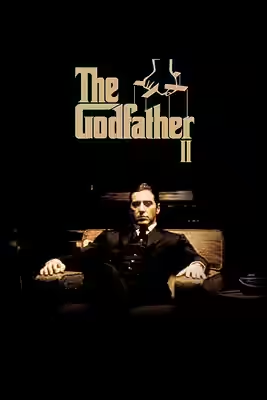
Once Upon a Time in America is the sadder and looser of the two, while The Godfather Part II is the more tightly made. Both move through time to make criminal success look wretched, and Robert De Niro appears in each. Leone's film asks more patience and rewards it with regret and Morricone's score; Coppola's is the safer choice for a viewer who wants the story to hold.
Is Once Upon a Time in America based on a true story or a book?
Once Upon a Time in America is adapted from a novel by Harry Grey, and the film is not presented as a true story. Leone reshapes the material into a drama of recollection, moving between periods through flashback. You do not need to know the book: the friendship between De Niro's Noodles and James Woods's character is explained entirely on screen.
What should I watch after Once Upon a Time in America?
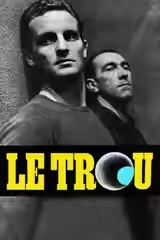
After Once Upon a Time in America, try The Godfather Part II (1974, Fi1m 92): Another crime story whose movement through time makes success look increasingly wretched. Then Le Trou (1960, Fi1m 88): Criminal companionship examined through patient physical detail and the hard business of trust; and A Brighter Summer Day (1991, Fi1m 90): Youth, gangs and accumulated detail, with more concern for lives outside the violence.

Cast

Awards

Silver nugget for the best foreign film, 1985

Won
Silver nugget for the best foreign film

If you liked this, try…

  1. The Godfather Part II (1974, Fi1m 92)Another crime story whose movement through time makes success look increasingly wretched.

  2. Le Trou (1960, Fi1m 88)Criminal companionship examined through patient physical detail and the hard business of trust.

  3. A Brighter Summer Day (1991, Fi1m 90)Youth, gangs and accumulated detail, with more concern for lives outside the violence.

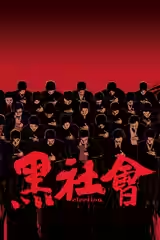
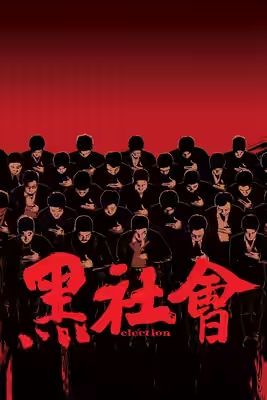
  4. Election (2005) · not reviewed yetGangster loyalties turn poisonous, with considerably less patience for the men involved.

  5. The Irishman (2019, Fi1m 86)Old gangsters consider their lives, with fewer opportunities to mistake loneliness for grandeur.

Free account

Know what to watch tonight

Two lists that know where things are streaming, collections you can share, your own score beside ours, and Discover that remembers what you have seen.

  • Want to see, sorted by what is streaming now
  • Seen, with your score out of ten
  • No adverts, ever