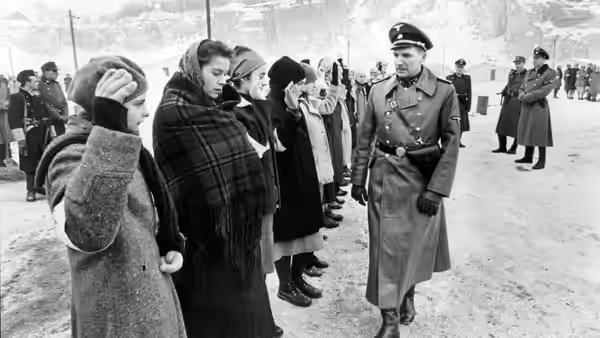
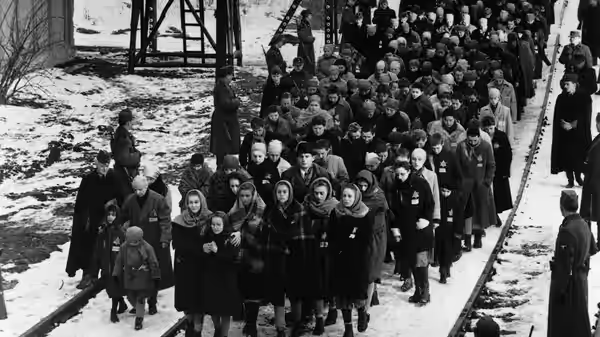
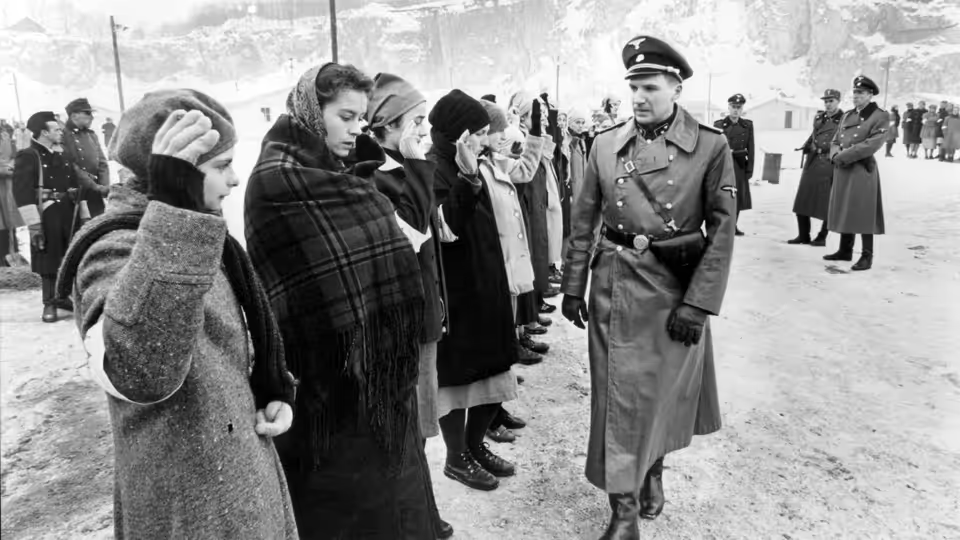
German officer facing a line of civilians with hands on their faces in snow
Film review

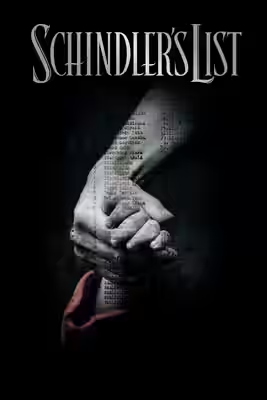
Schindler's List

1993 · Directed by Steven Spielberg · 3h 15m · MPA R

In a sentenceThe camera stays close when every instinct tells us to look away

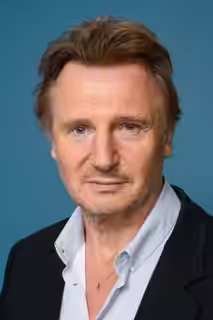
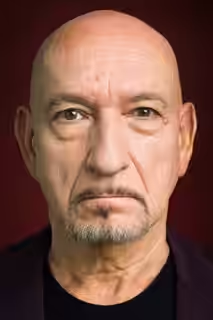
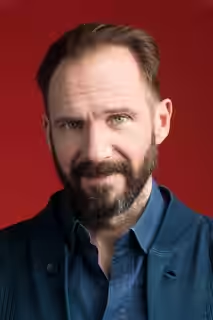
Steven Spielberg’s drama follows Oskar Schindler (Liam Neeson) during the Holocaust, tracing the choices of a man whose motives are not easily settled. Itzhak Stern (Ben Kingsley), Amon Goeth (Ralph Fiennes) and Emilie Schindler (Caroline Goodall) form part of a story about persecution, responsibility and the value of a single life. Steven Zaillian adapts Thomas Keneally’s novel, with Jonathan Sagall as Poldek Pfefferberg and Embeth Davidtz as Helen Hirsch. The film places individual decisions within the organised brutality of the Holocaust, keeping Schindler’s character at the centre of its account.

Plays from YouTube when you press play; nothing loads from them until then.

Fi1m review

Steven Spielberg’s Holocaust drama is harrowing, humane and worth the ordeal. Its acting and restless images carry an enormous force, despite occasional stretches that press too hard for our tears.

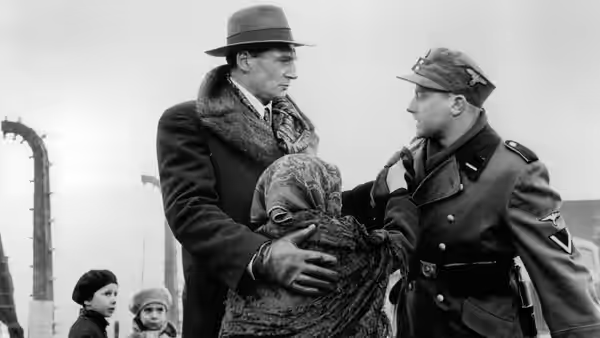
Steven Spielberg’s Schindler’s List is a film we would urge anyone able to face its violence to see. It makes the Holocaust immediate while allowing Liam Neeson’s Oskar Schindler to remain a difficult man to read. Spielberg sometimes presses for an emotion that the images have already earned, and those passages are less persuasive than the quieter ones. But the film gives us ample reason to care before it asks us to be moved, much of that through its three central performances.

Steven Zaillian’s screenplay, adapted from a novel by Thomas Keneally, benefits from the uncertainty about Schindler. Neeson gives the character enough weight to hold our attention without making him seem fully explained, and something important would be lost if his motives became tidier. We keep watching him because we have not finished deciding what we think of him. Historical dramas can be anxious to make their central figures comprehensible, but Neeson is allowed to keep some of his thinking to himself.

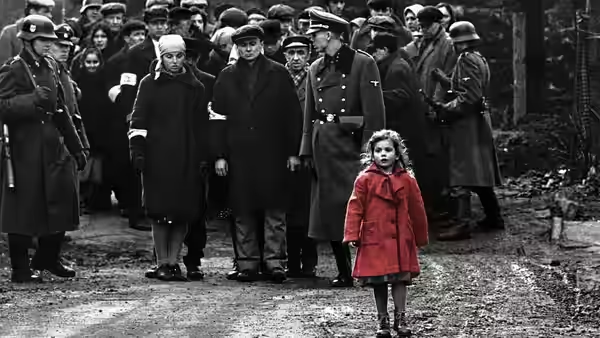
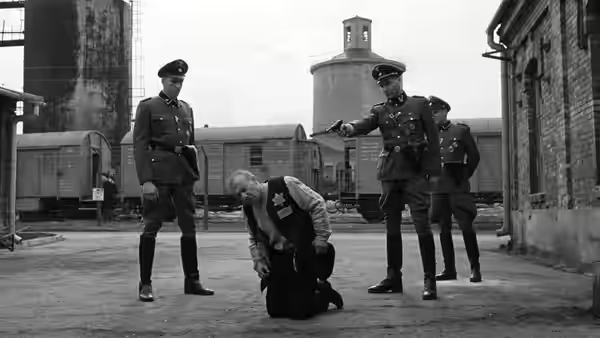
Janusz Kamiński’s black-and-white cinematography and handheld camerawork are crucial to the film’s force. The lack of colour does not soften what we see; the restless framing makes the violence feel close and difficult to anticipate. We were horrified by how near the camera keeps us to people being persecuted, with so little distance in which to recover. Even when we understand what we are being shown, the handheld images remain difficult to watch.

Michael Kahn’s editing sustains that pressure across 195 minutes without making the film feel hurried. There is time to register a performance, and time for the horror of an image to sink in before the next one arrives. Allan Starski’s production design gives the Krakow setting a persuasive solidity, so that we accept the places before we start examining their details. His work supports the harsh realism of the photography without inviting us to stop and admire the reconstruction.

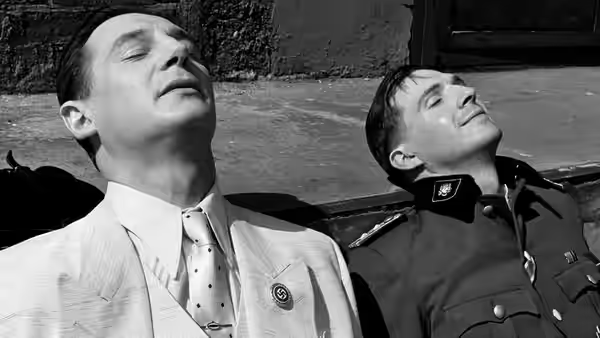
Ben Kingsley’s Itzhak Stern and Ralph Fiennes’s Amon Goeth give the film much of its force. Kingsley makes watchfulness absorbing, while Fiennes makes us uneasy even when his performance is contained. Neeson remains a compelling centre, but these two prevent our interest in Schindler from becoming the only reason to watch. The acting is controlled enough that a change of expression can hold our attention without an accompanying speech to explain its meaning.

The reservation is Spielberg’s occasional unwillingness to leave an emotion alone. John Williams’s music can be deeply affecting, but its insistence sometimes feels unnecessary beside performances and images that have already done the work. We felt more when the film seemed less anxious to make certain we were feeling it. The sentimentality is intermittent, though it is noticeable in a film capable of such restraint elsewhere.

As historical drama, this earns its length by giving us time to look closely at people without making all of them easy to understand. Schindler’s ambiguity matters, and the film is stronger for preserving it through Neeson’s performance. The violence demands something of us, too, and there is no use pretending that the recommendation comes lightly. Give it an uninterrupted evening, and do not plan on easy conversation afterwards.
Critical consensus AI synthesised

84
Positive
9
Mixed
1
Negative
0

Most critics regard this as Spielberg’s most serious work and a clear departure from his usual manner, and the praise clusters around restraint: the near-documentary hand-held camerawork, the black-and-white photography, and a refusal to dress up the horror. Neeson, Fiennes and Kingsley are singled out again and again, and several reviews treat the film’s decision not to explain Schindler’s motives as a strength rather than a gap. The liquidation of the Krakow ghetto is the sequence most often named for its immediacy.

Reservations are fewer and mostly British. Empire finds the film over-sentimental for a subject that needs no help; The Independent objects to kitsch and emotional manipulation in the coda; The Guardian, the lone mixed voice, finds a certain flatness and less emotional force than hoped, while still placing it far ahead of other Hollywood films on the subject. Slant, writing two decades on, notes a personal remove. The spread runs from wholehearted to respectfully qualified; nobody dismisses it.

Radio Times
★★★★★ · Alan Jones
100

This outstanding Holocaust drama, based on Thomas Keneally's bestseller Schindler's Ark, won seven Oscars including best picture and director. Spielberg uses stark, brutal realism, stunning black-and-white photography and gritty handheld camera work to deliver powerful points about racism and ethnic cleansing, with standout performances from Liam Neeson, Ralph Fiennes and Ben Kingsley.

Read the full review →
RogerEbert.com
24 June 2001 · ★★★★/4 · Roger Ebert
100

The film succeeds as parallel character studies of Schindler and the sadistic Goeth, showing that resistance to evil is possible even amid the Holocaust's horrors. Spielberg joins artistry with popular appeal, focusing on Schindler's ambiguous heroism and the arbitrary nature of survival.

Read the full review →
Los Angeles Times
15 December 1993 · Kenneth Turan
90*

Spielberg demonstrates remarkable restraint in this major departure, creating an indelible portrait of the Holocaust through hand-held documentary-style realism and strong performances. The film makes an unbelievable story believable and real, succeeding where more obvious approaches might fail.

Read the full review →
The New Yorker
13 December 1993 · Terrence Rafferty
90*

Spielberg’s film is great, impossible and inevitable, respecting the mystery of Schindler’s ambiguous personality in a new way for the director. The liquidation of the Krakow ghetto sequence makes the Holocaust overwhelmingly immediate, and the film is by far the finest dramatic depiction of it.

Read the full review →
The New York Times
15 December 1993 · Critic’s Pick · Janet Maslin
90*

The film presents the Holocaust as if discovering it anew through Spielberg's fury and immediacy, distilling complex events into indelible images. It is dark, sobering and invigoratingly dramatic, making terrifying sense to anyone.

Read the full review →
Variety
20 November 1993 · Todd McCarthy
90*

Spielberg delivers a remarkable, rigorously intelligent work with brilliant performances (especially Neeson, Kingsley, and Fiennes) and restrained technique that avoids sentimentality. The film focuses on Schindler's gradual transformation while vividly depicting the arbitrary cruelty of the Holocaust in near-documentary style.

Read the full review →

Straight answers AI written, from our review

Is Schindler's List worth watching?
Schindler's List is worth watching for anyone able to face three hours of Holocaust violence shown at close range, and we scored it 91. Liam Neeson, Ben Kingsley and Ralph Fiennes give it much of its force, and Janusz Kamiński's handheld black-and-white photography keeps us uncomfortably near the persecution. Spielberg occasionally presses too hard for tears, but the film earns them first.
How long is Schindler's List, and what is it rated?
Schindler's List runs 3h 15m and is rated R by the MPA in the US. It is a drama and history film.
Where can I watch Schindler's List in the US?
Schindler's List is available to rent from Amazon Prime Video and Apple TV from $3.99. Availability is checked daily; the links above go straight to each service.
How violent or frightening is Schindler's List, and is it suitable for children?
Schindler's List is certified 15 in the UK and R in the US, and its violence is sustained, close and hard to watch. Kamiński's handheld camera gives us little distance in which to recover, and we were horrified by how near it keeps us. It is not for children, and the squeamish should know the recommendation does not come lightly.
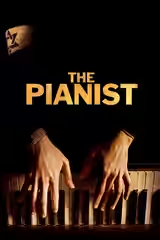
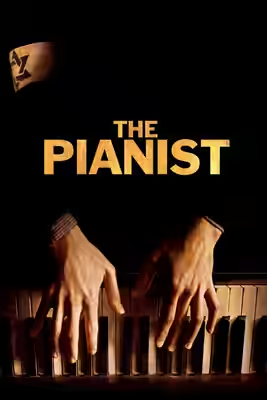
How does Schindler's List compare to The Pianist?
Schindler's List is the broader and more forceful of the two, following a man whose motives stay hard to read across a large canvas of persecution, while The Pianist is the more restrained, fixed on one man's effort to stay alive. Spielberg sometimes underlines emotion the images have already earned; Polanski's patience makes his violence harder to bear. Both are worth an uninterrupted evening.
Is Schindler's List based on a true story or a book?
Schindler's List is adapted by Steven Zaillian from Thomas Keneally's novel about Oskar Schindler, a real figure during the Holocaust. The film keeps Schindler's motives unsettled, which we think is its strength, and Neeson is allowed to keep some of his thinking to himself. No knowledge of the book is needed to follow it.
What should I watch after Schindler's List?
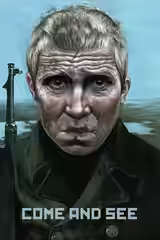
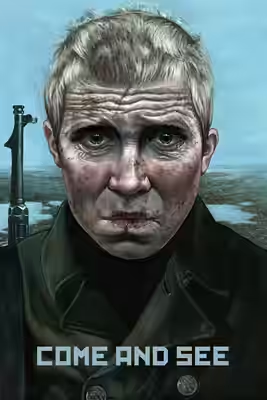
After Schindler's List, try The Pianist (2002, Fi1m 87): Another Holocaust drama attentive to survival, chance and the limits of individual action. Then Come and See (1985, Fi1m 92): For the same refusal to make wartime brutality manageable, with even less reassurance; and The Shop on the High Street (1965, Fi1m 90): A smaller account of persecution, compromise and the consequences of looking away.

Members

1 review · Fi1m gave it 91
@joe1026 September 2026

Horribly necessary.

Members' reviews are checked before they appear and are signed with a handle. Ours is above; theirs are theirs. Seen it? Add yours.

Cast

Awards

Academy Awards, 1994

Nominated
Best Actor
Nominated
Best Costume Design
Nominated
Best Makeup and Hairstyling
Nominated
Best Sound
Nominated
Best Supporting Actor
Won
Best Cinematography
Won
Best Director
Won
Best Film Editing
Won
Best Original Score
Won
Best Picture
Won
Best Production Design
Won
Best Writing, Adapted Screenplay

Amanda Award for Best Foreign Feature Film, 1994

Won
Amanda Award for Best Foreign Feature Film

BAFTA Film Awards, 1993

Won
Best Film

Dallas-Fort Worth Film Critics Association Award for Best Film, 1993

Won
Dallas-Fort Worth Film Critics Association Award for Best Film

If you liked this, try…

  1. The Pianist (2002, Fi1m 87)Another Holocaust drama attentive to survival, chance and the limits of individual action.

  2. Come and See (1985, Fi1m 92)For the same refusal to make wartime brutality manageable, with even less reassurance.

  3. The Shop on the High Street (1965, Fi1m 90)A smaller account of persecution, compromise and the consequences of looking away.

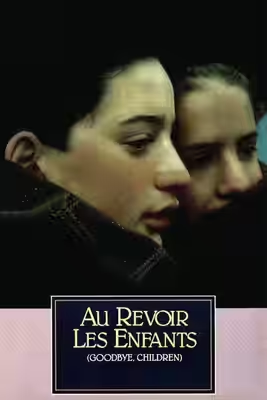
  4. Au revoir les enfants (1987, Fi1m 90)A child’s view of occupation, with quiet performances and no easy consolation.

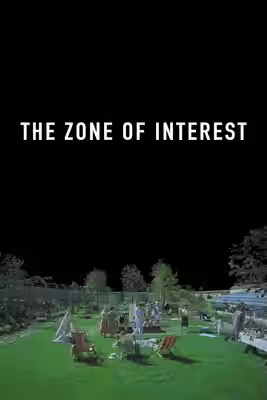
  5. The Zone of Interest (2023, Fi1m 91)An austere companion that makes domestic routine and unseen violence equally disturbing.

Free account

Know what to watch tonight

Two lists that know where things are streaming, collections you can share, your own score beside ours, and Discover that remembers what you have seen.

  • Want to see, sorted by what is streaming now
  • Seen, with your score out of ten
  • No adverts, ever