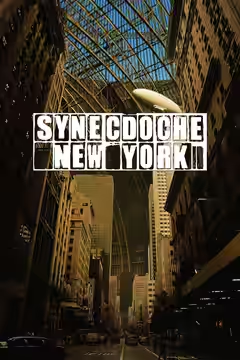
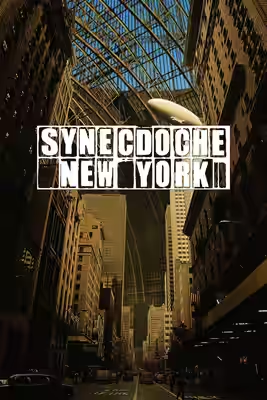
A white airship floats beneath a vast glass ceiling between city buildings
Film review

Synecdoche, New York

2008 · Directed by Charlie Kaufman · 2h 04m · MPA R

In a sentenceA man turns his personal problems into a theatre production, which is one way of ensuring everybody has them

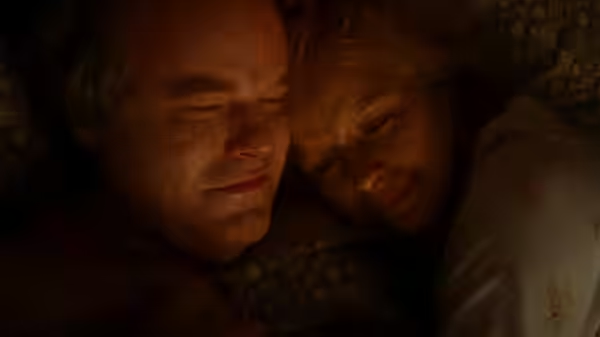
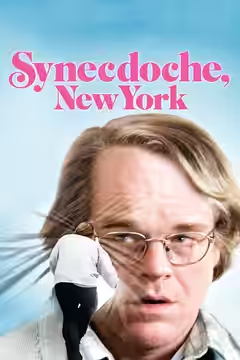
Theatre director Caden Cotard (Philip Seymour Hoffman) tries to make sense of his life by turning it into a play. Personal troubles and worries about his health feed a production that keeps growing, with performers taking on versions of people and experiences he knows. As the work expands, everyday life and rehearsal become harder to tell apart. Charlie Kaufman writes and directs a drama about making art while struggling with family, desire and the prospect of death. Samantha Morton plays Hazel, Catherine Keener plays Adele Lack and Michelle Williams plays Claire Keen, alongside Emily Watson and Tom Noonan.

Plays from YouTube when you press play; nothing loads from them until then.

Fi1m review

Charlie Kaufman’s drama about a man staging his own life is funny, distressing and worth the effort. Philip Seymour Hoffman makes its complications matter, though the repeated reminders of mortality can test our patience.

Charlie Kaufman’s Synecdoche, New York takes a theatre director’s attempt to stage his own life seriously enough to let it become absurd. Caden Cotard, played by Philip Seymour Hoffman, keeps enlarging the work as though enough actors and enough space might settle his worries about being alive. We recommend it for Hoffman’s performance and for the unusual force with which Kaufman makes that wish understandable. The repetitions can wear us down, but the film earns the time and attention it demands.

Hoffman allows Caden to be difficult company, a man who can make his own anxiety everybody else’s problem. His performance leaves the irritation intact, so sympathy does not require us to pretend that Caden would be easy to live with. We were more upset than we expected by the sight of him trying to reproduce his life on stage. Hoffman makes all that theatrical labour feel like a frightened man’s effort to preserve a life he fears he is wasting.

Samantha Morton’s Hazel gives us someone to care about besides Caden, a considerable service in a film so occupied with one man’s mind. Catherine Keener, as Adele Lack, is harder to warm to, though the narrowness of Caden’s attention is part of the problem. Kaufman’s writing can leave the people around him seeming important chiefly because they have something to do with him. That limitation is worth admitting, even when the actors give us reasons to want more of them.

Mark Friedberg’s production design makes the expanding warehouse production persuasive as a place where people have to work. The scale matters: Caden’s worries now take up space and require other people’s labour. Frederick Elmes photographs the constructed environments without making them feel safely separate from everyday life, which gives the confusion between performance and reality its unease.

Robert Frazen’s editing carries us between shifting time frames and between rehearsal and life, without always letting us find our bearings. The resulting disorientation suits Caden’s anxiety, though there are stretches when following the changes begins to feel like homework. Jon Brion’s score provides a welcome gentleness amid the preoccupation with decay. It helps us feel affection for these people when the writing has become absorbed in finding further reasons for them to be miserable.

As a drama about an artist, this is refreshingly sceptical about the assumption that making something will solve anything. Kaufman grants Caden an extraordinary amount of room for his work, then keeps our attention on the worries that accompany him into it. Not every reminder of mortality adds much, and the script sometimes worries at a point we have already understood. Its bleak humour is essential: without it, spending this long inside Caden’s distress would become an obligation.

The complications matter because Hoffman never lets us forget the vulnerable person making them. We do not need to solve every uncertainty to recognise the wish to get life straight before too much of it has passed. At 124 minutes, the film asks for concentration and occasionally asks for more patience than it should. Choose it when you can give it both, and when being cheered up is not the main requirement.


Critical consensus AI synthesised

72
Positive
9
Mixed
4
Negative
2

Most critics respond warmly to Charlie Kaufman’s ambitious, difficult film about a theatre director trying to capture life in an ever-expanding production. Praise centres on the writing’s dark humour and its treatment of love, loneliness and death, with Philip Seymour Hoffman repeatedly singled out for keeping the increasingly complicated story emotionally engaging. The supporting cast also draws broad approval, while The New York Times finds precision in the way Kaufman compresses a lifetime into the narrative.

The spread of opinion is wide, and even admirers describe stretches as frustrating, overcomplicated or self-indulgent. For some, the multiplying characters and shifting realities make the sadness more affecting; for others, they become exhausting, particularly as the film progresses. Slant Magazine offers a firm dissent, finding Kaufman’s ideas undisciplined and joyless. The central disagreement is over whether the film’s complications deepen its account of ordinary fears or simply keep repeating them.

Time Out
1 October 2008 · ★★★★★ · Dave Calhoun
100

This first film as writer/director from the man behind Adaptation and Eternal Sunshine is as neurotic and experimental as expected. Deeply ambitious, it is genius at some points but at others barely connects.

Read the full review →
The New York Times
4 January 2009 · Manohla Dargis
90*

The film is a complex, jam-packed reflection on life, love, art and mortality through the story of a theater director staging an ever-expanding production that blurs reality and performance. Dargis praises Kaufman's precise writing and the way the narrative condenses a lifetime's mysteries into its structure.

Read the full review →
The Guardian
15 May 2009 · Peter Bradshaw
85*

Charlie Kaufman's directorial debut is either a masterpiece or a massively dysfunctional act of self-indulgence. It is a film of mad Beckettian grandeur about the terrible twin truths of existence: life is disappointing and death inescapable.

Read the full review →
The AV Club
23 October 2008 · B+ · Scott Tobias
83

Kaufman’s magnum opus multiplies his signature self-reflexive absurdities into an ungainly but witty and poignant brain-teaser about creativity, love and mortality; Hoffman anchors the chaos as the playwright whose impossible project demands repeat viewings.

Read the full review →
Los Angeles Times
24 October 2008 · Carina Chocano
80*

Kaufman's sprawling directorial debut is an awe-inspiring yet frustrating meditation on futility, loss and the struggle to capture life in art, centered on a theater director's massive, ever-evolving production. Chocano highlights its beauty, the score, performances and the universal resonance of its existential themes.

Read the full review →
Screen Daily
23 May 2008 · festival review
80*

Kaufman’s directorial debut is a film of staggering imagination exploring the fragility of human existence and the inevitability of death. It remains incredibly engaging and ultimately very moving thanks to Hoffman’s bravura performance.

Read the full review →

Straight answers AI written, from our review

Is Synecdoche, New York worth watching?
Synecdoche, New York is worth watching for anyone prepared to give a bleak, funny drama their full concentration, and we scored it 84. Philip Seymour Hoffman's performance as a theatre director staging his own life makes the film's tangles matter. The repeated reminders of mortality can test patience, so choose it when being cheered up is not the main requirement.

How long is Synecdoche, New York, and what is it rated?
Synecdoche, New York runs 2h 04m and is rated R by the MPA in the US. It is a drama film.
Where can I watch Synecdoche, New York in the US?
Synecdoche, New York is streaming on The Roku Channel in the US, and it is also available to rent from Amazon Prime Video from $3.99. Availability is checked daily; the links above go straight to each service.
How violent or frightening is Synecdoche, New York, and is it suitable for children?
Synecdoche, New York is rated 15 in the UK and R in the US, and it is not a film for children. There is little in the way of violence or fright; what earns the certificate is adult material about desire, illness and death, treated with sustained gloom. Teenagers old enough for the rating may find it slow and demanding rather than disturbing.
How does Synecdoche, New York compare to All That Jazz?
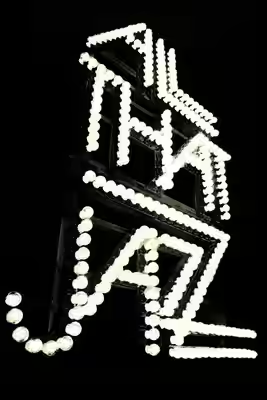
Synecdoche, New York and All That Jazz both follow a theatre director who cannot tell his work from his life, but Kaufman's film is the sadder and stranger of the two, and Fosse's has songs. All That Jazz is sharper about what show business costs and easier to enjoy despite its vanity. Kaufman asks for more patience and gives a more frightened, tender portrait in return.
What should I watch after Synecdoche, New York?
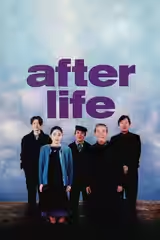
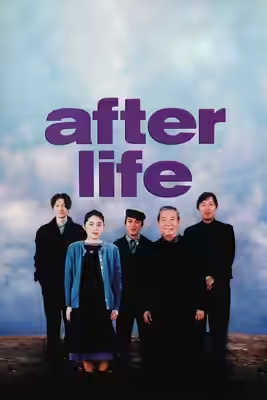
After Synecdoche, New York, try All That Jazz (1979, Fi1m 84): Another theatre director confuses work with living, though this one has songs. Then 8½ (1963, Fi1m 91): A director’s stalled production becomes an unruly examination of memory and desire; and After Life (1998, Fi1m 85): An imagined afterlife makes choosing a single memory a quietly difficult task.

Cast

If you liked this, try…

  1. All That Jazz (1979, Fi1m 84)Another theatre director confuses work with living, though this one has songs.

  2. 8½ (1963, Fi1m 91)A director’s stalled production becomes an unruly examination of memory and desire.

  3. After Life (1998, Fi1m 85)An imagined afterlife makes choosing a single memory a quietly difficult task.

  4. Wild Strawberries (1957, Fi1m 88)An ageing doctor’s journey brings dreams, regrets and uncomfortable encounters into daylight.

  5. The Singing Detective (1986) · not reviewed yetIllness and musical fantasy complicate another artist’s efforts to understand his own life.

Free account

Know what to watch tonight

Two lists that know where things are streaming, collections you can share, your own score beside ours, and Discover that remembers what you have seen.

  • Want to see, sorted by what is streaming now
  • Seen, with your score out of ten
  • No adverts, ever