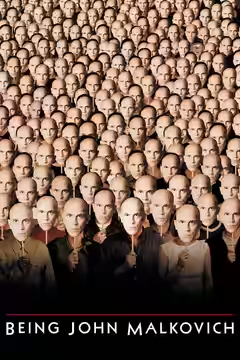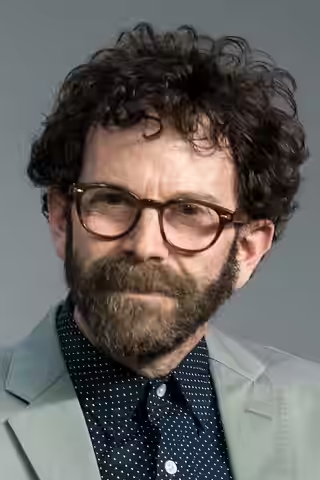
Charlie Kaufman makes the wish to escape yourself funny, distressing and worth following. His best scripts care about the people trapped in their peculiar situations, though he sometimes keeps inventing when they need time to feel.
Fi1m perspective
In Being John Malkovich (1999), borrowing an actor’s identity seems almost practical. Spike Jonze directs Kaufman’s screenplay calmly enough for us to recognise the ordinary wants behind it: relief from themselves, admiration and someone else’s affection. This is excellent comic writing, because the selfishness that makes people funny also makes it difficult for them to find company. The busy plotting sometimes hurries past their feelings, a weakness that recurs in Kaufman’s work.
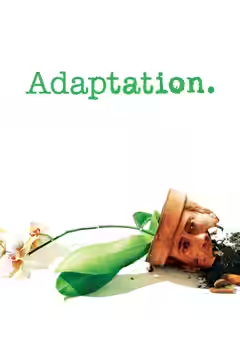
With Adaptation. (2002), Jonze and Kaufman make a writer’s inability to adapt Susan Orlean’s The Orchid Thief into the story itself. Nicolas Cage plays the screen version of Kaufman and Donald, his fictional twin. Charlie’s embarrassment stays funny because Kaufman is willing to make his counterpart tiresome as well as sympathetic. Our reservation is how much of that awkward, affectionate comedy gets hurried aside as the film presses its jokes harder.
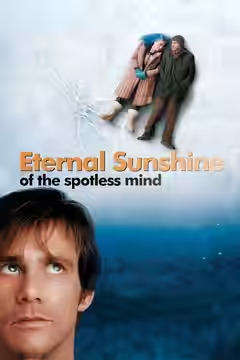
Eternal Sunshine of the Spotless Mind (2004), directed by Michel Gondry, gives the writing more room for affection. Jim Carrey’s Joel and Kate Winslet’s Clementine attract and irritate one another, and neither actor smooths away the difficulty. Kaufman asks what erasing a memory would feel like rather than explaining the equipment. The visual tricks occasionally crowd the couple out, but their attraction is convincing before the storytelling grows complicated. We care about both without needing either to be blameless.
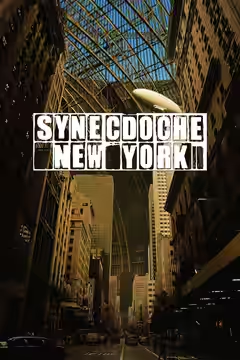
Kaufman began directing with Synecdoche, New York (2008), about a theatre director trying to stage his own life. Philip Seymour Hoffman makes Caden Cotard’s hope that work might settle his worries painfully understandable. The repeated reminders of mortality can test our patience. Samantha Morton’s Hazel gives us someone else to care about, though the script too often treats those around Caden as important chiefly for their connection to him. The bleak humour matters: without it, attending to his distress would become a duty.
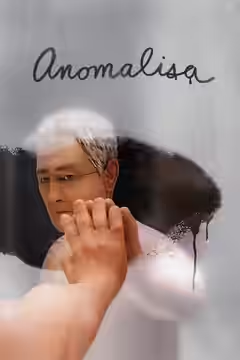
In the opening of Anomalisa (2015), co-directed with Duke Johnson, Michael Stone keeps meeting people with the same face and voice. We felt close to panic as Tom Noonan’s mild voice kept returning through different people, because Kaufman suggests that the sameness comes from Michael himself. Joe Passarelli’s shallow focus and warm bedside-lamp lighting make the puppet hotel feel ordinary, which helps the unease. It is tender, though too indulgent of Michael’s misery. For a first encounter, choose Being John Malkovich and leave the explanation until afterwards.
Biography
Charlie Kaufman is an American screenwriter, director and novelist. Born in New York City on 19 November 1958, he studied film at New York University. He began his career writing for television comedies including Get a Life before moving into feature films.
Kaufman wrote the screenplay for Being John Malkovich (1999), directed by Spike Jonze. He went on to write Adaptation. (2002), Eternal Sunshine of the Spotless Mind (2004) and Confessions of a Dangerous Mind (2002). He also wrote Human Nature (2001).
Kaufman made his directorial debut with Synecdoche, New York (2008). He later directed Anomalisa (2015) and I'm Thinking of Ending Things (2020). In 2020 he published his first novel, Antkind. He is also credited under the names Charles Kaufman and Donald Kaufman.