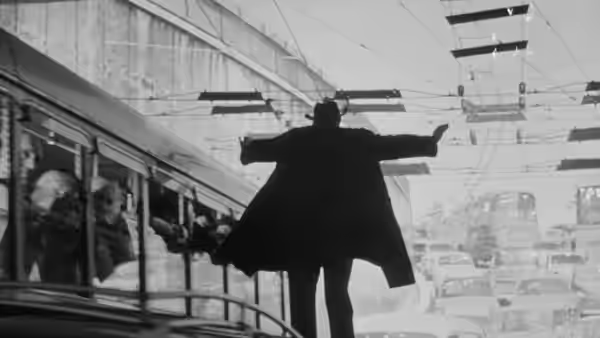
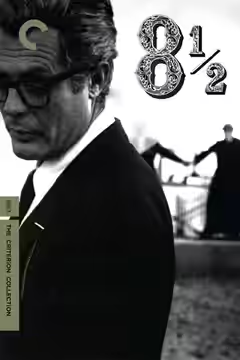
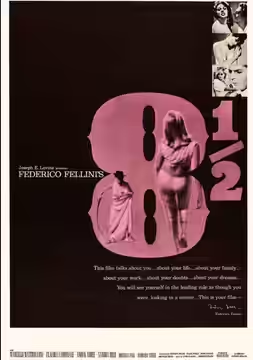
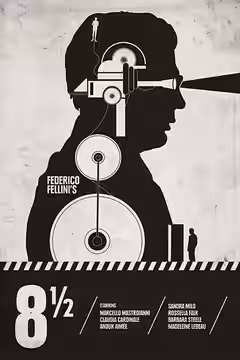
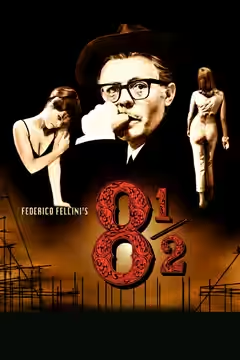
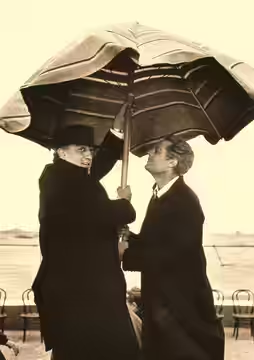
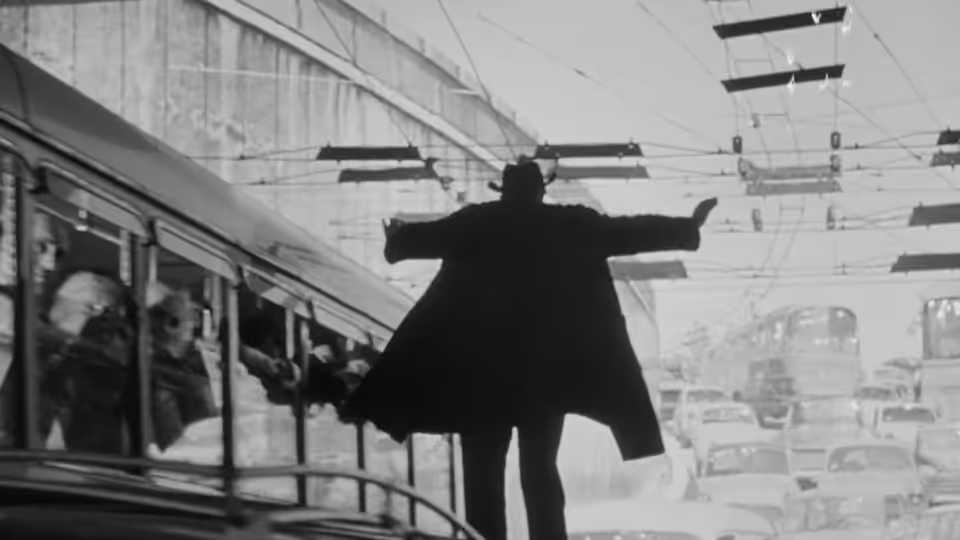
a man in a long coat standing with arms outstretched on a tram
Film review

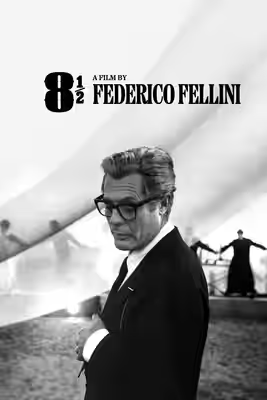
8½

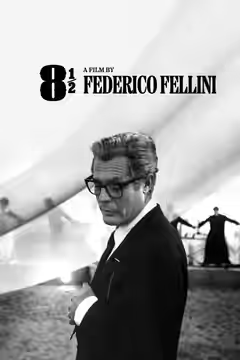
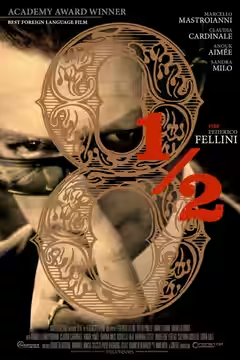
1963 · Directed by Federico Fellini · 2h 19m · MPA NR

In a sentenceA man avoids his wife, his mistress, his producer and his script, and somehow this counts as work

Guido Anselmi (Marcello Mastroianni), a successful Italian film director, arrives at a spa town to take the waters and to begin his next picture, a science-fiction film for which the producer, Pace (Guido Alberti), has already built a rocket launch tower the height of a cathedral. Guido has no script and no idea, and everyone around him wants one. His production manager Conocchia (Mario Conocchia) needs decisions, actresses need casting and a critic has notes on the pages that do exist. His mistress Carla (Sandra Milo) steps off a train in white fur and is installed in a second hotel across town. Between meetings Guido drifts into dreams: a silent traffic jam in a tunnel, a flight over the sea, a childhood farmhouse. Then he telephones his wife Luisa (Anouk Aimée) and asks her to come.

Plays from YouTube when you press play; nothing loads from them until then.

Fi1m review

Fellini’s film about a director who cannot make his film is as good as its reputation, and funnier than it. It is long, it is vain about its own vanity, and it is one of the few films we would send a stranger to.

Guido Anselmi (Marcello Mastroianni) is a film director who has come to a spa to rest and start his next picture, and he cannot do either. The producer, Pace (Guido Alberti), has built him a rocket launch tower the height of a church and wants to know what it is for. His mistress Carla (Sandra Milo) turns up at the station in furs and asks to be hidden in a second hotel. Federico Fellini, who had made La Dolce Vita three years earlier, has put a director’s block on screen and made it a comedy. We would send a stranger to see it.

Guido is stuck in a traffic jam inside a tunnel, the cars silent, every face turned to watch him as smoke fills his own. He climbs out through the roof and floats up over the sea. A man on the beach hauls him down by a rope tied to his ankle. Leo Catozzo cuts from the falling body to Guido’s hand reaching from a bed without a dissolve, and the film does this for 139 minutes: no marker between what happens, what Guido remembers and what he would prefer. We felt that fall in the stomach, and it is the silence that does it, not the spectacle: nobody in the jam will help.

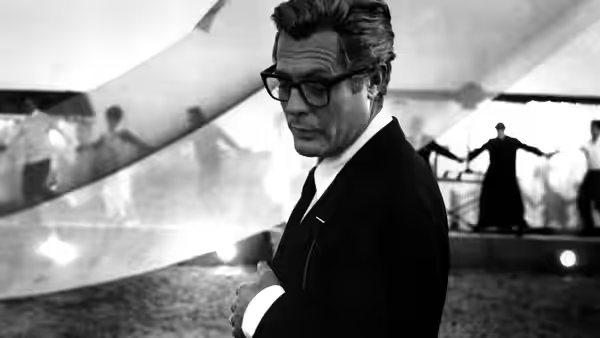
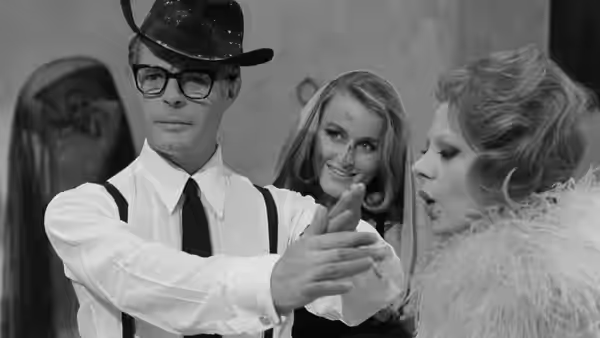
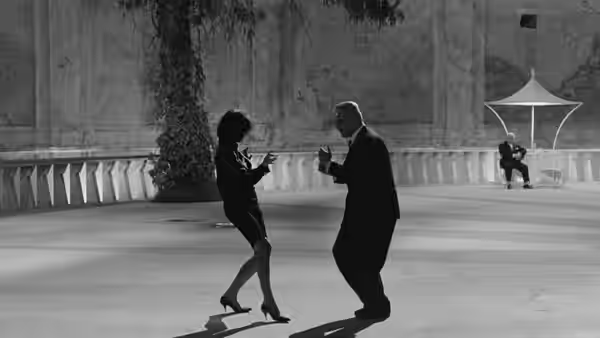
Gianni Di Venanzo shoots the spa in white so hard the queue for mineral water looks bleached, and the nights in deep black with a single lamp. Piero Gherardi, who designed both the sets and the clothes, gives every woman a hat that could shade a market stall and gives Guido a black hat and dark glasses to hide behind. The rocket set, all scaffold and ladders against the sky, is the best joke: an enormous thing built for a film nobody has written. Nino Rota’s score is a fairground band that starts up whenever Guido would rather it did not.

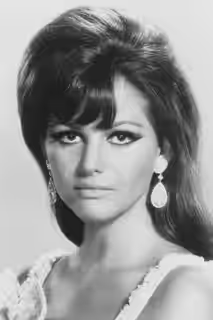
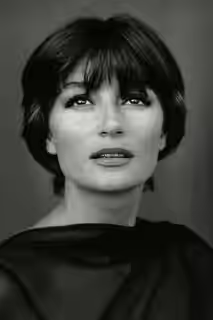
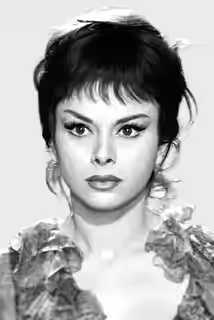
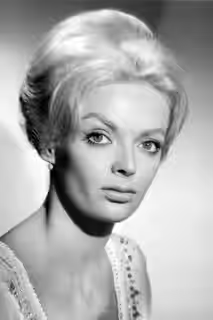
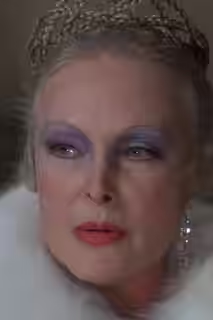
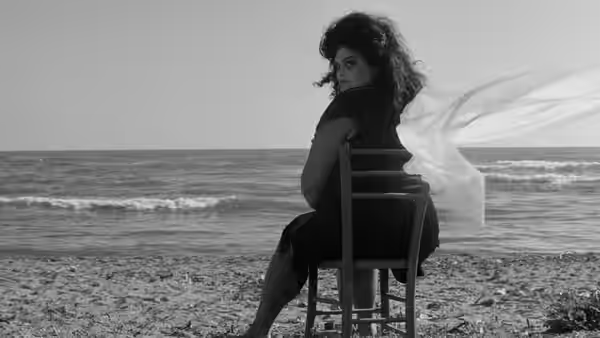
Anouk Aimée arrives as Luisa, Guido’s wife, in a short crop and severe spectacles, and watches him lie with an exhaustion that is the most honest thing in the film. Sandra Milo plays Carla as a woman who reads comics, adores him and is never taken seriously by him or by the film, which is the point. Claudia Cardinale is the girl in white who appears with a glass of water whenever Guido needs an idea; he knows this is a childish thing to want. Rossella Falk, as Luisa’s friend Rossella, gets the sharpest lines. Eddra Gale is La Saraghina, the enormous woman who danced for the schoolboys on a beach in Guido’s memory. We laughed at the rumba, and then the priests arrived and we felt the boy’s shame as our own.

The film is about a man who uses women as furniture, and it knows this. It is also a film in which women are furniture, and the second thing is not entirely cancelled by the first. The harem daydream, in which every woman he has known waits on him in a farmhouse, is funny and also exactly the fantasy it claims to be examining. A character says as much to Guido’s face. We have decided that is both honesty and a good alibi.

It is long. The screenplay, by Fellini with Ennio Flaiano, Tullio Pinelli and Brunello Rondi, circles rather than develops, and around the hundred-minute mark we felt the circle once too often: another corridor, another audition, another woman on the stairs. The visit to the Cardinal and the screen tests could each lose two minutes. Nothing in the last reel is a story, and we will not describe it, except to say that Rota’s band is involved and that it moved us more than any tidy resolution would have.

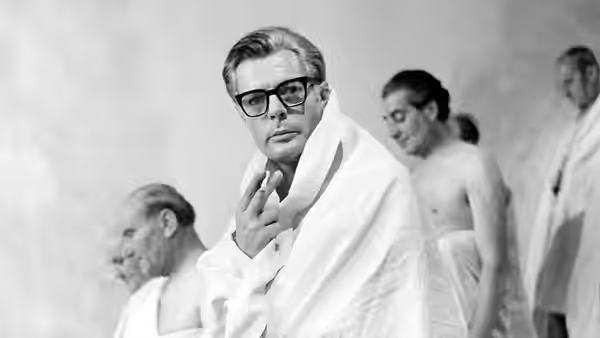
Mastroianni holds it together by doing almost nothing. He listens, he ducks, he puts the glasses back on. Watch him in the hotel lobby being handed a script, an actress and a complaint; he never raises his voice. It is a 15, in Italian, and in black and white for a reason. See it in one sitting, on the largest screen you have, and do not expect to be told when you have left the dream.
Critical consensus AI synthesised

85
Positive
15
Mixed
1
Negative
0

Most critics agree this is one of Fellini’s best films and the definitive portrait of a director who cannot get his next picture started. The praise clusters on the dream sequences and on the way the film slides between memory, fantasy and what is happening on set, with the opening and the harem daydream named more than once. Gianni Di Venanzo’s black-and-white photography and Nino Rota’s score are singled out repeatedly, as is Marcello Mastroianni’s performance as the blocked director.

The spread is narrow, with fifteen positive reviews and a single mixed one. The reservations are mostly historical. The New York Times, reviewing in 1963, finds the ending a letdown, and The Hollywood Reporter of the same year doubts its appeal beyond art houses. The Independent, in 1993, calls it dated but fitfully arresting. Even admirers concede it is self-indulgent and divisive, though most count that as part of its point.

Little White Lies
1 May 2015 · 5/5/5 · Ian Mantgani
100

The critic hails the film as an iconic masterpiece and a re-release worth seeing on the big screen. They praise its fluid shifts between reality, dream, memory and fantasy, its sincerity beneath virtuosic set pieces, and its enduring emotional resonance as a map of life’s stresses and creative catharsis.

Read the full review →
Radio Times
★★★★★ · David Parkinson
100

Parkinson praises the film as a mesmerising, complex study of creative and personal crisis. He singles out its mix of daydreams, memories, nightmares and confrontations for capturing Fellini’s struggle to sustain his reputation.

Read the full review →
Financial Times
30 April 2015 · Danny Leigh
90*

The critic describes the digitally restored re-release as a glorious portrait of a grand director folding in on himself. It ranks among the greatest movies about movies.

Read the full review →
Los Angeles Times
23 April 2010 · Kenneth Turan
90*

Turan describes 8 1/2 as a timeless classic of personal cinema about self-portraiture and the creative process. He singles out its ability to enthrall through imagination and instinct.

Read the full review →
RogerEbert.com
7 May 1993 · Roger Ebert
90*

Ebert calls 8 1/2 a great film and the definitive work about director's block. He singles out its autobiographical elements and the famous harem daydream sequence for praise.

Read the full review →
Slant Magazine
10 December 2024 · Joseph Jon Lanthier
90*

The critic views 8½ as a pivotal shift in Fellini’s work from neorealism to oneiric, personal cinema about creative and masculine crisis, praising its self-deprecating comedy, Freudian elements, and focus on the women in the protagonist’s life. The review highlights the film’s embrace of cinema as an expression of the panicked id and its enduring influence.

Read the full review →

Straight answers AI written, from our review

Is 8½ worth watching?
8½ is worth watching for anyone with patience for a long, drifting film about a director who cannot make his film, and we scored it 91. It is funnier than its reputation suggests, though it circles rather than develops and sags around the hundred-minute mark. See it in one sitting, on the largest screen you have.
How long is 8½, and what is it rated?
8½ runs 2h 19m and is rated NR by the MPA in the US. It is a drama film.
Where can I watch 8½ in the US?
8½ is streaming on HBO Max, Tubi, Hulu, The Roku Channel and Amazon Prime Video in the US, and it is also available to rent from Amazon Prime Video from $5.99. It leaves Tubi on 13 October. Availability is checked daily; the links above go straight to each service.
How violent or frightening is 8½, and is it suitable for children?
8½ is a UK 15 with no violence to speak of; the certificate reflects adult matter, chiefly a married man juggling a mistress and a daydream harem, and a childhood memory of a woman dancing for schoolboys. Nothing here would frighten anyone. It is in Italian, in black and white, and 139 minutes long, which rules out most children more surely than the rating does.
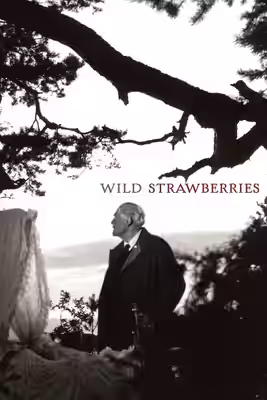
How does 8½ compare to Wild Strawberries?
8½ is the funnier and more extravagant of the two, a comedy of vanity that slides between dream and daytime without warning, while Wild Strawberries is a quieter, warmer film built on a single day's drive and one performance. Bergman's symbolism can be insistent; Fellini's length can tire. We rate Fellini's film higher, but viewers who want to be moved rather than dazzled may prefer Bergman.
What should I watch after 8½?
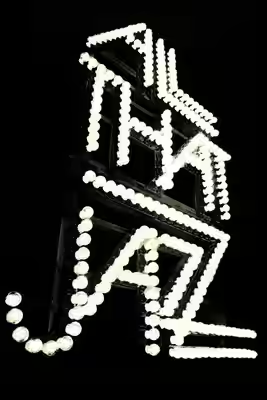
After 8½, try Wild Strawberries (1957, Fi1m 88): Bergman sends an old man through his memories on a single day’s drive. Then All That Jazz (1979, Fi1m 84): Fosse’s version, with dance numbers and a hospital bed, borrowed openly from Fellini.

Cast

Awards

Academy Awards, 1964

Nominated
Best Director
Nominated
Best Writing, Original Screenplay
Won
Best Costume Design, Black-and-White
Won
Best International Feature Film

International Submission to the Academy Awards, 1964

Nominated
International Submission to the Academy Awards

National Board of Review Award for Best Foreign Language Film, 1963

Won
National Board of Review Award for Best Foreign Language Film

If you liked this, try…

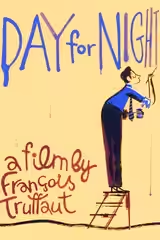
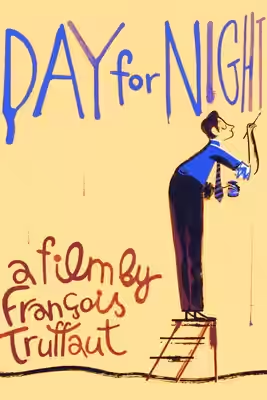
  1. Day for Night (1973) · not reviewed yetTruffaut’s answer: a film shoot where everything goes wrong and the director loves it anyway.

  2. Wild Strawberries (1957, Fi1m 88)Bergman sends an old man through his memories on a single day’s drive.

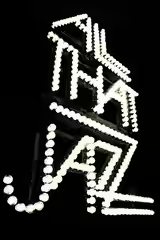
  3. All That Jazz (1979, Fi1m 84)Fosse’s version, with dance numbers and a hospital bed, borrowed openly from Fellini.

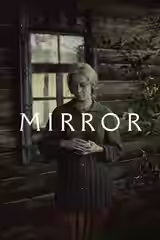
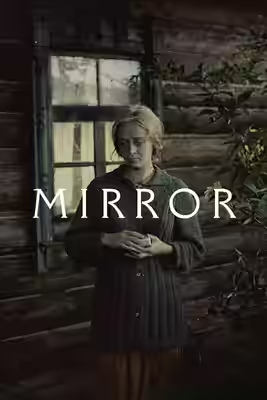
  4. Mirror (1975) · not reviewed yetTarkovsky’s memory film, slower and stranger, with no jokes at all.

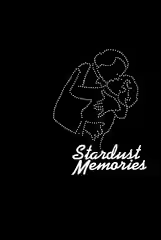
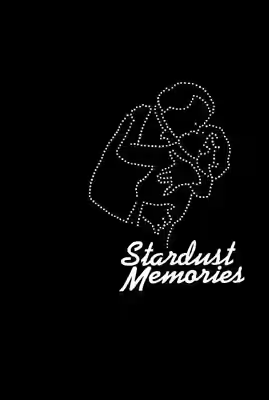
  5. Stardust Memories (1980) · not reviewed yetWoody Allen’s homage, down to the traffic jam, sourer and shorter.

Free account

Know what to watch tonight

Two lists that know where things are streaming, collections you can share, your own score beside ours, and Discover that remembers what you have seen.

  • Want to see, sorted by what is streaming now
  • Seen, with your score out of ten
  • No adverts, ever