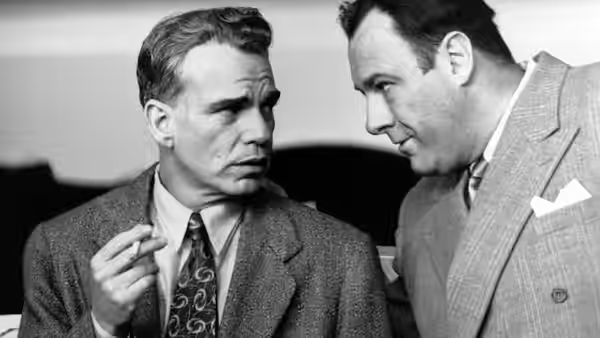
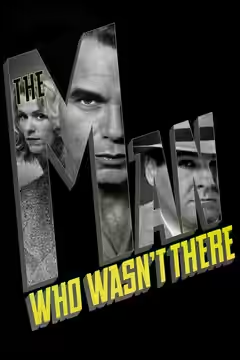
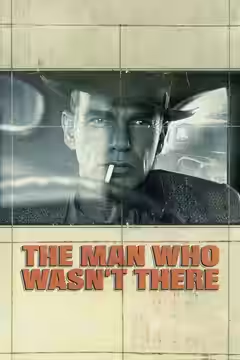
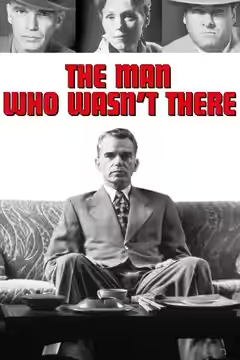
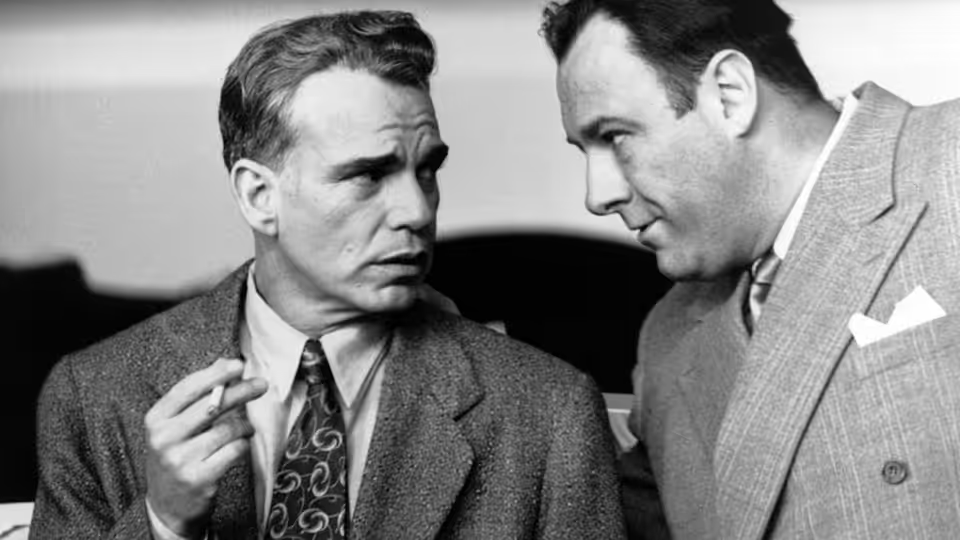
Ed Crane (Billy Bob Thornton) and Big Dave Brewster (James Gandolfini) in close conversation
Film review

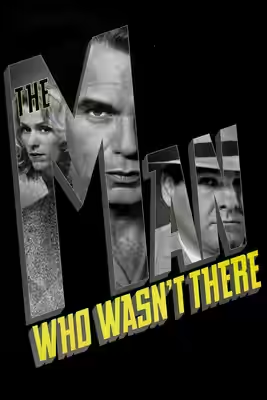
The Man Who Wasn't There

2001 · Directed by Joel Coen, Ethan Coen · 1h 56m · MPA R

In a sentenceBilly Bob Thornton makes everyone else look as though they ought to sit down

Ed Crane (Billy Bob Thornton) is a small-town barber who says little and keeps his feelings to himself. Adultery and blackmail disturb the everyday routines around him, drawing a man accustomed to standing back into a crime story. Frances McDormand plays Doris Crane, alongside James Gandolfini as Big Dave Brewster and Jon Polito as Creighton Tolliver. Joel and Ethan Coen write and direct this period drama, presented in black and white. Scarlett Johansson appears as Birdy Abundas, with Tony Shalhoub as Freddy Riedenschneider.

Fi1m review

Billy Bob Thornton’s withdrawn barber holds our attention through a fine, deliberately slow crime film. The Coens’ taste for eccentricity occasionally gets in his way, but Roger Deakins’ black-and-white images give us ample reason to stay.

The Man Who Wasn’t There is a fine, slow crime film whose chief attraction is a man who scarcely seems inclined to participate. Joel and Ethan Coen build their story around Ed Crane, a small-town barber played by Billy Bob Thornton, and give his passivity an uncomfortable amount of room. The adultery and blackmail promise familiar pleasures. The Coens are interested in how little Ed appears to feel, even when we badly want him to respond.

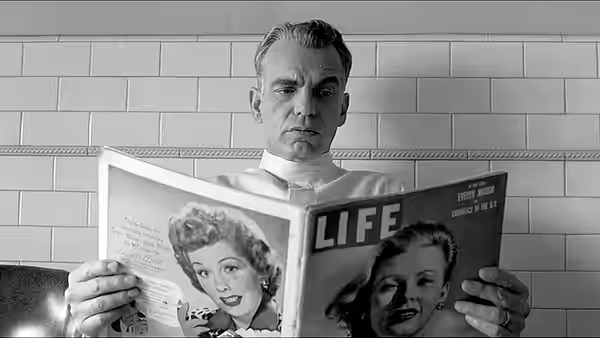
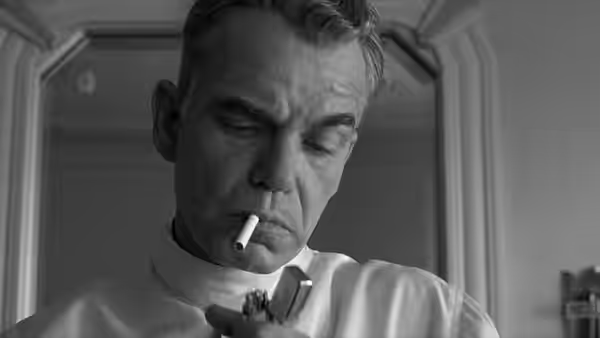
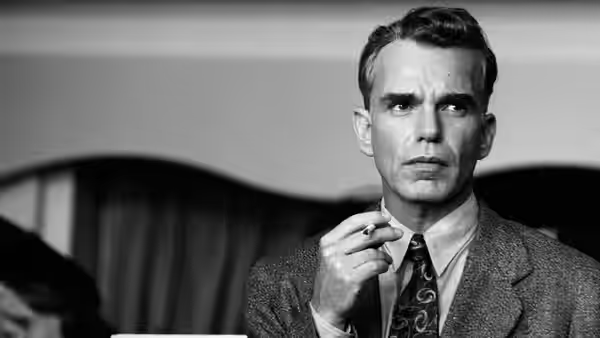
Thornton is the reason this works. His reticence never feels like an actor withholding a performance until a more rewarding scene arrives. We felt unexpectedly sorry for Ed, because Thornton’s mournful stillness makes even ordinary company look like an effort. He allows us to see loneliness without requiring Ed to recognise it. That is a difficult performance to build a crime story around, and the film is right to let us study it.

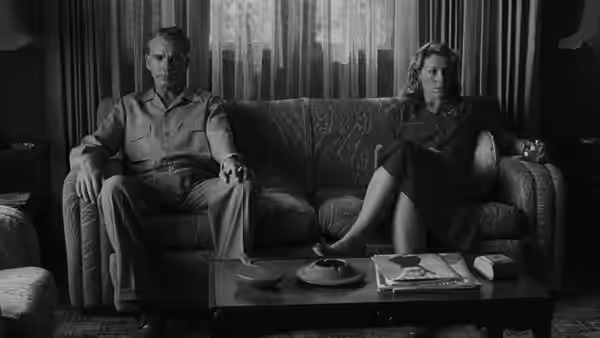
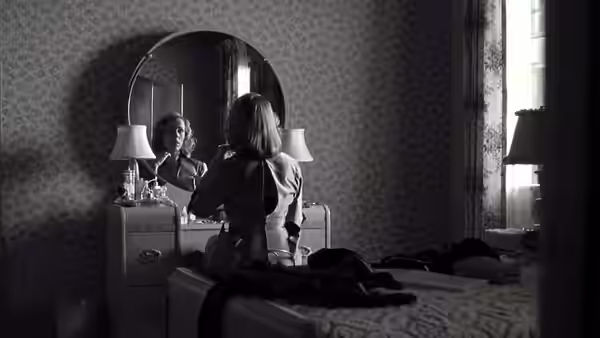
Roger Deakins’ black-and-white cinematography gives the small-town setting a severity that suits Ed, without making every image feel like an instruction to despair. The precision is pleasurable in itself, which matters in a film this unhurried. Dennis Gassner’s production design helps make those everyday surroundings feel confining. We occasionally find ourselves admiring the period detail when we ought to be worrying about the people in it.

Frances McDormand, as Doris Crane, supplies a welcome warmth beside Thornton’s withdrawal. Their different acting styles give us something to watch beyond the careful handling of the plot, and McDormand helps prevent the film from becoming an exercise in admiring its leading man. Some of the broader supporting performances are less helpful. Joel and Ethan Coen can be too fond of an eccentric turn, and here that fondness occasionally distracts from the quieter behaviour they have made so absorbing.

Tricia Cooke edits with Joel and Ethan Coen, and their willingness to linger is mostly an asset. We have time to look at Thornton rather than simply register what happens next. Carter Burwell’s music is effective company for that melancholy, though Thornton needs little help persuading us to feel it. The trouble comes later, when the same patience is extended to material that has already made its point. At 116 minutes, the film has stretches in which we start wishing the editors had been less accommodating.

We come to crime films expecting somebody to want something badly enough to do harm. Ed’s reluctance makes this one an awkward fit, and that is part of its appeal. The Coens ask us to take an apparently negligible man seriously, even while making his detachment funny. Their attention to him justifies the experiment, though the surrounding story sometimes grows too elaborate for the slight shifts in feeling that hold our interest.

Watch it when there is time to concentrate and nobody is waiting for the next burst of action. Thornton rewards that attention, even when the plotting does not. Anyone already feeling restless should choose something brisker.

Critical consensus AI synthesised

76
Positive
7
Mixed
2
Negative
0

Most critics respond favourably to the Coens’ restrained crime drama, with praise clustering around Roger Deakins’ black-and-white photography and Billy Bob Thornton’s performance as the withdrawn barber Ed Crane. The reviews admire the precise period detail, dry humour and philosophical concerns, finding plenty to consider beneath the noir plotting. Thornton’s stillness is generally seen as expressive rather than empty, while the photography gives the small-town setting depth and a sense of confinement.

The main divide concerns how much feeling survives all that control: some critics find unexpected warmth, while others find the film cold and difficult to engage with. Screen Daily admires the craftsmanship and Thornton but finds the cerebral approach emotionally distancing; the Evening Standard argues that the story loses its way before the finish. Slow pacing, a passive protagonist and familiar Coen quirks recur as reservations, though most reviews regard them as limitations rather than decisive failures.

The AV Club
29 March 2002 · Keith Phipps
85*

The Coens craft a precise, funny, and thematically rich black-and-white noir that blends genre conventions with deeper philosophical and historical resonance. Thornton’s alienated everyman anchors a world where existential themes play out in everyday settings.

Read the full review →
Total Film
26 October 2001
85*

The black-and-white cinematography by Roger Deakins adds depth, and there is more emotional warmth than usual with Fargo-esque humanity. The Coens deliver a gripping, amusing and accomplished work that will delight their fans.

Read the full review →
Empire
1 January 2000 · Kim Newman
80*

The Coens riff on James M. Cain in a chilly black-and-white style with a passive, uncommitted hero. It is a gripping, unusual and challenging work from consistently brilliant filmmakers, though slowly paced with an off-putting lead.

Read the full review →
Radio Times
★★★★ · Andrew Collins
80

The Coens deliver a complex and clever period crime drama that is more introspective than their usual comic mania. Sublime acting from Thornton and McDormand, aided by Deakins' photography, makes it the most introspective entry in their canon and on a par with Fargo.

Read the full review →
Time Out
10 September 2012 · GA
80*

The Coens' meditative and arty crime movie, inspired by Cain but neither noir nor thriller, is a brave and largely successful attempt to explore the inner workings of someone who simply doesn't feel the way most people do. It is helped no end by Billy Bob Thornton's supremely eloquent performance.

Read the full review →
Slant Magazine
22 October 2001 · Ed Gonzalez
75*

The Coens deliver a visually elegant noir tribute with strong period atmosphere and a sympathetic lead performance from Thornton. The film is undercut by overly familiar Coen quirks and reliance on noir tropes.

Read the full review →

Straight answers AI written, from our review

Is The Man Who Wasn't There worth watching?
The Man Who Wasn't There is worth watching for anyone with the patience for a slow, quiet crime film, and we scored it 81. Billy Bob Thornton's withdrawn barber and Roger Deakins' black-and-white photography are the reasons to stay. Its 116 minutes drag in places, so anyone wanting brisk plotting should look elsewhere.
How long is The Man Who Wasn't There, and what is it rated?
The Man Who Wasn't There runs 1h 56m and is rated R by the MPA in the US. It is a crime and drama film.
Where can I watch The Man Who Wasn't There in the US?
The Man Who Wasn't There is available to rent from Amazon Prime Video and Apple TV from $3.99. Availability is checked daily; the links above go straight to each service.
How violent or frightening is The Man Who Wasn't There, and is it suitable for children?
The Man Who Wasn't There carries a UK 15 certificate, so it is not for children. The story turns on adultery and blackmail rather than sustained violence, and the review finds little that frightens; the mood is melancholy and slow rather than tense. Older teenagers with a taste for deliberate, adult crime drama are the youngest audience it suits.
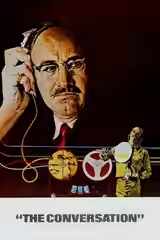
How does The Man Who Wasn't There compare to The Conversation?
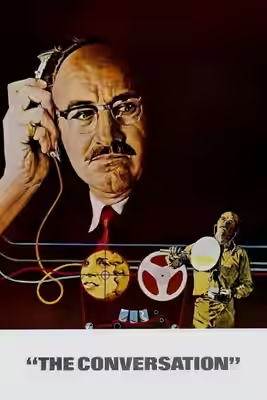
The Man Who Wasn't There is the slower and more detached of the two films, while The Conversation is the more gripping. Both follow a withdrawn man whose distance from other people fails him, but Coppola builds real suspense and Gene Hackman makes the loneliness hurt, whereas the Coens ask us to study a man who barely responds. Choose Coppola for a thriller, the Coens for a character study.
What should I watch after The Man Who Wasn't There?
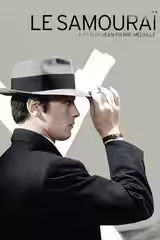
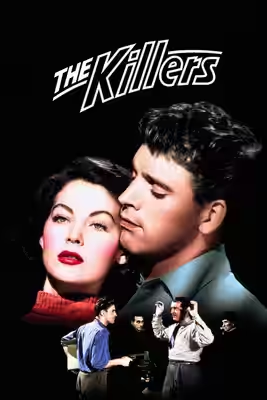
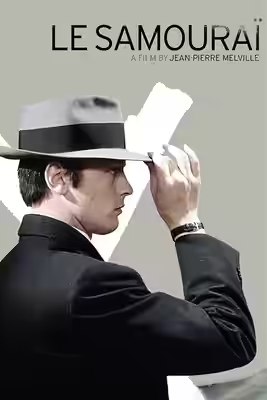
After The Man Who Wasn't There, try The Killers (1946, Fi1m 84): For black-and-white fatalism with a firmer grip on the criminal business. Then Le Samouraï (1967, Fi1m 88): For precisely controlled crime and a leading performance that scarcely needs dialogue; and The Conversation (1974, Fi1m 92): Another withdrawn man whose attempts to keep his distance become painfully inadequate.

Cast

Awards

Academy Awards, 2002

Nominated
Best Cinematography

If you liked this, try…

  1. The Killers (1946, Fi1m 84)For black-and-white fatalism with a firmer grip on the criminal business.

  2. Le Samouraï (1967, Fi1m 88)For precisely controlled crime and a leading performance that scarcely needs dialogue.

  3. The Conversation (1974, Fi1m 92)Another withdrawn man whose attempts to keep his distance become painfully inadequate.

  4. The Headless Woman (2008) · not reviewed yetA more disorientating account of someone becoming a stranger to her own life.

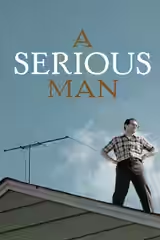
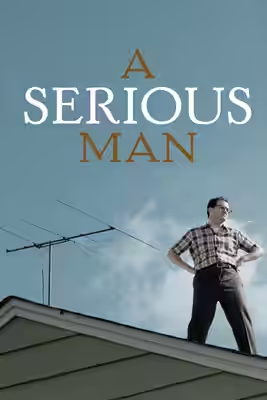
  5. A Serious Man (2009, Fi1m 84)The Coens make ordinary misfortune funny again, then make the laughter uncomfortable.

Free account

Know what to watch tonight

Two lists that know where things are streaming, collections you can share, your own score beside ours, and Discover that remembers what you have seen.

  • Want to see, sorted by what is streaming now
  • Seen, with your score out of ten
  • No adverts, ever