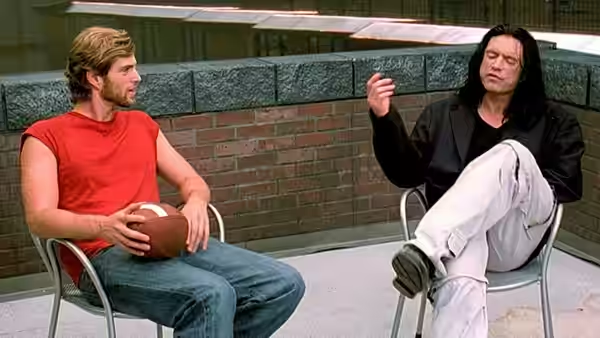
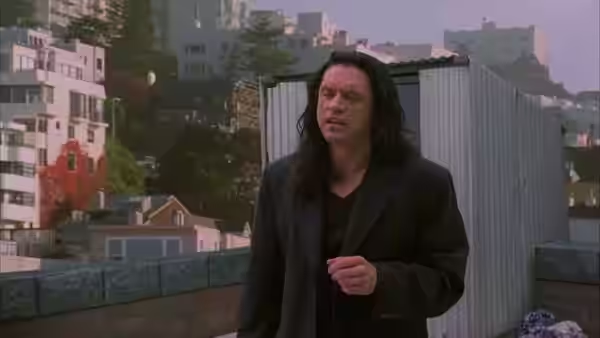
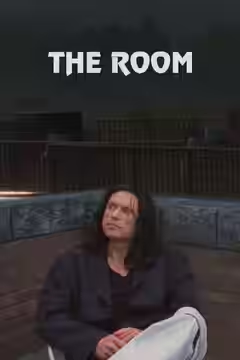
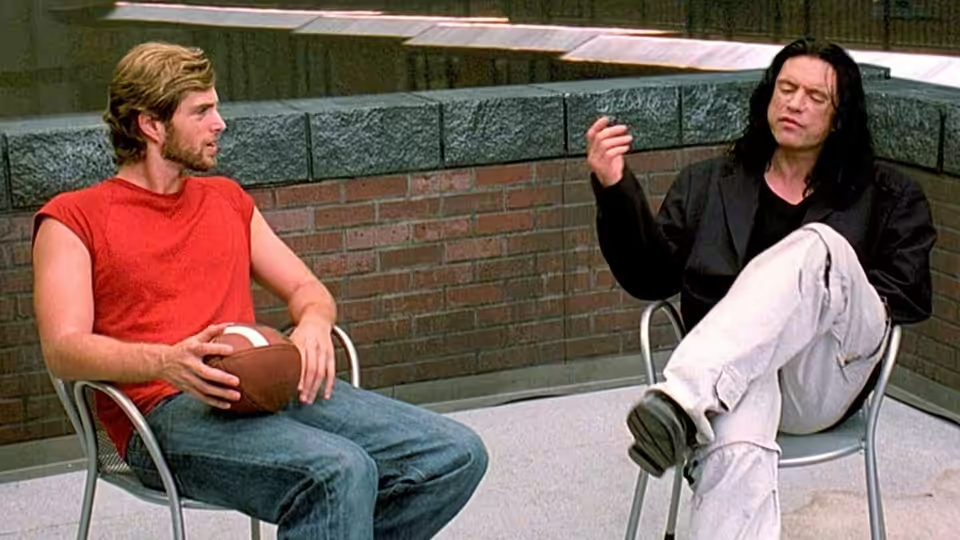
Johnny (Tommy Wiseau) gesturing to Mark (Greg Sestero) while seated on the rooftop
Film review

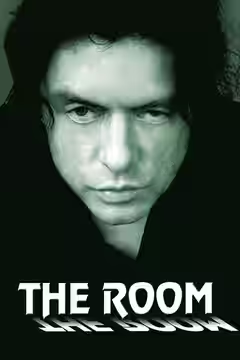
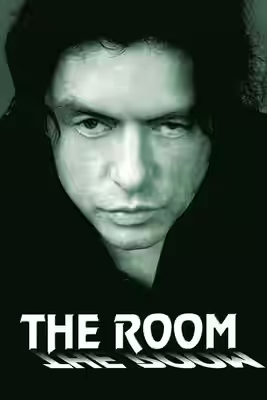
The Room

2003 · Directed by Tommy Wiseau · 1h 40m · MPA R

In a sentenceThe Golden Gate Bridge gets plenty of screen time and wisely declines to speak

Johnny (Tommy Wiseau) is presented as an ordinary man in a romantic drama concerned with whether anyone can be trusted. Lisa (Juliette Danielle) and Mark (Greg Sestero) share the story with Denny (Philip Haldiman), Claudette (Carolyn Minnott) and Michelle (Robyn Paris). Sex scenes, pillow fights and repeated shots of the Golden Gate Bridge are among the film’s recurring elements. Tommy Wiseau also writes and directs the film. The Room runs for 100 minutes and carries an 18 certificate.

Plays from YouTube when you press play; nothing loads from them until then.

Fi1m review

The Room is a failed romantic drama whose misplaced confidence produces occasional, involuntary comedy. Tommy Wiseau’s sincerity keeps it interesting in patches, but the repetition makes a full evening difficult to recommend.

The Room asks to be taken seriously as a story about romance and trust, and we think it deserves to be judged on that basis before the laughing begins. On those terms, it is poor. Tommy Wiseau writes, directs, produces and plays Johnny, giving the film a personal commitment that remains visible through its failures. There is something touching about that effort, though it does little to make the dialogue persuasive or the relationships involving.

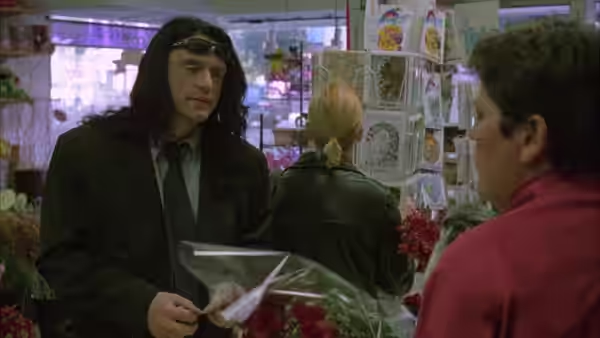
Johnny is presented as an ordinary man, but Tommy Wiseau’s performance makes that proposition difficult to accept. The effort to communicate strong feeling is so exposed that we keep noticing the actor struggling to convince us. Juliette Danielle, as Lisa, and Greg Sestero, as Mark, have little chance of establishing a convincing dramatic rhythm around him. With dialogue this awkward, even an exchange meant to sound casual feels like something everyone has been required to demonstrate.

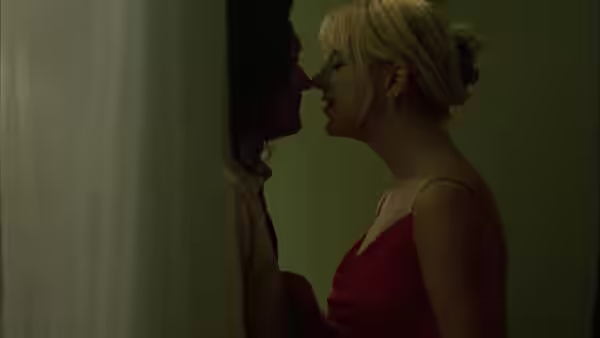
We laughed at the pillow fights, then felt slightly mean about it. Their forced cheerfulness is funny, but there is an earnest wish to make these people seem happy together, and that is harder to dismiss. The sex scenes are less endearing: their protracted insistence on intimacy makes the film feel stalled. There is a limit to how long accidental comedy can excuse a scene that has not found a reason to continue.

Todd Barron’s cinematography repeatedly returns to the Golden Gate Bridge, until those views start to feel like interruptions. They give us a landmark without making the surrounding conversations any more believable. Mercedes Younger supplies the production design, but the writing and performances leave those settings struggling to suggest an ordinary life. When every exchange sounds rehearsed, it is difficult to accept that anybody belongs in the space around them.

Eric Chase’s editing does little to organise the script’s scattered concerns into a story with some forward movement. Scenes occupy time without making the next conversation feel necessary, and the repeated material becomes more noticeable as the film goes on. Mladen Milicevic’s score tries to supply the emotional conviction missing from the exchanges, but it cannot make us care on the characters’ behalf. At 100 minutes, the film gives its uneven rhythms plenty of time to become wearing, especially once the initial surprise has passed.

Most critics disagree with us, finding enough pleasure in the film’s peculiar sincerity and participatory screenings to recommend it. We think that judgement gives too much credit to the audience: people entertaining one another can rescue an evening without improving the film they have come to see. The appeal is understandable, and nobody needs permission to enjoy a failed melodrama. But a romantic drama needs to make us care about the people and their choices, and this one rarely manages it.

There is a virtue here that more competent films sometimes lack: it never feels anonymous. The awkwardness belongs to somebody who plainly wanted these feelings to matter, and the laughter does not erase that. We would not recommend it as a romantic drama, and its accidental comedy is too intermittent to sustain the evening unaided. Choose your company carefully; they will be supplying some of the entertainment.

Critical consensus AI synthesised

63
Positive
4
Mixed
2
Negative
1

Most critics agree The Room is a terrible film and that this is beside the point. Nearly every review treats Tommy Wiseau’s drama as a midnight-screening ritual rather than a story, and the praise clusters around the audience: the thrown spoons and the shared pleasure of watching something fail so completely. Several find in Wiseau’s fixations, the pillow fights and the repeated Golden Gate Bridge shots, something raw and personal that makes it stranger than the usual bad film.

The reservations are about whether any of that amounts to a reason to watch. Variety, reviewing on release before the cult formed, finds it simply unpleasant and expects walkouts before the halfway point. Paste, writing two decades on, accepts the appeal but argues the so-bad-it’s-good mode has run its course. The spread is wide, from outright dismissal to something close to affection, and the score in the middle reflects a film critics enjoy describing more than they defend.

Evening Standard
10 February 2017 · Tim Cooper
80*

The piece portrays The Room as a staggeringly bad film that has become a cult phenomenon enjoyed through audience participation at screenings. The critic singles out the interactive experience and Tommy Wiseau's enigmatic presence for enjoyment.

Read the full review →
The AV Club
26 March 2009 · Scott Tobias
80*

The critic celebrates The Room as a worthy successor to Rocky Horror in the midnight movie tradition, highlighting its uniquely amateurish and revealing ineptitude that has spawned audience rituals like throwing spoons. He singles out Wiseau's nakedly personal pain and odd personal fetishes, such as repeated Golden Gate Bridge shots and pillow fights, as what makes the film stranger and more compelling than a typical bad movie.

Read the full review →
The New Yorker
4 December 2017 · Richard Brody
80*

The critic argues that The Room is a more compelling and deeper work than The Disaster Artist, praising its raw, unfiltered expression of the director's personality and worldview despite (or because of) its technical and narrative flaws.

Read the full review →
The Independent
20 July 2009 · Tim Walker
60*

The critic describes The Room as incoherently scripted, appallingly acted and unintelligibly edited, yet notes that it makes audiences happy in its awfulness. He singles out its cult following and audience participation at screenings for praise.

Read the full review →
Variety
18 July 2003 · Scott Foundas
10*

The film is extremely unpleasant and prompts most viewers to ask for their money back well before the halfway point. It singles out the ludicrous attempt to portray the freakish Wiseau character as a normal everyday guy, along with the soft-core sex scenes.

Read the full review →
Collider
27 June 2023 · Ross Bonaime
75*

The critic views The Room as both one of the worst films ever made and a masterpiece, crediting its singular, idiosyncratic vision by Wiseau that defies conventional criticism. He singles out the way audience participation and reinterpretation have transformed it into a unique communal experience that transcends the director's original dramatic intent.

Read the full review →

Straight answers AI written, from our review

Is The Room worth watching?
The Room is not worth watching as the romantic drama it wants to be, and its accidental comedy is too patchy to carry a full evening alone; we scored it 46. Tommy Wiseau's sincerity keeps it interesting in stretches, but the repeated bridge shots and stalled sex scenes wear thin at 100 minutes. Watch it with company prepared to do some of the work.
How long is The Room, and what is it rated?
The Room runs 1h 40m and is rated R by the MPA in the US. It is a drama and romance film.
Where can I watch The Room in the US?
The Room is streaming on Tubi in the US. It leaves Tubi on 10 October. Availability is checked daily; the links above go straight to each service.
How violent or frightening is The Room, and is it suitable for children?
The Room carries an 18 certificate and is not suitable for children. It is not violent or frightening in any way our review noted; the adult content is the protracted sex scenes, which go on long enough to stall the film rather than to shock. Teenagers are excluded by the certificate, and the squeamish have little to fear beyond embarrassment.
How does The Room compare to Plan 9 from Outer Space?
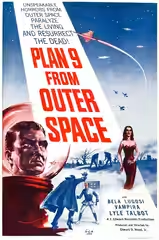
The Room and Plan 9 from Outer Space are both earnest failures whose stiff dialogue outlasts the fun, but Ed Wood's alien invasion is the more tolerable evening. Its crude handmade effects give it something to enjoy between the speeches, where Wiseau's romantic drama offers only repetition and long sex scenes. Choose Plan 9 for curiosity, The Room for a crowd.
What should I watch after The Room?
After The Room, try Plan 9 from Outer Space (1959, Fi1m 67): A similarly earnest oddity, with enough handmade conviction to survive the dialogue. Then Troll 2 (1990, Fi1m 40): Another straight-faced nightmare whose peculiar dialogue keeps sabotaging its attempts at terror.

Cast

If you liked this, try…

  1. Plan 9 from Outer Space (1959, Fi1m 67)A similarly earnest oddity, with enough handmade conviction to survive the dialogue.

  2. Troll 2 (1990, Fi1m 40)Another straight-faced nightmare whose peculiar dialogue keeps sabotaging its attempts at terror.

  3. Miami Connection (1987) · not reviewed yetMartial arts, friendship and rock music, delivered with a comparable shortage of restraint.

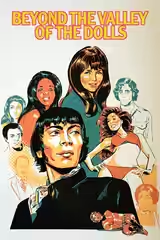
  4. Beyond the Valley of the Dolls (1970) · not reviewed yetFor lurid melodrama that knows exactly how ridiculous its characters can become.

  5. The Happiness of the Katakuris (2001) · not reviewed yetFamily disasters become musical numbers in a far more deliberately peculiar entertainment.

Free account

Know what to watch tonight

Two lists that know where things are streaming, collections you can share, your own score beside ours, and Discover that remembers what you have seen.

  • Want to see, sorted by what is streaming now
  • Seen, with your score out of ten
  • No adverts, ever