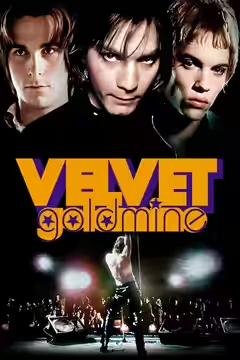
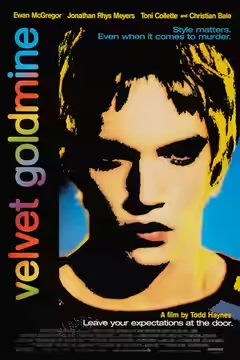
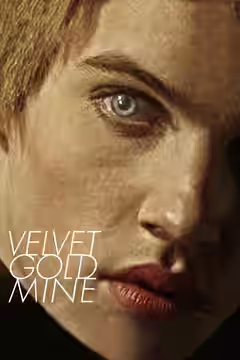
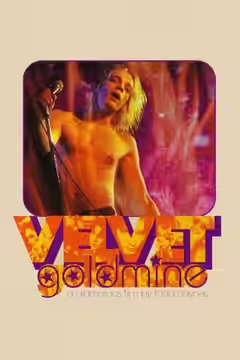
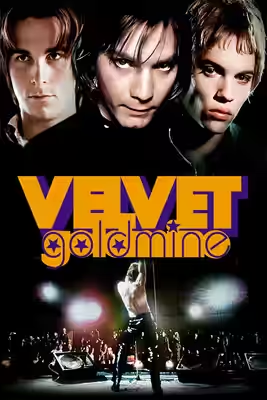
Todd Haynes makes glam rock’s promise of reinvention feel worth believing in, helped by committed performances and clothes that do half the storytelling. The winding investigation is a drag, but the music repeatedly wins us back.
Todd Haynes’s Velvet Goldmine is a persuasive, sometimes frustrating film about the freedom a pop star can appear to offer. We recommend it for the music, the performances and its belief that dressing up can matter, with a warning that the detective story becomes laborious. The enquiry into a glam idol’s past gives Haynes a way to revisit an era without pretending to deliver its official history. He is interested in what the fans might have wanted from it.
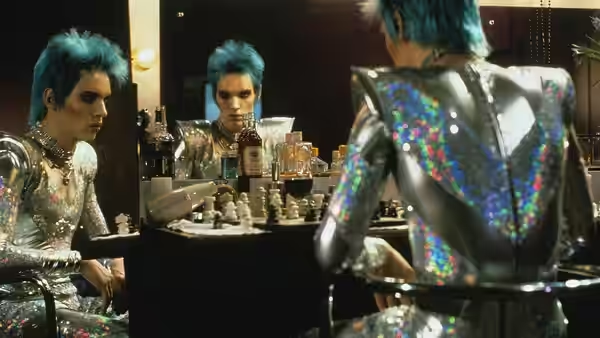
Sandy Powell’s costumes do much of the explaining, making the performers’ determination to dress differently seem exciting. Maryse Alberti’s colour photography lets the clothes command attention, and we can understand their appeal before anyone explains it. Christopher Hobbs and Amy Beth Silver’s production design extends that extravagance into the spaces around the performers. Occasionally there is too much competing for the eye, but the crowded images suit people so determined to be noticed.
Jonathan Rhys Meyers’s Brian Slade is convincing as someone a fan could build a life around, even when the man himself remains difficult to reach. Ewan McGregor brings a welcome unruliness to Curt Wild; the film loosens up around him. Toni Collette gives Mandy Slade a sharper emotional presence than the writing consistently allows the others. Christian Bale’s Arthur Stuart has the less immediately rewarding task of carrying the investigation, and he makes its connection to personal identity worth following. None of them can quite solve the unevenness of Haynes’s screenplay.
We were moved by the seriousness Rhys Meyers brings to the extravagantly dressed Slade. He makes the wish to be seen differently feel urgent, and Haynes allows that wish to look a little ridiculous without dismissing it. The music, with contributions from Carter Burwell and Craig Wedren, helps sustain that generosity: it gives the performing room to be pleasurable before we are asked to interpret it. There are stretches when the soundtrack supplies all the persuasion the dialogue has been labouring towards.
The investigation keeps getting in the way. James Lyons’s editing has to accommodate the enquiry and a story that will not run in a straight line, and the changes of direction eventually start to feel fussy. Haynes asks us to piece together Slade while also tracing what the enquiry means to Stuart; too often, both interests lose momentum in the process. At 123 minutes, the film has enough space to develop these connections, but it spends too much of that space arranging another approach to them.
Most critics are less persuaded than we are. The complaints about coldness overlook how much feeling Haynes puts into the prospect of sexual freedom, though the objections to the storytelling are harder to dismiss. Against the usual music drama, his willingness to let fantasy replace a tidy life story is a considerable virtue. We do not need every song to illustrate a lesson about success, and the film is often at its most engaging when it lets the performers get on with performing.
Choose it for an evening when the music can have your full attention. Anyone after a dependable history of glam rock should look elsewhere, because Haynes is far more interested in what it might have felt like to find yourself through a record. Allow him some untidiness, and turn it up.