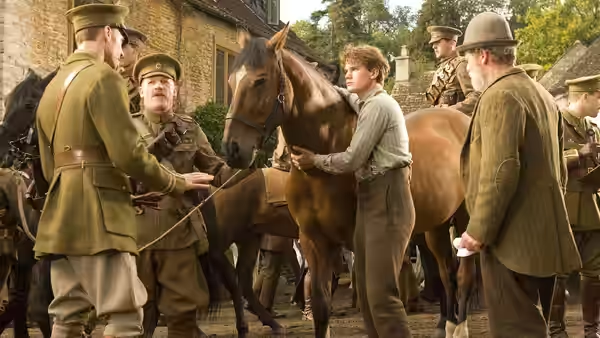
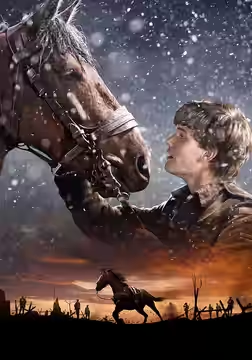
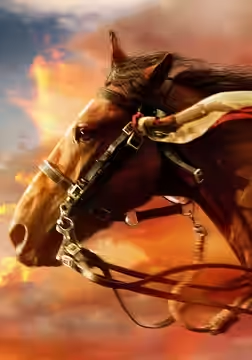
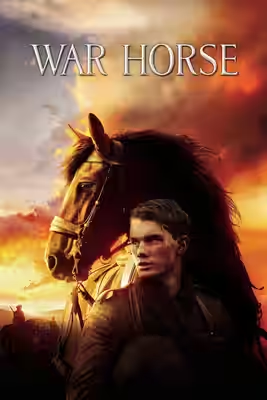
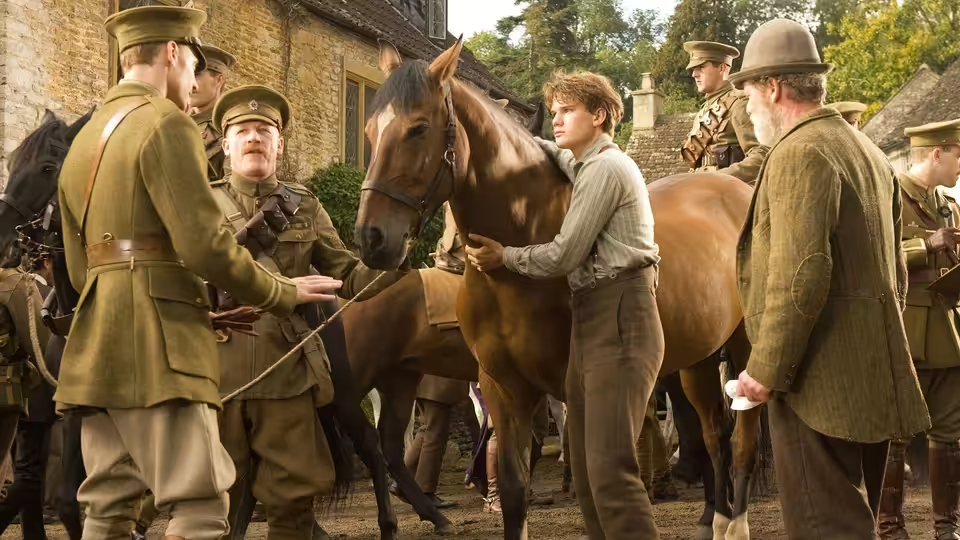
Soldiers in uniform surround a young man holding the head of a brown horse in a courtyard
Film review

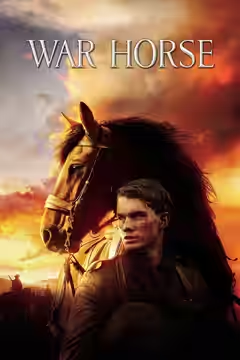
War Horse

2011 · Directed by Steven Spielberg · 2h 26m · MPA PG-13

In a sentenceA boy, a horse and John Williams, and only the horse knows when to stop

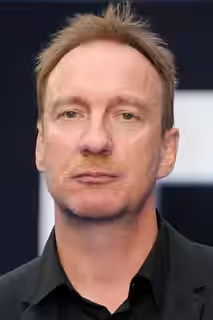
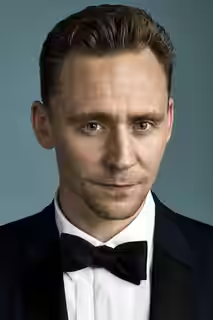
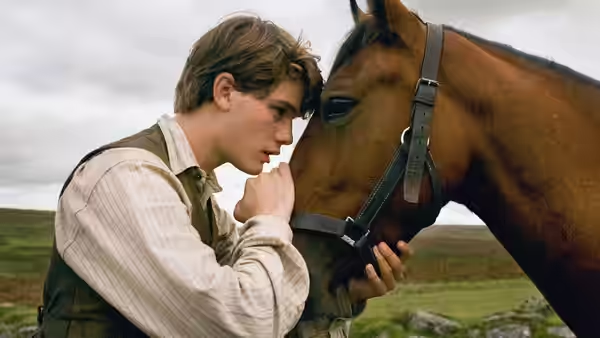
Devon, in the years before the First World War. Ted Narracott (Peter Mullan), a tenant farmer with a bad leg and a drink problem, goes to auction for a plough horse and comes home with a thoroughbred colt he has bought to spite his landlord, Lyons (David Thewlis). His wife Rose (Emily Watson) points out that the rent is now unpayable. Their son Albert (Jeremy Irvine) names the horse Joey and sets out to teach a hunter to plough a field full of stones, with the whole village watching from the wall. Then war is declared, Ted sells Joey to the army, and Captain James Nicholls (Tom Hiddleston) promises the boy he will look after him. Albert, too young to enlist, swears he will find him.

Plays from YouTube when you press play; nothing loads from them until then.

Fi1m review

Spielberg’s First World War film is superbly made and twice, in the charge and in the wire, it is as good as anything he has done. The rest is a handsome, episodic picture book with the music turned up too loud.

Steven Spielberg has taken Michael Morpurgo’s children’s novel, already a stage hit with puppet horses, and made it the old way, with a real horse, real mud and a studio orchestra. Joey is bought at a Devon auction, taught to plough by Albert Narracott (Jeremy Irvine), sold to the cavalry when war comes, and passed from hand to hand across France while Albert tries to find him. It runs 146 minutes. Two of its sequences are as good as anything Spielberg has made, and most of the rest is handsome, episodic and forever telling you what to feel.

The Devon hour is the weakest. Janusz Kamiński shoots the moor in the deep greens and lit clouds of a bread advert, and Lee Hall and Richard Curtis’s script has everyone say exactly what they feel, the moment they feel it. Peter Mullan is good as Ted, whose limp and drinking have a history the film mentions and then drops. Emily Watson, as Rose, stands in doorways being right. David Thewlis’s landlord Lyons exists to want the rent. Irvine has an open face and an honest manner, and Albert has one want and no doubts, so there is little left for him to play once he has said it.

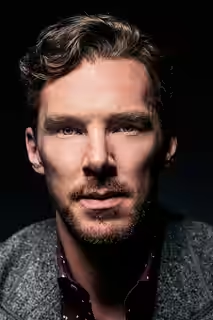
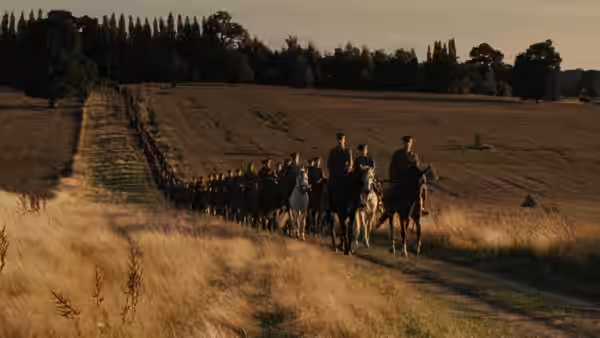
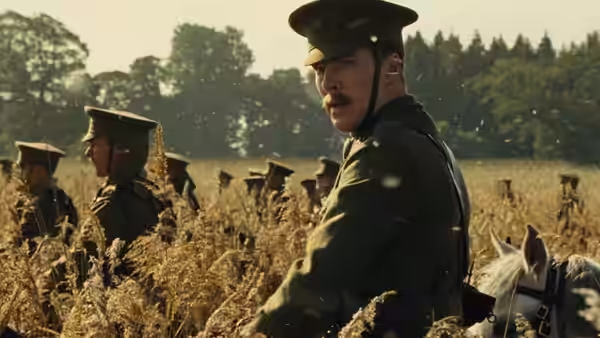
Then the horse goes to war and the film wakes up. Tom Hiddleston’s Captain Nicholls, Benedict Cumberbatch’s Major Stewart and Patrick Kennedy’s Lieutenant Waverly lead a cavalry charge on a German camp, and Spielberg stages it as a nineteenth-century idea running into a twentieth-century gun. Sabres come up, horses go flat out through long grass, and then Michael Kahn cuts to the machine guns, and then to the trees, where the horses run on with nobody riding them. Nothing is shown that would trouble a 12A. We were shaken anyway.

The middle is episodes. Two German brothers, Gunther (David Kross) and Michael (Leonard Carow), take Joey and make a decision we will not describe. A French girl, Emilie (Céline Buckens), hides him in the windmill where she and her grandfather make jam. Each chapter ends when the plot needs the horse elsewhere and leaves its people behind, so we are forever being handed to strangers and asked to mind about them. Niels Arestrup, as the grandfather, gives the best human performance in the film, a man who has settled on gentleness as a policy. Rick Carter’s mill and its kitchen look lived in, and Joanna Johnston’s uniforms fade and stain as the war goes on.

Late on, Joey is tangled in barbed wire between the lines, and a Geordie soldier (Toby Kebbell) climbs out under a white flag to cut him free while a German does the same from the other side. For a few minutes there is almost no music, a joke about wire cutters and two frightened men doing a job. It moved us more than we thought possible, because for once nobody was telling us to be moved. It is also the only scene where the film’s idea, that the horse is the one thing both armies can agree on, is shown rather than announced. Then John Williams comes back.

He is rarely away. Williams’s score sits under nearly every scene, strings for Devon, brass for the army, a solo horn whenever Joey looks at a horizon, and it is mixed to lead rather than follow. We resisted it and then resented it, because it kept arriving a beat before the image had finished. Kamiński has the same habit at the close, lighting the final stretch in an orange no English sky has managed. Both men are doing what Spielberg asked.

Against his own record it sits between two films. E.T. (1982) trusted a boy and a creature to carry a picture without a war behind them; Saving Private Ryan (1998) trusted the war to carry itself without a violin. War Horse wants both and keeps propping each up with the other. See it with children, who have not yet learned to distrust a string section and who will remember the charge and the wire. Adults will admire those two scenes and check the time during the jam.

Critical consensus AI synthesised

58
Positive
8
Mixed
4
Negative
5
Empire
4 January 2012 · ★★★★ · Ian Freer
80

Spielberg delivers bold, exquisite family filmmaking in the grandest Hollywood tradition, channeling classic movie traditions with virtuoso direction and emotional sincerity. The film excels in its sweeping combat sequences and tender human moments amid the horse's journey, though it may not match his more complex works.

Read the full review →
Time Out
16 December 2011 · ★★★★ · Joshua Rothkopf
80

Spielberg's most potent and poetic work in years captures the power of wordless images in its epic tale of a boy and his horse amid WWI, evoking classic Hollywood simplicity despite some missing anchors.

Read the full review →
The Hollywood Reporter
15 December 2011 · Todd McCarthy
70*

The critic describes it as a grandly made, tear-jerking film for all audiences in the style of old Hollywood, praising its universal themes and Spielberg's cinematic skill in capturing the boy-and-horse story against a war backdrop. He notes that the film accentuates the story's one-dimensionality and sentimentality compared to the stage version.

Read the full review →
The New York Times
22 December 2011 · A.O. Scott
70*

The critic urges surrender to the film's sincere, old-fashioned emotional appeals and its tribute to honest storytelling traditions. The sweeping adaptation is praised for its cinematic craft and ability to move audiences despite potential cynicism.

Read the full review →
Total Film
22 December 2011 · James Mottram
70*

War Horse is a wholesome, nostalgic throwback that feels purpose-built for Spielberg's heart-plucking style, with enthralling battle scenes and old-fashioned appeal. It stumbles in pacing early on and with an overindulgent score, but delivers a picaresque tale of endurance that engages despite some actor limitations.

Read the full review →
Little White Lies
13 January 2012 · 4/3/3 · Adam Woodward
60

Spielberg delivers a hybrid of stage-influenced theatricality and cinematic war spectacle that feels over-sentimental and bloodless, with flashes of brilliance in the battle scenes undermined by cheesy dialogue and lack of nuance.

Read the full review →

Straight answers AI written, from our review

Is War Horse worth watching?
War Horse is worth watching for families and for anyone who wants Spielberg working at full scale, and we scored it 62. Two sequences, the cavalry charge and the horse in the wire, are as good as anything he has made, but the Devon opening and the episodic middle are handsome and forever telling you what to feel. Adults may check the time during the jam-making.
How long is War Horse, and what is it rated?
War Horse runs 2h 26m and is rated PG-13 by the MPA in the US. It is a war and history film.
Where can I watch War Horse in the US?
War Horse is available to rent from Amazon Prime Video and Apple TV from $3.99. Availability is checked daily; the links above go straight to each service.
How violent or frightening is War Horse, and is it suitable for children?
War Horse is a 12A that shows a First World War cavalry charge running into machine guns and a horse tangled in barbed wire, but nothing that would trouble the certificate. The frights come from the idea rather than the image, and we were shaken anyway. Children old enough for the horrors of war in outline should be fine; the horse's suffering is the hardest part.
How does War Horse compare to Kes?
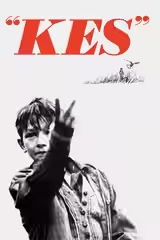
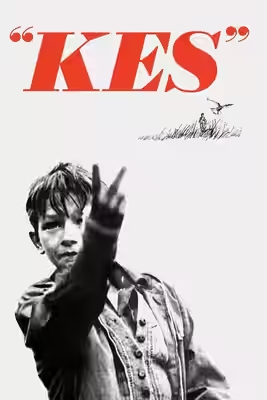
War Horse and Kes are both about a boy and an animal, but Loach's film is rougher, funnier and carries the class anger that Spielberg's Devon leaves out. Kes is the better film, and the one that trusts a child to hold the screen without an orchestra. War Horse is the choice for a family evening and for spectacle; Kes for anyone who wants to be told the truth.
Is War Horse based on a true story or a book?
War Horse is based on Michael Morpurgo's children's novel of the same name, which was also a stage hit with puppet horses before Spielberg filmed it. It is not a true story, though it is set among real events of the First World War. Knowing the book is not necessary; the film explains itself at every turn, often more than it needs to.
What should I watch after War Horse?
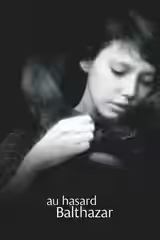
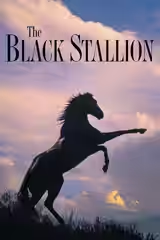
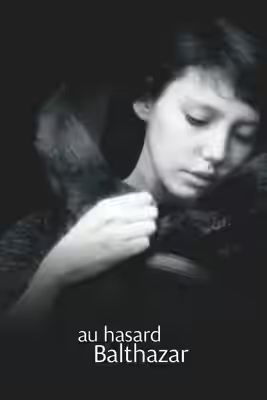
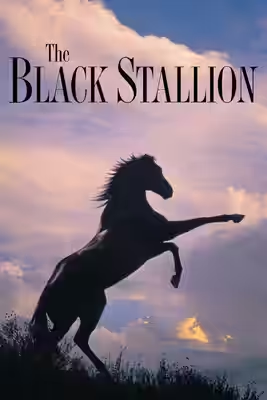
After War Horse, try Au Hasard Balthazar (1966, Fi1m 90): Bresson’s donkey passes from owner to owner without a single violin to help him. Then The Black Stallion (1979, Fi1m 87): A boy and a horse on a beach, and almost nobody speaks for an hour; and Kes (1969, Fi1m 88): Loach’s Yorkshire boy and his kestrel, with the class anger Spielberg’s Devon leaves out.

Cast

Awards

Academy Awards, 2012

Nominated
Best Cinematography
Nominated
Best Original Score
Nominated
Best Picture
Nominated
Best Production Design
Nominated
Best Sound
Nominated
Best Sound Editing

If you liked this, try…

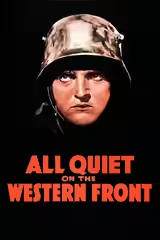
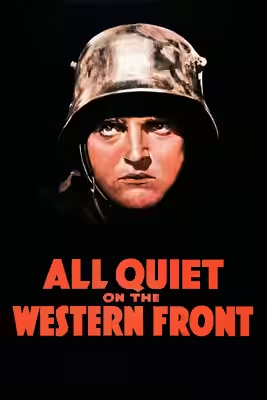
  1. All Quiet on the Western Front (1930) · not reviewed yetThe trench film Spielberg’s charge is remembering, and far less willing to comfort you.

  2. Au Hasard Balthazar (1966, Fi1m 90)Bresson’s donkey passes from owner to owner without a single violin to help him.

  3. The Black Stallion (1979, Fi1m 87)A boy and a horse on a beach, and almost nobody speaks for an hour.

  4. Kes (1969, Fi1m 88)Loach’s Yorkshire boy and his kestrel, with the class anger Spielberg’s Devon leaves out.

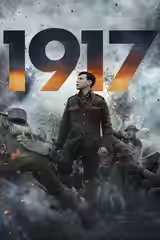
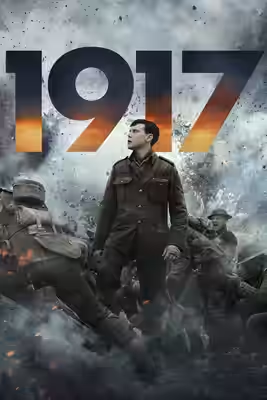
  5. 1917 (2019, Fi1m 78)The same mud from ground level, one long take and no horse to carry it.

Free account

Know what to watch tonight

Two lists that know where things are streaming, collections you can share, your own score beside ours, and Discover that remembers what you have seen.

  • Want to see, sorted by what is streaming now
  • Seen, with your score out of ten
  • No adverts, ever