Barry Pepper makes supporting soldiers and men of duty immediately recognisable. We value his precision, while Saving Private Ryan also shows its limits: a firm first impression needs writing that will take the character further.
Fi1m perspective
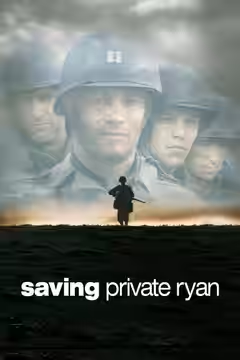
Barry Pepper’s sniper quotes the Bible in Saving Private Ryan (1998), giving Private Jackson a habit we can recognise before we know much about him. Pepper makes him readily distinguishable among the soldiers, though Robert Rodat’s screenplay too often stops once each man has an attitude. We were frightened and exhausted by Steven Spielberg’s combat sequences. Pepper helps the ensemble hold together, but he cannot make every conversation between battles interesting.
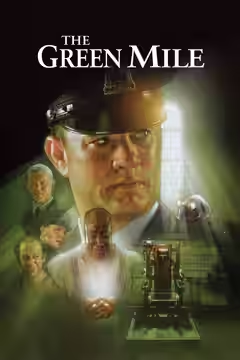
The Green Mile (1999) followed that breakthrough, with Pepper playing Dean Stanton for Frank Darabont and working alongside Tom Hanks again. We rate the prison fable, though Hanks and Michael Clarke Duncan do most to earn its sentiment, and its length tests our patience. Those two films established the pattern of an actor finding his place within large dramatic ensembles. Much of his subsequent film work has been in supporting roles, which seems a poor reason to undervalue an actor good at making an immediate impression.
Historical characters offered another use for his attention to particulars. He played baseball player Roger Maris in 61\ (2001), then Sergeant Michael Strank in Clint Eastwood’s Flags of Our Fathers (2006). He researches real figures and has described staying in character throughout production, though preparation alone is no reason to praise a performance. The Coen brothers’ True Grit* (2010) gave him the villainous role of Lucky Ned Pepper. That part is a useful corrective to the idea that he can only play principled men.
We value Pepper most as an ensemble actor, where a quickly established identity gives the leading performance someone definite to meet. The limitation in Saving Private Ryan is how seldom the writing asks Jackson to complicate that first impression. We would welcome a substantial part that lets Pepper hesitate or reconsider, rather than treating promotion to leading man as an achievement in itself. Start with Spielberg’s film, and allow for some familiar talk between the fighting.
Biography
Barry Robert Pepper is a Canadian-American actor. He was born on 4 April 1970 in Campbell River, British Columbia, Canada. He studied acting at the Vancouver Actors Studio and began his career with a recurring role on the Canadian television series Madison.
Pepper gained prominence for his role as Private Daniel Jackson in Saving Private Ryan (1998). His other notable film roles include Dean Stanton in The Green Mile (1999), Roger Maris in 61 (2001), Lucky Ned Pepper in True Grit (2010), and Vince in the Maze Runner sequels The Scorch Trials (2015) and The Death Cure* (2018).
In 2011, Pepper won the Primetime Emmy Award for Outstanding Lead Actor in a Miniseries or Movie for portraying Robert F. Kennedy in the miniseries The Kennedys. He has received Screen Actors Guild Award nominations and a Golden Globe Award nomination.