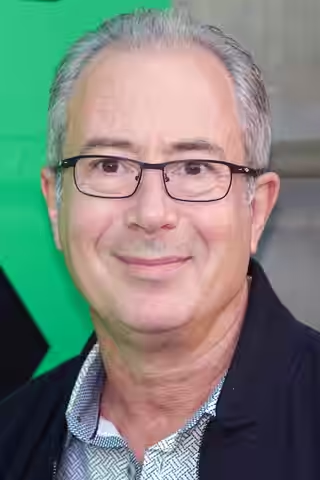
Ben Elton puts clever wordplay and lavatory jokes in the same sentence, and with Richard Curtis on Blackadder he wrote some of the sharpest comedy British television has made. On his own, the pace sometimes runs ahead of the point.
Fi1m perspective
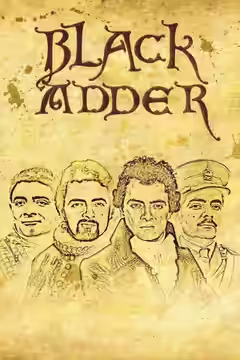
The Elton scene, when it works, is one man explaining something to another man who will never understand it. In Blackadder II Rowan Atkinson's Edmund is the only intelligent person in Elizabethan England and Baldrick is the stupidest, and nearly every scene is the first trying to get an idea into the second and failing. The lines do two jobs at once. They are built like proper prose and they land on a joke about the privy. Wordplay and filth in the same sentence is Elton's trademark, and nobody has done it better.
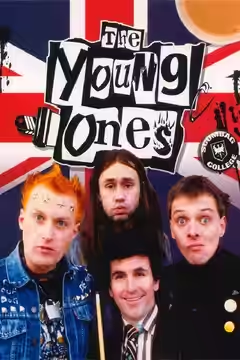
He came out of the Comedy Store, compèring and talking fast, and his first television job of consequence was The Young Ones (1982), written with Rik Mayall, Alexei Sayle and Lise Mayer. It gave Mayall and Adrian Edmondson dialogue that rewarded their appetite for excess, and it also showed the fault we have noticed in him since: the weaker passages keep pushing after the point is made, and by the end of a 29-minute episode the insistence can wear you out. Then in 1985 he sat down with Richard Curtis. Blackadder II, first shown on 9 January 1986, fixed a floundering show at a stroke, moving it indoors to two or three rooms and a door and making Edmund the schemer he stayed. Blackadder the Third (1987) did it again in the Regency, and Blackadder Goes Forth (1989) took the same shape to the First World War, which is where most people think the series peaked.
What Curtis seems to have supplied was the brake. Left to himself Elton writes generously and at speed, and the solo sitcoms show both. Filthy, Rich & Catflap (1987) put Mayall and Edmondson back in a room; The Thin Blue Line (1995) gave Atkinson a police station and a gentler tone; Upstart Crow (2016) put Shakespeare in a sitcom, which is Elton's period instinct at its most obvious. He has also written the books for musicals, We Will Rock You (2002) among them, and novels since Stark in 1989. The later work has drawn mixed and sometimes hostile reviews, and some of those reviews are plainly about the man on the 1980s stage rather than the script in front of them.
We still laugh at Blackadder II, out loud and not politely, at the moment Edmund lays out a plan of real ingenuity and Baldrick fails to follow a word of it. It works because the intelligence in the line is not faked; Elton and Curtis wrote a clever man, not a man the script tells us is clever. That is the thing Elton can do that few others can, and it is why the two Curtis years matter more than the four decades either side.
If you are new to him, start with Blackadder II and skip the first series, which he did not write. If you are returning, the solo work is worth an evening with expectations lowered. He has never lost the speed. What comes and goes is someone at the desk telling him when the joke has landed.
Biography
Ben Elton is a British writer, actor and stand-up comedian. He co-wrote the BBC sitcom The Young Ones (1982–1984) with Rik Mayall and Lise Mayer, and co-wrote the second, third and fourth series of Blackadder (1985–1989) with Richard Curtis.
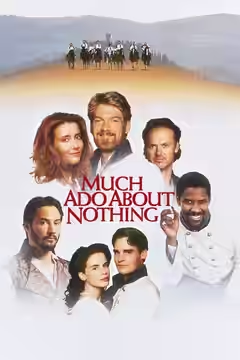
Born in London on 3 May 1959, he graduated from the University of Manchester. Elton has written for series including The Thin Blue Line (1995–1996) and created Upstart Crow (2016–2020). He has acted in The Young Ones, Blackadder the Third (1987) and Much Ado About Nothing (1993).
His stage work includes the musical We Will Rock You (2002), co-written with Queen. He received a BAFTA TV Award for Best Comedy Series for Blackadder Goes Forth (1989).