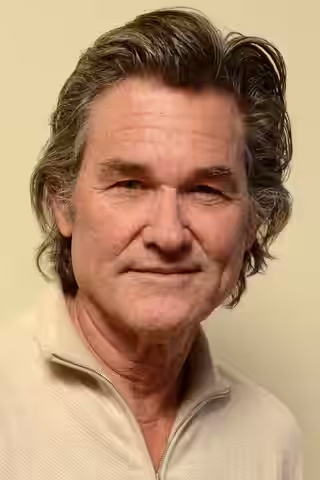
Kurt Russell makes a man's misplaced confidence funny without asking us to despise him. We rate his willingness to look foolish and his ease in quieter scenes, though the scripts are less reliable than the actor.
Fi1m perspective
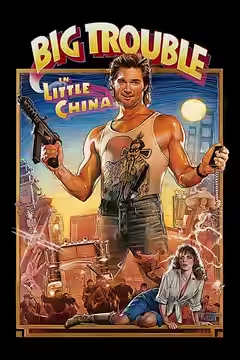
Jack Burton talks as though being the loudest man present qualifies him to lead. In John Carpenter's Big Trouble in Little China (1986), Russell lets us see the confusion behind the confidence without signalling a joke with every line. We laughed because Jack kept claiming control of situations he barely understood. There is affection in the playing, which makes the incompetence tolerable even when the fighting grows cumbersome.
Carpenter had already cast him as Snake Plissken in Escape from New York (1981) and MacReady in The Thing (1982). Those earlier roles help explain why Jack's confidence seems plausible for even a moment. Their five collaborations, spanning 1979 to 1996, offer the clearest account of what Russell can do. In Big Trouble in Little China, Carpenter and Alan Howarth's music keeps the adventure moving without demanding that we take Jack as seriously as he takes himself.
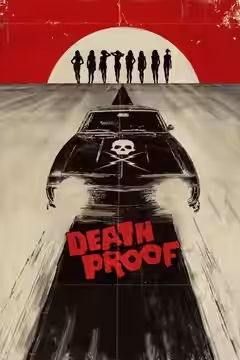
Quentin Tarantino finds something less comfortable in the same ease. As Stuntman Mike in Death Proof (2007), Russell sits at a bar eating nachos and listening, and the scene becomes more threatening whenever we return to him. His disappointment when a young woman fails to recognise the television programmes he did stunts on is funny and faintly pathetic. He keeps the courtesy and the danger present together. The performance makes the long wait through the bar talk bearable, though we still wish the film would get on with it.
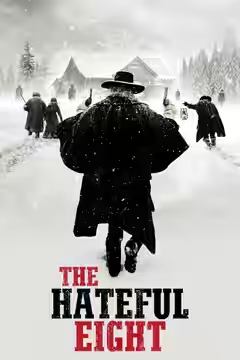
In The Hateful Eight (2015), Tarantino gives Russell less opportunity for that ambiguity. His bounty hunter John Ruth has a thick moustache, a barking delivery and a readiness to hit his prisoner. Russell makes the unpleasantness plain, but the performance offers less to discover than Mike's patient listening. The cast makes the film worth considering, with firm warnings about its length and cruelty.
The quieter scenes in The Madison (2026) suggest where we would like to see more of him. His Preston Clyburn is an older man who does not explain his feelings, and opposite Michelle Pfeiffer he makes familiarity convincing through what the pair leave unsaid. Their scenes give Taylor Sheridan's thinly written series some badly needed feeling. We would welcome another pairing with Pfeiffer, preferably in something more worth their trouble.
Biography
Kurt Russell is an American actor. Born in Springfield, Massachusetts, he began his career as a child actor, appearing in the television series The Travels of Jaimie McPheeters (1963–1964). In the late 1960s he signed a ten-year contract with The Walt Disney Company and starred in films including The Computer Wore Tennis Shoes (1969), Now You See Him, Now You Don't (1972) and The Strongest Man in the World (1975).
Russell received a Primetime Emmy Award nomination for his portrayal of Elvis Presley in the 1979 television film Elvis. He collaborated with director John Carpenter on Escape from New York (1981), The Thing (1982) and Big Trouble in Little China (1986). His later credits include The Hateful Eight (2015) as John 'The Hangman' Ruth, Death Proof (2007) as Stuntman Mike and the series The Madison (2026) as Preston Clyburn.