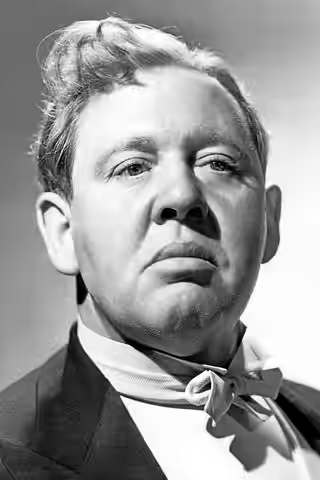
Charles Laughton could be the largest thing in any room, and often was. His best work is quieter: a father who waits rather than shouts, and the one film he directed, which has him nowhere on screen and everywhere in it.
Fi1m perspective
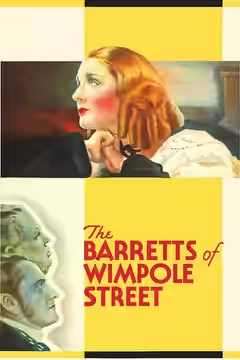
Watch what Charles Laughton does when he is not talking. In The Barretts of Wimpole Street (1934) he brings his invalid daughter a tankard of porter she has said she cannot face, and instead of arguing he waits, and prays over her, and tells her she will drink it because he asks. Everyone else in that upstairs room sits. He stands, in the doorway or over the sofa, and William H. Daniels keeps him at the edge of the frame so that Elizabeth's bedroom seems smaller once he is in it. We were frightened of him, more than a frock coat and a costume drama had any right to manage, and it was the patience that did it. Of that film's censored script he said, "They can't censor the gleam in my eye," and he was right.
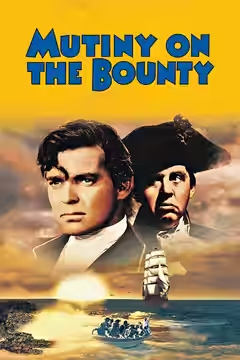
He came to films from the London stage, where he first appeared professionally in 1926, and to Hollywood in 1932. The title part in The Private Life of Henry VIII (1933) made his name, and for a decade he was the man you sent for when a script called for a king, a tyrant or a monster: Captain Bligh in Mutiny on the Bounty (1935), Quasimodo in The Hunchback of Notre Dame (1939). The complaint against him has always been the same, that he could not leave a scene alone, and there are films from the 1940s where colleagues and critics found him hammy. We would not defend all of it. The fault is the other side of the gift; a man who can shrink a room by standing in it will sometimes stand in it too long.
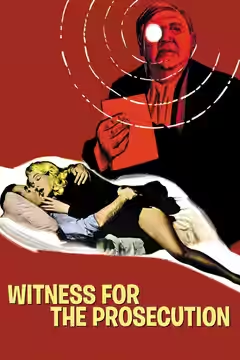
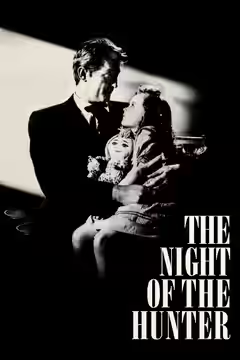
The fifties were his best years, and he spent them on both sides of the camera. There was a comic turn for David Lean in Hobson's Choice (1954), and then, in 1955, he directed The Night of the Hunter and never directed again. Stanley Cortez shot it in black and white with almost nothing in between, Lillian Gish was used as the face of silent cinema she had been, and Billy Chapin carried the middle of the film on a child's face that had learned to give nothing away. We would send a stranger to see it. Two years later Billy Wilder gave him Sir Wilfrid in Witness for the Prosecution (1957), and the old habits came out to play: the performance is broad, sometimes insistently so, and the vanity is funny because the mind behind it never stops working. It helps that Elsa Lanchester, who made ten films with him, is on hand as Miss Plimsoll to refuse to be impressed. Laughton was always better with someone prepared to argue back. By Spartacus (1960) and Advise & Consent (1962) he had found a measured restraint that the younger man rarely bothered with.
Start with Witness for the Prosecution if you want the show, and The Barretts of Wimpole Street if you want to know why the show was worth sitting through. Then see the one film he directed, and wonder, as we do, what the second would have been.
Biography
Charles Laughton (1899–1962) was an English actor, director and screenwriter. He trained at the Royal Academy of Dramatic Art in London and made his professional stage debut in 1926. In 1927 he appeared in a play with Elsa Lanchester, whom he later married; the couple worked together until his death.
Laughton appeared in numerous British and Hollywood films, including Mutiny on the Bounty (1935) and The Hunchback of Notre Dame (1939). He directed and co-wrote the screenplay for The Night of the Hunter (1955) and played Sir Wilfrid in Witness for the Prosecution (1957). He also directed stage productions such as The Caine Mutiny Court-Martial.