Chen Kaige is at his most persuasive when the people in his historical dramas matter more than the spectacle. We rate Farewell My Concubine highly for precisely that reason, despite plotting that sometimes pushes too hard.
Fi1m perspective
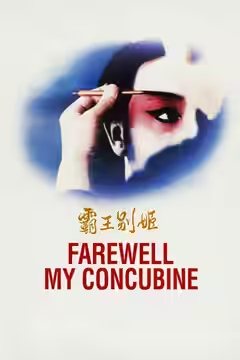
In Farewell My Concubine (1993), two Peking Opera performers cannot keep their feelings out of their work. Chen Kaige lets us see why they remain attached even when they are making each other unhappy. We were moved by that persistence, because he makes their attachment understandable without pretending it is good for them. Leslie Cheung gives the troubled relationships their force. This is the Chen we rate highly: a director who allows people to be difficult without making us give up on them.
Chen began directing with Yellow Earth (1984), as part of China’s Fifth Generation of filmmakers. His collaborators include cinematographer Zhang Yimou, and the early work gives considerable attention to landscape and austere rural settings. Later came the elaborate period reconstructions of films such as Temptress Moon (1996) and The Emperor and the Assassin (1998). Personal betrayal recurs across his work, giving those broad historical stories something painful to concentrate on.
Farewell My Concubine shows why that interest suits him. Across its 171 minutes, the performers’ different wants remain clear, so the long span of Chinese history never becomes the only thing to attend to. The plotting sometimes pushes too hard, insisting on pain that the actors have already made us understand. We would welcome a little less insistence from the plot; the performances already give us ample reason to stay.
He also made the English-language thriller Killing Me Softly (2002) and the intimate father-son story Together (2002), so scale has never been his only interest. The fantasy The Promise (2005) brought complaints about convoluted plotting and stylistic excess. Large historical productions became more prominent from the 2010s, with Chen co-directing The Battle at Lake Changjin (2021). That makes for a less tidy career than a few sumptuous images might suggest. Start with Farewell My Concubine, and set aside an uninterrupted evening for Cheung.
Biography
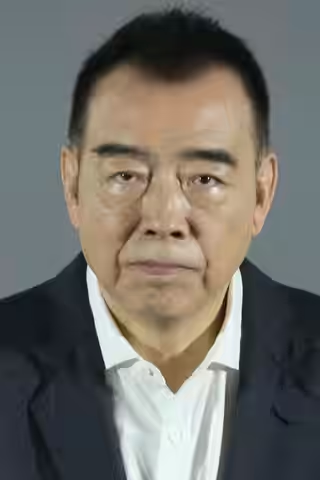
Chen Kaige (born 12 August 1952) is a Chinese film director. He graduated from the Beijing Film Academy in 1982 after earlier work in a film processing factory and service in the People's Liberation Army. He belongs to the fifth generation of Chinese filmmakers.
His first feature was Yellow Earth (1984). He is best known for Farewell My Concubine (1993), which shared the Palme d'Or at the Cannes Film Festival. Other films he has directed include The Emperor and the Assassin (1998), The Promise (2005) and The Battle at Lake Changjin (2021).
Chen has been married to actress Chen Hong since 1997. They have two sons.