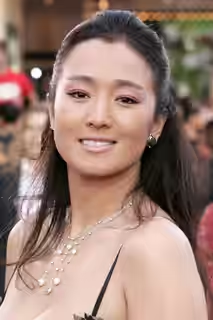
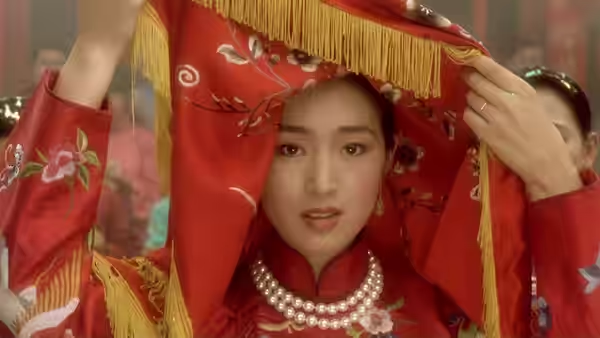
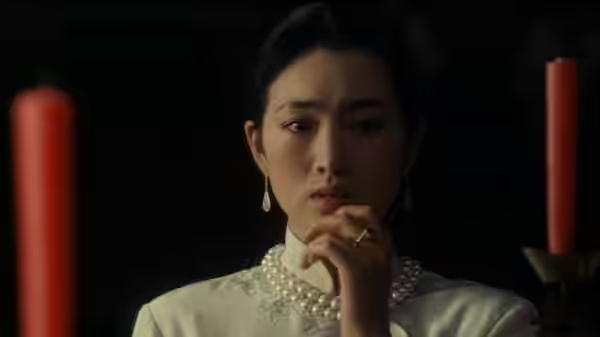
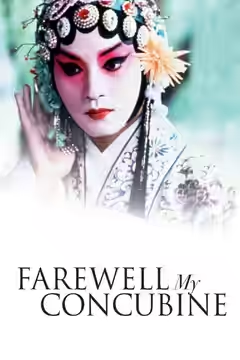
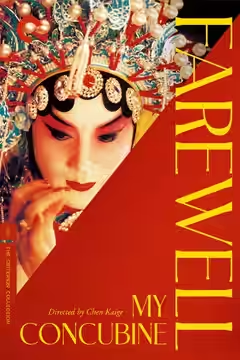
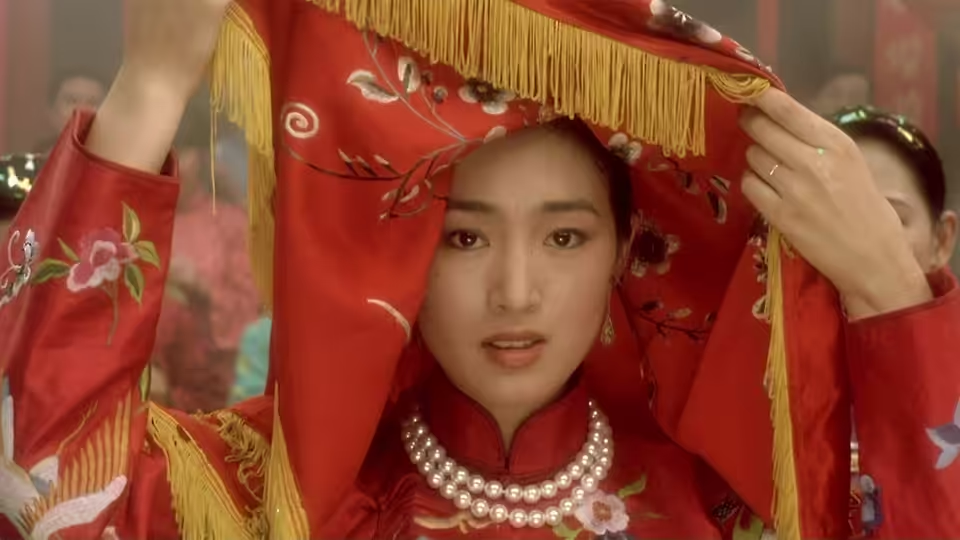
Juxian (Gong Li) lifting a red veil over her head
Film review

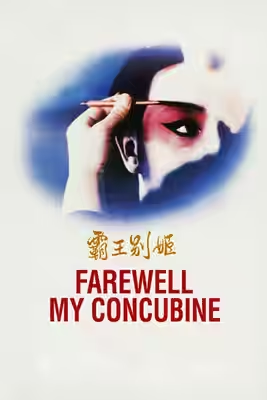
Farewell My Concubine

1993 · Directed by Chen Kaige · 2h 51m · MPA R

In a sentenceA lifetime in opera is a long time to wait for someone to love you back

Cheng Dieyi (Leslie Cheung) and Duan Xiaolou (Zhang Fengyi) are Peking Opera performers whose relationship begins in childhood training. As their careers develop, the bond between them becomes entangled with unrequited love. Juxian (Gong Li) enters their lives, forming a triangle in which personal loyalties are difficult to separate from their work on stage. Their story stretches across decades of Chinese history, as political upheaval puts pressure on the performers and their relationships. Directed by Chen Kaige, the film follows people trying to sustain an artistic partnership while facing demands that extend beyond the theatre.

Plays from YouTube when you press play; nothing loads from them until then.

Fi1m review

Chen Kaige’s drama makes its long span of Chinese history painfully personal, with Leslie Cheung giving its troubled relationships their force. The plotting sometimes pushes too hard, but the performances warrant all 171 minutes.

Chen Kaige’s Farewell My Concubine is absorbing enough to justify its 171 minutes, even when the plotting pushes too hard. It follows two Peking Opera performers through decades of Chinese upheaval, asking what happens to a partnership when the people in it want different things. They cannot easily keep their feelings out of their work, and Chen gives that difficulty time to become painful. He lets us understand why these people remain attached to one another even when they are making one another unhappy.

The early opera-training sequences establish what becoming a performer costs. We were horrified by the brutality towards the children, because the suffering is treated as an ordinary part of learning an art. The film makes it difficult to enjoy the accomplished performances later without remembering how that accomplishment is produced. Chen gives the training enough attention that it continues to trouble us when there are other things happening on screen.

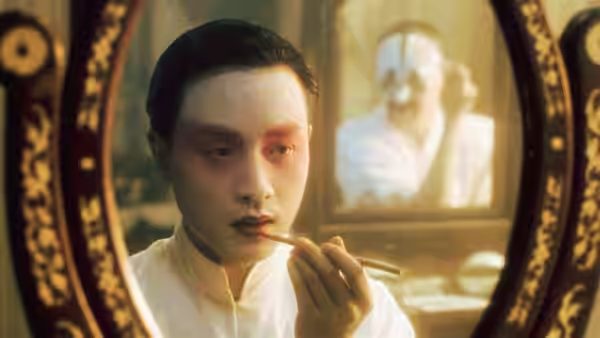
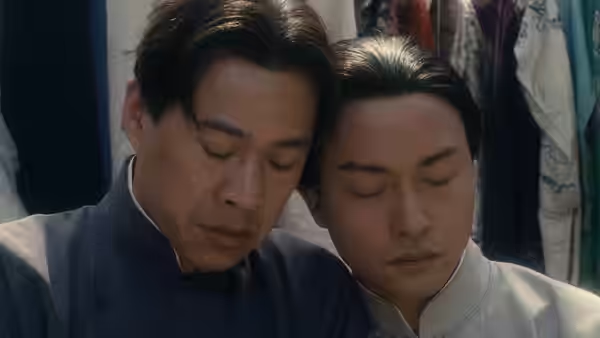
Leslie Cheung’s Cheng Dieyi is the strongest reason to keep watching. Cheung makes Dieyi’s attachment to his partner seem so necessary to him that his difficult behaviour remains comprehensible, even when it is hard to forgive. Zhang Fengyi’s Duan Xiaolou seems more able to separate the partnership from the rest of his life, and the difference makes their scenes together hurt. Zhang gives Cheung plenty to respond to without making Xiaolou’s feelings conveniently match Dieyi’s.

Gong Li’s Juxian could easily have been treated as an inconvenience in a story about two men. Gong makes that reading difficult by giving Juxian’s wants the same weight as theirs. She makes her claims on their shared life seem reasonable, even when they put the partnership under strain. The screenplay by Lu Wei and Lilian Lee Bik-Wah is strongest in this close, unhappy company, where understanding another person’s pain does not prevent anyone from adding to it.

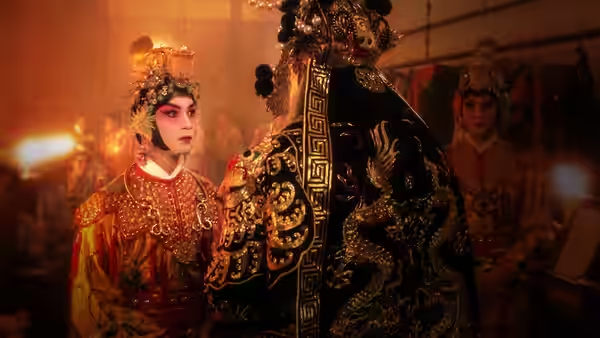
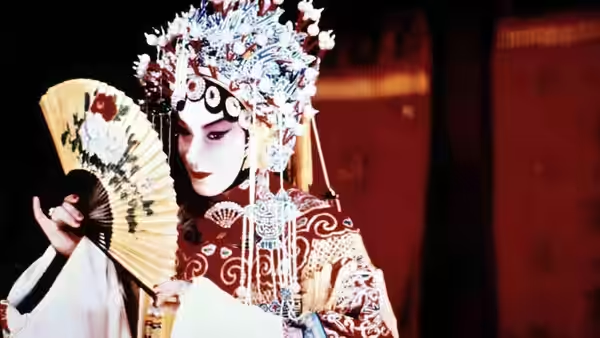
Gu Changwei’s cinematography gives the opera performances a richness that helps us understand why the characters remain committed to their work. Chen Changmin’s costumes make that commitment visible in the care of their stage appearance. Production designers Yang Yu-He and Yang Zhanjia give the theatre a similar pull, although the beauty can sometimes make these unhappy lives look too carefully arranged. The film needs the attraction of performance to be persuasive, and these crafts make it so.

Pei Xiaonan’s editing keeps the long story moving, but the screenplay sometimes presses the characters through one crisis before we have absorbed the last. This is where the historical sweep starts to feel cramped, despite the running time. The music, credited to Jonathan Lee and Zhao Jiping, can add more emotional weight than the performances need. These stretches would benefit from less insistence, because Chen has already given us ample reason to care.

Within historical melodrama, Chen’s film stands out for treating private jealousy as seriously as public danger. Its characters would have enough difficulty living together even in a country that left them alone. Set aside the full evening, and do not choose it when anyone needs cheering up.

Critical consensus AI synthesised

75
Positive
7
Mixed
0
Negative
2

Most critics like it, and the praise clusters in the same places. The reviews follow two Peking Opera actors through half a century of Chinese history and admire how their loyalties and betrayals track the country’s upheavals. The photography and production values draw the warmest words, with the film’s sweep and its look mentioned in almost every notice. Leslie Cheung’s performance is singled out, and several critics find the long running time earned rather than endured.

The dissent is small but sharp. Two critics hold out, and both object to the storytelling rather than the look. The Independent finds the plotting overambitious and the point of view confused, and calls the melodrama manipulative. Variety finds the film seductive to look at but emotionally uninvolving, with a lopsided script that never examines the characters’ sexual or emotional lives. Even the admirers concede the grimness; The New Yorker credits brisk direction with keeping it from sinking into pathos.

Empire
1 January 2000 · Phillipa Bloom
90*

The critic highlights the film's epic sweep through Chinese history via the lives of two Peking Opera stars, their bond, unrequited love, and the political turmoil, calling it a fascinating, beguiling and tragic portrait that triumphs despite its dangers.

Read the full review →
Film Comment
1 July 1993 · festival review
90*

The critic calls Farewell My Concubine a knockout that blends passion and precision, more than worthy to share the Palme d’Or. It is praised as a fearless denunciation of regimes that stifle life and art, while delivering nonstop entertainment value over 170 minutes.

Read the full review →
Los Angeles Times
22 October 1993 · Kenneth Turan
90*

This gorgeous, intoxicating epic is a slow, confident journey through modern Chinese history that marks the coming of age of Chinese cinema. Exceptional performances, especially Leslie Cheung's, and lush visuals make it unforgettable.

Read the full review →
Time Out
10 September 2012 · GA
90*

Chen Kaige shifts to a direct approach charting the troubled relationship of two Peking Opera actors from 1925 to 1977, mirroring China's upheavals through their loyalties, betrayals and support. The visually spectacular epic is sumptuous, intelligent, enthralling and rhapsodic.

Read the full review →
Slant Magazine
28 July 2024 · Clayton Dillard
85*

The film is an epic melodrama blending personal stories with 20th-century Chinese history through the lens of Peking Opera and a tragic love triangle. It stands out for its vivid portrayal of how personal identity and politics intertwine, especially during the Cultural Revolution.

Read the full review →
The New York Times
8 October 1993 · festival review · Vincent Canby
85*

Chen Kaige's epic delivers action, history, exotic color, and a vicious love story rooted in the characters' lives. It is a vastly entertaining spectacle and a recognizable cultural achievement.

Read the full review →

Straight answers AI written, from our review

Is Farewell My Concubine worth watching?
Farewell My Concubine is worth watching for anyone prepared to give a serious, unhappy drama a full evening, and we scored it 85. Leslie Cheung's performance and the long view of two performers' entangled lives justify the 171 minutes, though the plotting sometimes presses through crises too quickly. Do not choose it when anyone needs cheering up.

How long is Farewell My Concubine, and what is it rated?
Farewell My Concubine runs 2h 51m and is rated R by the MPA in the US. It is a drama film.
Where can I watch Farewell My Concubine in the US?
Farewell My Concubine is streaming on MUBI, The Criterion Channel, The Roku Channel, Apple TV and Amazon Prime Video in the US, and it is also available to rent from Amazon Prime Video and Apple TV from $2.99. It leaves The Roku Channel on 5 October. Availability is checked daily; the links above go straight to each service.
How violent or frightening is Farewell My Concubine, and is it suitable for children?
Farewell My Concubine is an adult drama, rated R in the United States, and is not suitable for children. The early opera-training scenes show brutality towards children treated as an ordinary part of learning an art, which horrified us, and the story deals with unrequited love, jealousy and political persecution across decades. The squeamish should be warned about the training sequences in particular.
How does Farewell My Concubine compare to The Red Shoes?
Farewell My Concubine and The Red Shoes both follow performers who cannot keep love safely outside their work, but Chen Kaige's film is the longer and heavier of the two, stretched across decades of Chinese history. Powell and Pressburger's film is more seductive and more urgent, and the one we would recommend to anyone; Chen's rewards those with patience for sustained unhappiness.
Is Farewell My Concubine based on a true story or a book?
Farewell My Concubine is based on a novel by Lilian Lee Bik-Wah, who also co-wrote the screenplay with Lu Wei. It is not a true story, though it sets its fictional performers against real Chinese political upheaval. Knowing the novel is not necessary; the film explains its characters' attachments fully on its own.
What should I watch after Farewell My Concubine?
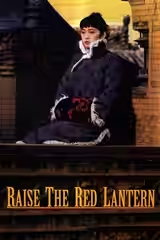
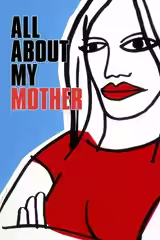
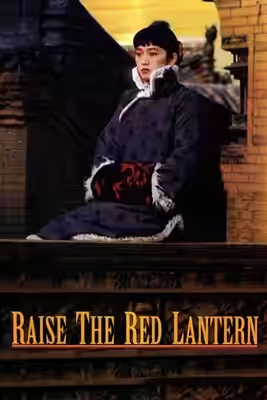
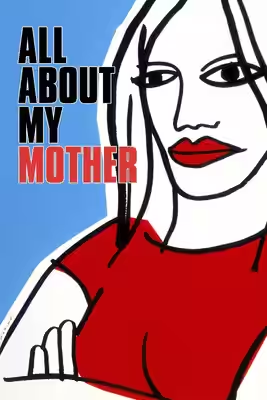
After Farewell My Concubine, try The Red Shoes (1948, Fi1m 92): For another account of performers who cannot keep love safely outside their work. Then Raise the Red Lantern (1991, Fi1m 91): For closely observed cruelty, restricted choices and beauty that makes neither easier; and All About My Mother (1999, Fi1m 88): Theatre, grief and chosen family, with more generosity towards people making mistakes.

Cast

Awards

Academy Awards, 1994

Nominated
Best Cinematography
Nominated
Best International Feature Film

International Submission to the Academy Awards, 1994

Nominated
International Submission to the Academy Awards

Cannes Film Festival, 1993

Won
Palme d'Or

If you liked this, try…

  1. The Red Shoes (1948, Fi1m 92)For another account of performers who cannot keep love safely outside their work.

  2. The Travelling Players (1975) · not reviewed yetAnother acting troupe carries its private troubles through a country’s political upheavals.

  3. Raise the Red Lantern (1991, Fi1m 91)For closely observed cruelty, restricted choices and beauty that makes neither easier.

  4. All About My Mother (1999, Fi1m 88)Theatre, grief and chosen family, with more generosity towards people making mistakes.

  5. The Lives of Others (2006, Fi1m 84)For artists trying to preserve private loyalties under intrusive political scrutiny.

Free account

Know what to watch tonight

Two lists that know where things are streaming, collections you can share, your own score beside ours, and Discover that remembers what you have seen.

  • Want to see, sorted by what is streaming now
  • Seen, with your score out of ten
  • No adverts, ever