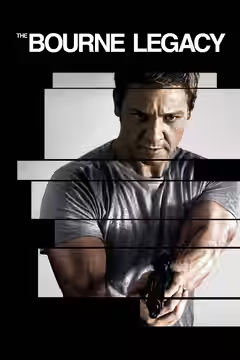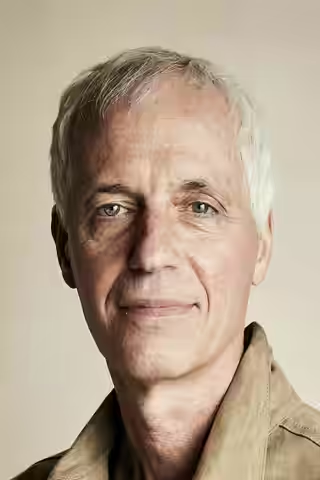
Dan Gilroy writes people who get on in ugly trades and describe themselves in the language of a job application. When he trusts us to notice, as in Nightcrawler, the effect is chilling; when he explains, as in The Bourne Legacy, the film stalls.
Fi1m perspective
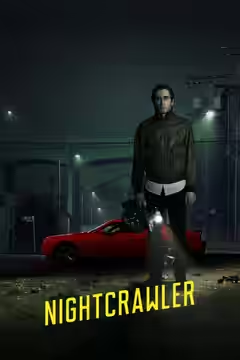
Louis Bloom, in Nightcrawler (2014), films car wrecks for the morning news and talks about it like a man at an interview. He has goals. He is a fast learner. He values the relationship. Gilroy wrote those lines and let Jake Gyllenhaal say them with complete sincerity, and that is the film's best idea: Bloom is frightening because he sounds like a good employee.
The career behind it is an odd shape. Gilroy began as a journalist at Variety, wrote for hire from the late 1980s, got his first produced credit on Freejack (1992), and then spent a long stretch on minor work: Chasers (1994), Two for the Money (2005), The Fall (2006). He shared the screenplay of The Bourne Legacy (2012) with his brother Tony, who directed it. Then, in his fifties, he directed his own script and made the film that the rest had been building towards. Roman J. Israel, Esq. (2017), written for Denzel Washington, and Velvet Buzzsaw (2019), a thriller set in the art world, followed to a more mixed reception, with pacing the usual complaint. Since 2022 he has written six episodes of Andor, the series his brother created.
The subject is nearly always someone prospering in a market for something unpleasant, and the recurring problem is how much Gilroy should say about it. Nightcrawler says the least and works best, though even there our complaint was that noticing suffering is for sale gets treated as the whole argument. The Bourne Legacy says the most. Its first hour is men in shirtsleeves telling each other about a programme, and we were bored, and then cross about being bored, because Robert Elswit's cold Alaskan frames and John Gilroy's patient cutting were plainly waiting outside the door. One scene in a laboratory, early and horrible, frightened us more than any chase in the series, and it is almost wordless. He is at his best when he stops talking.
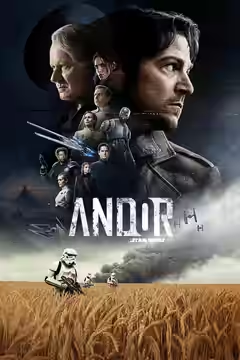
Andor suggests he knows it. The rebellion there is built out of debt, wages and bad decisions rather than speeches, and the patience pays off in people worth caring about, though the opening episodes spread out before the story has a direction. John Gilroy is in the cutting room again, and the family arrangement has started to look like a working method: Tony sets up the world, John cuts it, Dan writes the people trying to get by in it. He said of Bloom, "I did not want a character with an arc." He has held to that. A writer who refuses to let his people change needs somebody else to decide when a scene has gone on long enough, and so far he has been lucky in his brothers.
Biography
Dan Gilroy is an American screenwriter and film director. He was born on 24 June 1959 in Santa Monica, California, and graduated from Dartmouth College.
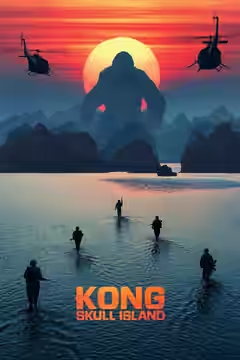
Gilroy began his screenwriting career with credits including Freejack (1992) and The Bourne Legacy (2012), the latter written with his brother Tony Gilroy. He made his directorial debut with Nightcrawler (2014), for which he received an Academy Award nomination for Best Original Screenplay. Other writing credits include Real Steel (2011), Kong: Skull Island (2017) and Roman J. Israel, Esq. (2017).
He wrote six episodes of the Disney+ series Andor (2022–2025), created by his brother Tony Gilroy, and won the Primetime Emmy Award for Outstanding Writing for a Drama Series in 2025.