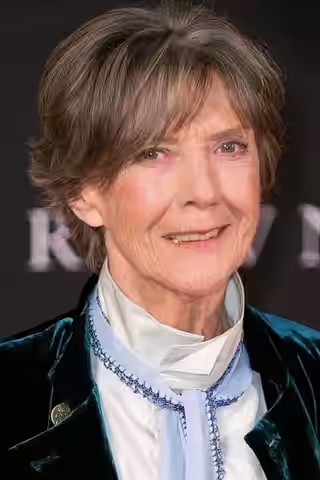
Eileen Atkins makes disapproval sound like a verdict, and she does it without raising her voice. In Cranford and The Dresser that stillness carries scenes the scripts barely wrote; too often since, she has been asked only to repeat it.
Fi1m perspective
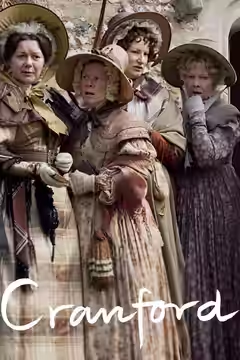
Watch what happens when Miss Deborah Jenkyns disapproves of something in Cranford (2007). She does not lean forward or raise her voice. She states the proper way of doing things, and the matter is closed before anyone has thought of a reply. Eileen Atkins plays her without a wink, never inviting us to laugh at the character behind her back, and the comedy is better for it: we can find the rules absurd and still respect the effort of keeping them. Judi Dench, as her sister Matilda, supplies the doubt and the wish to be kind, and the two performances need each other.
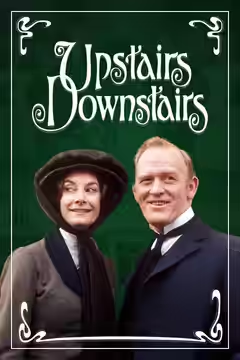
The certainty was earned the long way round. She began as a child tap-dancer in working men's clubs, trained at Guildhall, joined the Royal Shakespeare Company in the late 1950s and made her name on stage as Childie in The Killing of Sister George in 1965. Then, in 1971, she did something actors rarely do: with Jean Marsh she created Upstairs, Downstairs, a series that gave the servants' lives the same weight as the family's and took a harder view of the household than its Edwardian setting suggests. It tells you where her attention goes. Her screen parts, ever since, have tended to be the people doing the work of holding a room together.
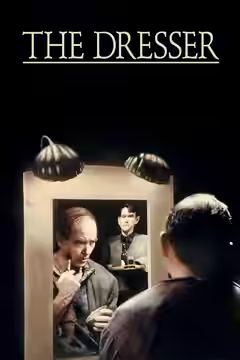
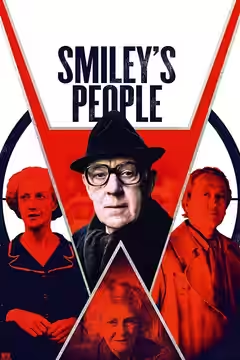
Madge, the stage manager in The Dresser (1983), is ready to cancel the night's King Lear when the film opens, and Ronald Harwood's script gives her little more than a set face for most of the evening. Atkins does more with that face than was written for it, and her late scene with Albert Finney's ruined actor-manager nearly undid us, chiefly because she had spent the preceding hour and a half refusing to ask for our sympathy. In Smiley's People (1982) her Madame Ostrakova is one of the reasons we keep following the plot at all, and in Robert Altman's Gosford Park (2001) she runs the kitchen below stairs as Mrs Croft, in a film whose whole subject is the one she and Marsh had staked out thirty years earlier.
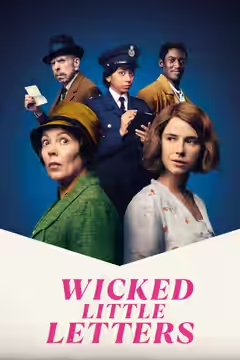
The limit is the casting, not the actress. Television and film have settled on her as the authoritative or eccentric older woman in a period piece, and she is seldom asked to be anything else. Wicked Little Letters (2024) sits her down with Joanna Scanlan and Lolly Adefope to run an unofficial investigation over tea, and their scenes are the warmest in the film and also the most familiar. We have seen her do this. So has she. "There are plenty of parts if you're willing to make yourself look lousy," she has said, which sounds like an offer. Directors keep sending her the tea instead.
Biography
Dame Eileen Atkins is an English actress and writer. She was born on 16 June 1934 in Clapton, London, and trained at the Guildhall School of Music and Drama.
Atkins has worked extensively in theatre, film and television since the 1950s. She is known for film roles including Mrs Croft in Gosford Park (2001), Maddy in Cold Mountain (2003), Madame Kozlova in Paddington 2 (2017) and Mabel in Wicked Little Letters (2024), as well as Queen Mary in the series The Crown (2016).
She co-created the television series Upstairs, Downstairs (1971–1975) with Jean Marsh and has received three Olivier Awards, a BAFTA and an Emmy. She was appointed DBE in 2001.