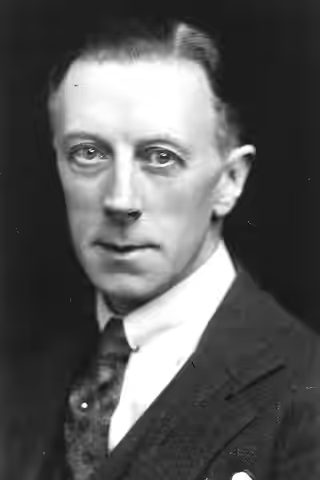
Ernest Thesiger played the thin, fastidious, faintly poisonous gentleman for the best part of thirty years and made him worth watching every time. James Whale found the best use for him, and Bride of Frankenstein is the proof.
Fi1m perspective
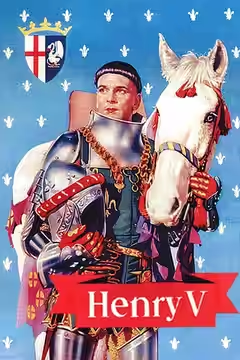
Ernest Thesiger's face arrives before he does. It is long and narrow and it has already decided that the room is beneath it. As the French ambassador in Olivier's Henry V (1944) he delivers his message to the English court looking as though he can smell something faintly off, and he holds that expression for the length of the scene without ever turning it into a joke. A thin man in good clothes, precise about everything and quietly disgusted by most of it: that is what he did, and he did it in horror and in comedy without changing much.
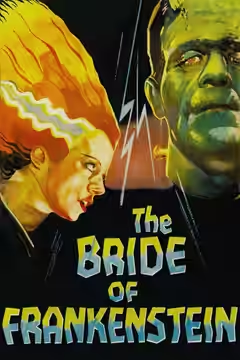
He came to film late. He had been a stage actor since 1909 and a fixture of the West End long before the camera took any interest, and it needed James Whale, whom he had met in 1919, to see what the screen could do with him. Whale cast him as Horace Femm, the host in The Old Dark House (1932), and then insisted on him for Doctor Pretorius in Bride of Frankenstein (1935). They made three films together, two of them with Boris Karloff, and those two are the whole of Thesiger's Hollywood reputation. He then went home and spent the rest of his working life, nearly sixty films of it up to 1961, in supporting parts in British pictures.
Pretorius is the part to see. Thesiger plays a man for whom making life is a hobby, and a slightly disreputable one, like collecting something he ought not to. Colin Clive's Henry Frankenstein sweats and shouts and looks worn out by the work; Thesiger beside him is calm and pleased with himself, and the calm is what frightens. We laughed at him for most of his scenes and then noticed we had stopped, because a man who finds the creation of life this amusing is plainly not going to stop at anything. Whale wanted a horror film that could be funny without laughing at the creature, and Thesiger is the reason the balance holds. He takes the laughs so that Karloff does not have to.
The trouble with a face like that is that directors know exactly what to do with it and rarely want more than a few minutes of it. After 1935 the parts got smaller. Ealing used him as the ancient industrialist Sir John Kierlaw in The Man in the White Suit (1951), and British films of the forties and fifties kept finding him a doorway to stand in and a line to disapprove of. It is hard to imagine him minding. He wrote in an unpublished memoir that he had found great pleasure in needlework, "which, after all, is only another way of making pictures", and his film work has that quality: small, exact, finished in an afternoon, and worth keeping.
Start with Bride of Frankenstein, where Whale gives him a whole film to be appalling in, then The Old Dark House. After that you will be watching British films for a minute of a thin man in the corner, and you will find yourself waiting for it.
Biography
Ernest Frederic Graham Thesiger (15 January 1879 – 14 January 1961) was an English stage and film actor. Born in Chelsea, London, he was educated at Marlborough College and the Slade School of Fine Art before making his professional stage debut in 1909. He appeared in numerous West End productions and received the CBE in 1960 for services to drama.
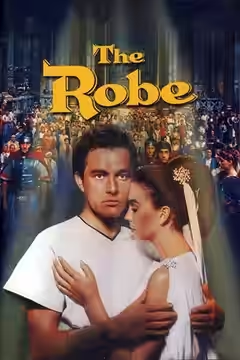
Thesiger is best known for his roles in two films directed by his friend James Whale: Horace Femm in The Old Dark House (1932) and Doctor Septimus Pretorius in Bride of Frankenstein (1935). Other notable film appearances include the Duke of Berri in Henry V (1944), Sir John Kierlaw in The Man in the White Suit (1951), the Undertaker in Scrooge (1951) and Emperor Tiberius in The Robe (1953).