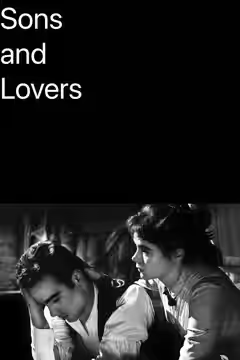
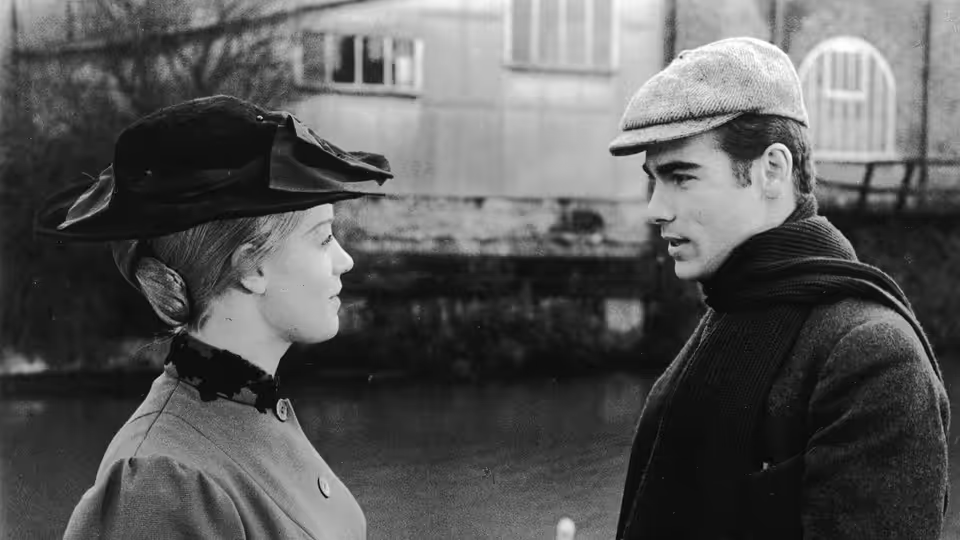
Woman in black hat faces man in flat cap by a canal
Film review

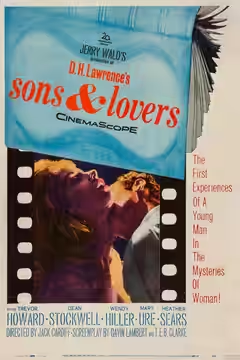
Sons and Lovers

1960 · Directed by Jack Cardiff · 1h 43m

In a sentenceTrevor Howard drinks, Wendy Hiller disapproves, and the boy between them sounds like he is visiting

The Nottinghamshire coalfield, at the turn of the last century. Paul Morel (Dean Stockwell) is the son of a miner, Walter (Trevor Howard), who drinks a good part of his wages, and of Gertrude (Wendy Hiller), who has decided her boy will not go down the pit. Paul wants to paint. His elder brother William (William Lucas) has already got away to a job elsewhere, and Gertrude turns everything she has left on Paul. He takes a clerk’s job in a Nottingham factory under Mr. Pappleworth (Donald Pleasence), walks out to the Leivers farm to sit with the devout, watchful Miriam (Heather Sears), and notices Clara Dawes (Mary Ure), a married woman living apart from her husband Baxter (Conrad Phillips). Between the kitchen, the factory and the farm, his mother is always waiting at the door.

Plays from YouTube when you press play; nothing loads from them until then.

Fi1m review

Jack Cardiff’s version of D. H. Lawrence is beautifully photographed by Freddie Francis and superbly acted by Trevor Howard and Wendy Hiller as the parents. It is also tidy where the novel is raw, and its Paul is a passenger in his own story.

Jack Cardiff, the cinematographer of Black Narcissus and The Red Shoes, took the director’s chair for D. H. Lawrence’s 1913 novel about a miner’s son who wants to paint and a mother who wants it for him more than he does. The screenplay is by T. E. B. Clarke and Gavin Lambert and the whole thing runs 103 minutes, which is quick work for a book that takes its time. What they have made is a handsome, seriously acted, rather careful film. It is worth an evening for the parents and the photography, and it never quite lets Lawrence’s people be as unreasonable as they are on the page.

Freddie Francis shot it in black and white and it is the best-looking thing in the film. The pit village is rows of terraces under a low sky, men coming off shift with their faces black to the collar, a kitchen where the one window puts a hard bar of light across a scrubbed table. Nottingham is trams and stone and shop glass. The Leivers farm is shot soft and grey, so that Miriam seems to live in a different weather from everyone else. Francis does not prettify the coal; he finds the one clean line in every dirty room and lets the people stand in it.

Trevor Howard plays Walter Morel as a man who lost the argument in his own house years ago and still turns up for it every night. He comes home from the pit, sits stripped to the waist while Wendy Hiller washes his back, and neither of them says a word, and we were moved more than we expected to be, because for a minute you can see the marriage that was there before the drinking and the disappointment. Then he goes out, and comes back loud, and the children go quiet. Howard never asks us to forgive Walter. He only shows us that the man knows.

Hiller is his match. Her Gertrude is not a monster and the film is right not to make her one; she is a clever woman with nowhere to put her cleverness except her sons, and she puts it there with a force that would frighten a grown man. Watch her face when Paul talks about London. She wants him gone and cannot bear it, and Hiller does both at once without moving very much.

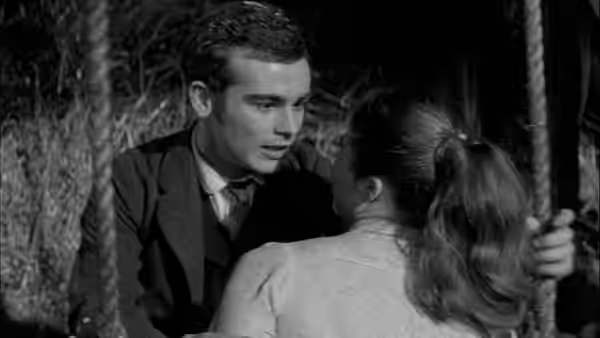
The trouble is Paul. Dean Stockwell is an American in a Nottinghamshire kitchen, and the accent is the least of it; the reviews have picked at the voices and they are right to, but a wrong vowel is forgivable. What is harder to forgive is that the script gives Paul nothing to want except the escape his mother wants for him. Stockwell is handsome and attentive and he listens well, and for long stretches that is all he is asked to do. Heather Sears is good at the stillness of Miriam, a girl who has made a religion of holding back. Mary Ure’s Clara comes in with more life than the film knows how to use, and Conrad Phillips, as her husband, is around for exactly as long as the plot needs him. Donald Pleasence gets a couple of dry scenes as the factory overseer and makes a meal of each.

Clarke and Lambert have cut the novel’s first half, the marriage and the elder brother, down to a prologue so as to reach the two women faster. That is a defensible choice and it costs them the ground the rest stands on; when Gertrude clings, we have to take the reason on trust. The dialogue tends to announce a feeling rather than let it happen, and Mario Nascimbene’s strings arrive a moment later to confirm it. Gordon Pilkington cuts each scene off the instant its point is made, which keeps the film moving and keeps the rooms from ever getting stuffy in the way Lawrence’s rooms should.

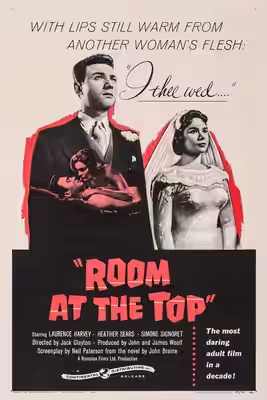
Room at the Top (1959), a year earlier and with Sears in it, is rougher and knows more about wanting. Cardiff’s film looks better and feels less. It is still a decent evening, and better than that whenever Howard or Hiller is on screen. Watch it for them, and for Francis, and do not expect it to hurt. It carries a PG.

Critical consensus AI synthesised

59
Positive
3
Mixed
1
Negative
1
Empire
31 December 2005 · David Parkinson
75*

The critic finds Jack Cardiff’s adaptation involving and restrained overall, though the actors’ regional accents are unconvincing. Freddie Francis’ monochrome photography stands out as particularly impressive, making it the best screen version of Lawrence available.

Read the full review →
The New York Times
3 August 1960 · Bosley Crowther
70*

The film is sensitively felt and photographed, with the classic novel's theme of mother-son attachment faithfully preserved and an excellent cast. Jack Cardiff fills it with picture poetry, capturing the drab coal town and bleak countryside in stunning black-and-white style, though the overall emotional tone becomes monotone.

Read the full review →
Variety
31 December 1959 · Variety Staff
70*

This is a well-made and conscientious adaptation, smoothly directed by Jack Cardiff and superbly acted by a notable cast, though the screenplay does not entirely recapture the atmosphere of the mining village. Trevor Howard delivers the outstanding performance as the miner, moving and believable in equal parts tenderness and toughness.

Read the full review →
The New Yorker
13 August 1960
50*

The adaptation reveres Lawrence's strengths but fails to overcome the dangers of its focus on the silver-cord situation, resulting in a picture entirely taken up with a complicated love affair at the expense of the novel's earlier sections. The acting is often better than commendable, with Trevor Howard's performance as the miner standing out as the strongest.

Read the full review →
Time Out
10 September 2012 · TM
30*

The critic calls the film a slack and superficial adaptation of Lawrence's novel that fails to define the central character's inner conflicts. It is praised for its careful period atmosphere and camerawork by Freddie Francis, but criticised for stiff dialogue that makes scenes feel like animated tableaux.

Read the full review →

Straight answers AI written, from our review

Is Sons and Lovers worth watching?
Sons and Lovers is worth an evening for Trevor Howard and Wendy Hiller as the parents and for Freddie Francis's black and white photography of the Nottinghamshire coalfield, and we scored it 64. It is a careful, handsome film that tidies Lawrence up, and Dean Stockwell's Paul is given little to want beyond the escape his mother wants for him.
How long is Sons and Lovers, and what is it rated?
Sons and Lovers runs 1h 43m. It is a drama film.
Where can I watch Sons and Lovers in the US?
Sons and Lovers is available to rent from Apple TV from $3.99. Availability is checked daily; the links above go straight to each service.
How does Sons and Lovers compare to Room at the Top?
Sons and Lovers is the better-looking of the two films and Room at the Top is the one that feels more. Jack Clayton's film is rougher and understands ambition and shame in a way Cardiff's does not quite reach, though Cardiff has the stronger pair of leads in Howard and Hiller. Heather Sears appears in both.
Is Sons and Lovers based on a true story or a book?
Sons and Lovers is based on D. H. Lawrence's 1913 novel of the same name, not on a true story. The screenplay cuts the book's first half, the parents' marriage and the elder brother, down to a prologue, so readers of the novel will find it tidier and less raw. You do not need to know the book to follow the film.
What should I watch after Sons and Lovers?
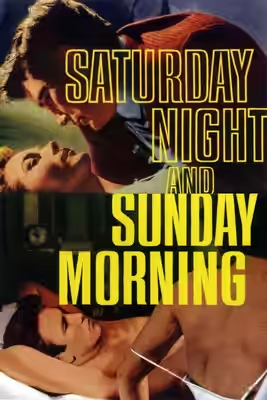
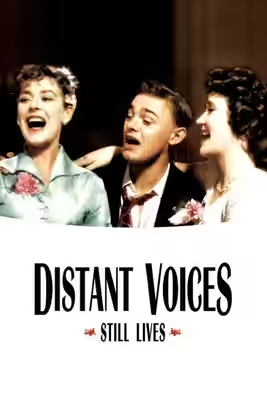
After Sons and Lovers, try Room at the Top (1959, Fi1m 82): Heather Sears again, in a northern film that understands ambition and shame. Then Saturday Night and Sunday Morning (1960, Fi1m 82): Nottingham the same year, a factory hand instead of a painter, no chapel light; and Distant Voices, Still Lives (1988, Fi1m 90): Terence Davies on a violent father and a household that sings anyway.

Cast

Awards

Academy Awards, 1961

Nominated
Best Actor
Nominated
Best Art Direction, Black and White
Nominated
Best Director
Nominated
Best Picture
Nominated
Best Supporting Actress
Nominated
Best Writing, Adapted Screenplay
Won
Best Cinematography, Black-and-White

If you liked this, try…

  1. Women in Love (1969) · not reviewed yetKen Russell lets Lawrence be as excessive as he actually is; Glenda Jackson runs riot.

  2. Room at the Top (1959, Fi1m 82)Heather Sears again, in a northern film that understands ambition and shame.

  3. Saturday Night and Sunday Morning (1960, Fi1m 82)Nottingham the same year, a factory hand instead of a painter, no chapel light.

  4. Distant Voices, Still Lives (1988, Fi1m 90)Terence Davies on a violent father and a household that sings anyway.

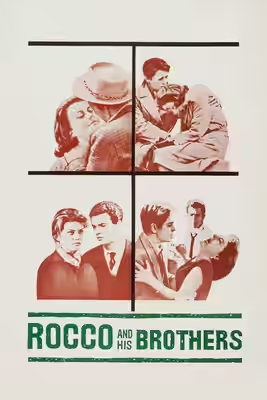
  5. Rocco and His Brothers (1960) · not reviewed yetVisconti on a mother, her sons and a city that takes them one by one.

Free account

Know what to watch tonight

Two lists that know where things are streaming, collections you can share, your own score beside ours, and Discover that remembers what you have seen.

  • Want to see, sorted by what is streaming now
  • Seen, with your score out of ten
  • No adverts, ever