Truffaut wrote about people who care too much: a boy who prefers the cinema to school, two friends who love the same woman. The writing is warm and rarely cruel, which is why The 400 Blows lasts and why the later films can feel soft.
Fi1m perspective
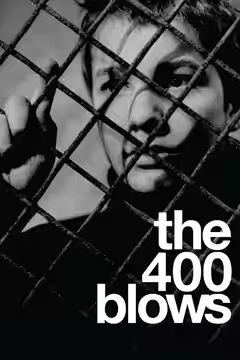
Antoine Doinel lies to his teacher, skips school and comes home to parents who were short of patience before he ever did anything to try it. Truffaut's habit in The 400 Blows (1959) is to let us enjoy the misbehaviour first and only then make us count how few chances the boy was given. That is how he writes people from then on: from inside the person doing the wrong thing, without pretending it is right. The children's faces at the Punch and Judy show moved us more than we expected, because he stops the story to watch them enjoy themselves, and for a minute their pleasure is the whole film. The music presses harder for sympathy than the pictures need.
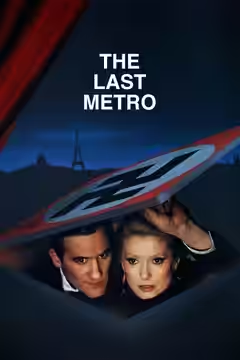
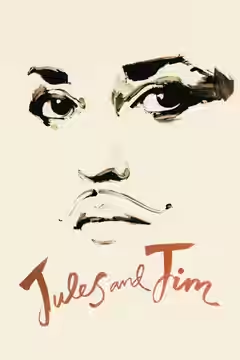
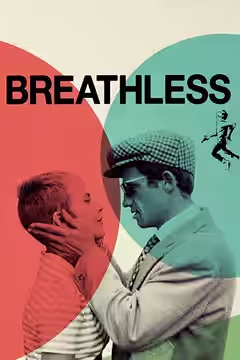
He came to directing from criticism. In the early 1950s he wrote for Cahiers du Cinéma under André Bazin, arguing for the director as author and against the so-called tradition of quality. Then he made The 400 Blows and did not stop, directing around twenty features in twenty-five years and writing or co-writing most of them himself. He also gave Jean-Luc Godard the story for Breathless (1960), with Claude Chabrol; the lovers there sometimes have more to say than we want to hear, though the talk is Godard's, not his. Shoot the Piano Player (1960) played with film noir, Jules and Jim (1962) followed two friends and one woman, Day for Night (1973) went behind the camera, and The Last Metro (1980) took him to a Paris theatre under the occupation. Jean-Pierre Léaud played Doinel for him across five films.
What works is that he never tidies anyone up. Truffaut drew on his own neglected childhood for Antoine and stayed protective of him, yet he does not let the boy off, and he resists making the parents hateful. He preferred invention to observation and said so: "I have never filmed a documentary in my life and I hope I never do." He kept the same people around him for years, Georges Delerue on eleven scores, Nestor Almendros as cinematographer on nine films, Raoul Coutard on three, Suzanne Schiffman at his side on the scripts, and the films have a steady, unshowy surface as a result. The cost of his closeness to one character is already visible in 1959: the adults in The 400 Blows get less of his attention than the boy, and we wanted more of their lives. The complaint that follows the later films is that the sincerity stayed and the craft did not move on much. We have not reviewed enough of them to rule on that.
Start with The 400 Blows. It needs no knowledge of film history, only a memory of being told off before you had finished explaining. If you find yourself on the boy's side and slightly ashamed of it, that is the writer at work.
Biography
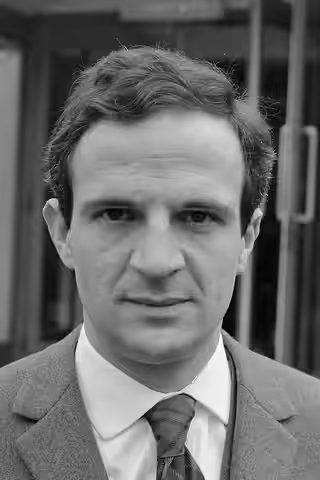
François Truffaut was a French film director, screenwriter, producer and critic. He began his career writing for the magazine Cahiers du Cinéma under the guidance of André Bazin.
His first feature, The 400 Blows (1959), on which he also received screenplay and producer credits, helped launch the French New Wave. He supplied the original story for Breathless (1960) and later directed Jules and Jim (1962), Fahrenheit 451 (1966), Day for Night (1973) and The Last Metro (1980), among other films.