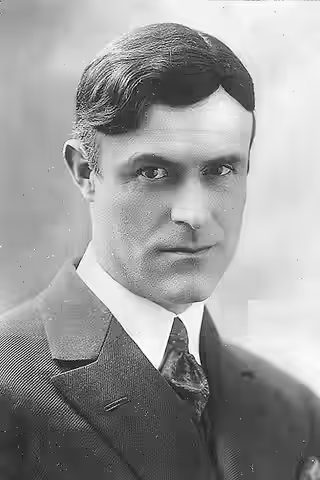
Gaston Modot spent half a century as the stern man at the edge of the frame in the best French films of his day: the gamekeeper, the engineer, the villain. He is rarely the reason to watch and almost never a reason not to.
Fi1m perspective
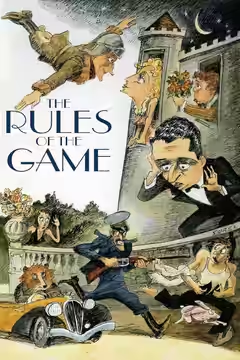
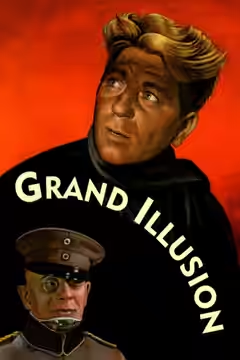
Watch either of the Jean Renoir films of the late 1930s that we rate most highly and there is, somewhere off the centre of the frame, a stern man doing his job while the leads do theirs. That is Gaston Modot. In Grand Illusion (1937) he is the Engineer among the French officers in the prison camp; in The Rules of the Game (1939) he is Schumacher, the gamekeeper. Directors cast him for three decades as exactly this sort of figure, gamekeepers and engineers and blind men, the solid piece an ensemble needs so that the flighty ones have something to knock against. Our reviews of both films do not stop to mention him, and we suspect that is how he liked it.
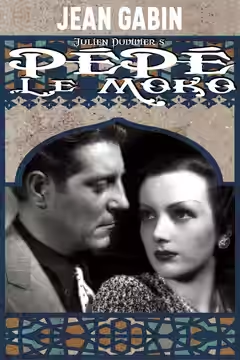
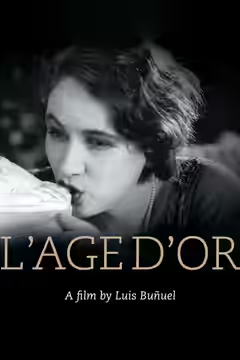
He had been a lead once. Modot began as a painter in Montmartre and came into film through Gaumont in 1909, and in the silent years he had prominent parts for Abel Gance, Germaine Dulac and Louis Delluc. He made the move to sound with René Clair in 1930, and the same year Luis Buñuel gave him the whole of L'Âge d'or, in which he plays a character called simply The Man. After that the pattern set. He worked repeatedly for Renoir, Clair, Julien Duvivier and Jacques Becker, played Jimmy alongside Jean Gabin in Duvivier's Pépé le Moko (1937) and Fil de Soie in Marcel Carné's Children of Paradise (1945), and stopped acting in 1962 with more than a hundred films behind him.
What he could do was play villains and play comic parts without changing his face. He did it without heavy make-up, which is rarer than it sounds; most character actors of that period had one thing and were hired for it. Asked about this in 1929 he put it as a question: "Pourquoi me limiter à un seul rôle, à un seul aspect de ma personnalité dramatique ?" Why, roughly, should he be confined to one role, one side of himself. The honest answer is that after the silents the French cinema mostly did confine him, to the strong supporting part in somebody else's great film, and his reputation rests on those parts rather than on anything he carried alone.
We will admit that we lost him the first time we saw The Rules of the Game. The opening is crowded and quick and we were still sorting out who was married to whom. The second time we watched for the gamekeeper and found a man who is present in every scene he is given, doing what such a man would do, and never once turning to us for credit. That is a real skill and an unshowy one.
Start with the two Renoirs, which are among the best films we have reviewed, and see if you can pick him out without a cast list. Then, if you want to see what he was like with a whole film on his shoulders, find L'Âge d'or. He spent fifty years standing slightly to one side of the picture; it is worth once looking directly at him.
Biography
Gaston Modot (31 December 1887 – 19 February 1970) was a French actor. Born in Paris, he began his career in 1909 with Gaumont and appeared in more than 100 films over five decades, working with directors including Abel Gance, René Clair, Luis Buñuel, Jean Renoir, Julien Duvivier and Marcel Carné.
He is known for roles in L'Âge d'or (1930), Grand Illusion (1937), Pépé le Moko (1937), The Rules of the Game (1939) as Edouard Schumacher, le garde-chasse, and Children of Paradise (1945). Modot also directed a short film and contributed to screenplays.