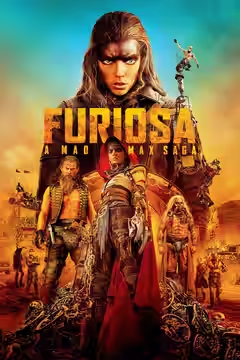
George Miller writes films whose story is told by the chase, and for more than forty years he has been among the clearest action writers in cinema. The scripts falter when people stop driving and start talking, which they do too often in Furiosa.
Fi1m perspective
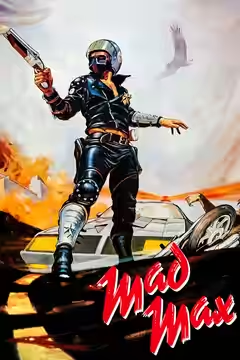
A car leaves the road and George Miller holds the shot long enough for us to work out how heavy it is before it lands. He has been doing this since Mad Max in 1979, when David Eggby kept the camera low to the tarmac and the collisions felt capable of doing lasting damage. Miller has called Mad Max "a montage film", and the phrase fits nearly everything he has written in the desert. The story is the order of the movements. The people are there to be in the way of them.
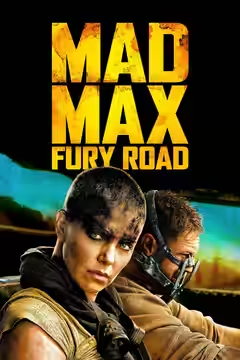
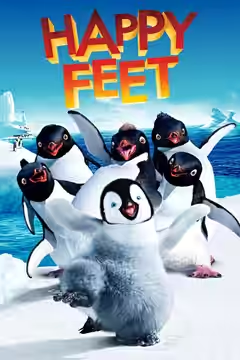
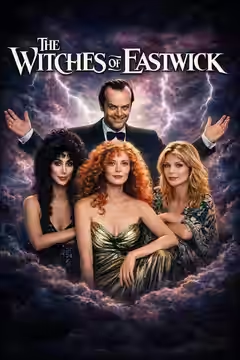
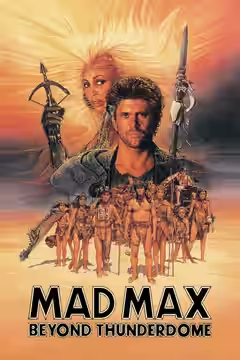
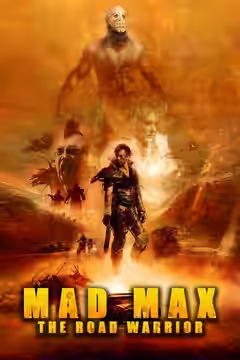
He founded Kennedy Miller with the producer Byron Kennedy and made Mad Max (1979), Mad Max 2 (1981), which was the international breakthrough, and Beyond Thunderdome (1985), the softer one. Then Hollywood: The Witches of Eastwick (1987) and Lorenzo's Oil (1992). He co-wrote Babe (1995) and directed its sequel in 1998, made Happy Feet (2006) and its sequel (2011), and went back to the desert for Mad Max: Fury Road (2015) and Furiosa: A Mad Max Saga (2024).
The writing is in the staging. Mad Max 2, written with Brian Hannant and Terry Hayes, has a thin story, fuel and a fortress and a stranger arriving at a siege, and Miller knows exactly how much that story can carry. Fury Road, written with Brendan McCarthy and Nico Lathouris, is one long pursuit with almost no backstory and it stays intelligible at its most frantic, which is rarer than it should be. We flinched at the collisions in Fury Road, and not because they were loud. The stunts are practical, the vehicles have weight, and Miller has shown us what the next move will cost before anybody makes it.
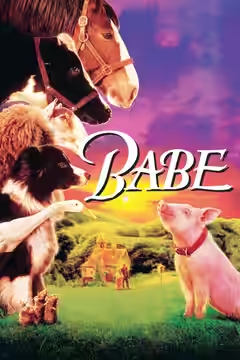
The weakness is talk. In Mad Max, his lines with James McCausland keep telling us how dangerous a man is after the action has already said so. Mad Max 2 keeps motives basic, and Mel Gibson's reserve gives the film a centre without much company. Fury Road leaves the Wives underwritten as individuals. And in Furiosa, again with Lathouris, Chris Hemsworth's Dementus explains himself at length, and Miller enjoys the performance more than the film can afford; the speeches get longer as it goes on. The odd one out is Babe, a screenplay made almost entirely of conversation, about a piglet whose manners upset the farmyard's ideas of what he is for, and it is funny and tender throughout. Perhaps it helped that Chris Noonan was directing and somebody else was deciding where the camera went.
Start with Mad Max 2 for the writer at his plainest, then Fury Road on the largest screen you can find. Furiosa is worth its middle hour. Whatever Miller writes next, we hope the villain is given fewer lines.
Biography
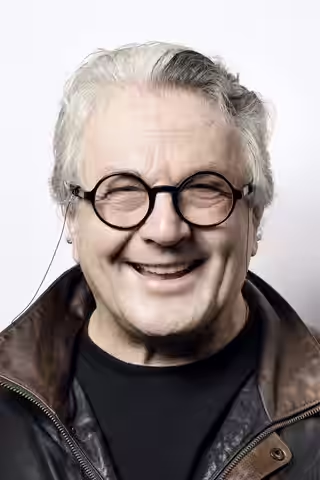
George Miller is an Australian filmmaker, screenwriter and producer. Born on 3 March 1945 in Chinchilla, Queensland, he began his career in medicine before turning to film.
He created and directed the Mad Max franchise, beginning with Mad Max (1979), followed by Mad Max 2 (1981), Mad Max Beyond Thunderdome (1985), Mad Max: Fury Road (2015) and Furiosa: A Mad Max Saga (2024). Other notable directorial credits include The Witches of Eastwick (1987), Lorenzo's Oil (1992), Babe: Pig in the City (1998), Happy Feet (2006) and Three Thousand Years of Longing (2022). He also produced and co-wrote Babe (1995).
Miller won the Academy Award for Best Animated Feature for Happy Feet. He has received further Academy Award nominations, including for Best Director for Mad Max: Fury Road, as well as BAFTA and Golden Globe awards.