Gregory Hoblit keeps police and legal stories moving while leaving room for the people doing the work. We value that clarity and care; his feature thrillers are less dependable when a clever plot asks us to overlook how unlikely it is.
Fi1m perspective
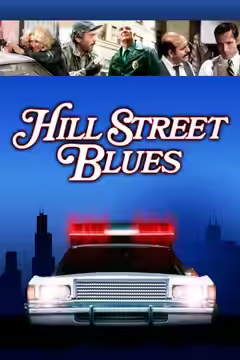
In Hill Street Blues (1981), the police work has to share our attention with the people doing it. The storytelling is crowded, and keeping up takes effort, but the characters reward that effort. We grew fond of them because the programme keeps making room for compassion alongside the investigations. Hoblit worked on the series as both director and producer, closely with writer and producer Steven Bochco.
We would not give one director all the credit for a continuing series. What matters to Hoblit's later work is the habit of cutting between several stories, letting information accumulate without stopping for explanatory speeches. That approach needs characters worth following, and Hill Street Blues supplies them even when some of its characterisation shows its age. It is a useful measure for the thrillers: can we still care about the people while trying to work out what has happened?
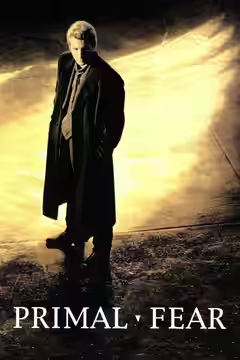
His first feature was the courtroom thriller Primal Fear (1996), which launched Edward Norton's career. The acting gives us a reason to stay interested beyond working out the case, and points to Hoblit's skill with complicated roles. The plot is less convincing when it depends on contrivance. We need to believe what is happening before we can be impressed by how cleverly it has been arranged.
Fallen (1998) takes the procedural into supernatural territory, with possession added to the investigation. Frequency (2000) makes a father-and-son story span time, using cross-cutting and layered information in ways learnt in television. Those are useful variations on his methods, rather than reasons to abandon them. By Fracture (2007), he is back with a lawyer and a defendant trying to outmanoeuvre each other.
For a first encounter, we would still start with Hill Street Blues. Its people give us more reason to return than the promise of another case, even allowing for the dated characterisation and the concentration it asks of us. Then try Frequency for a feature built around the storytelling skills he learnt in television.
Biography
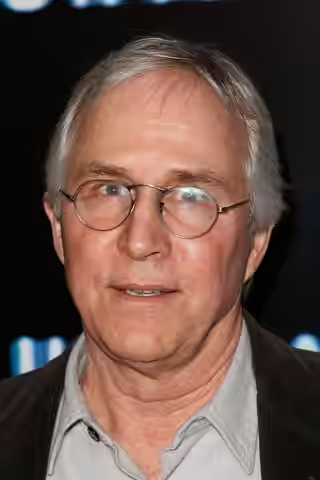
Gregory Hoblit is an American film and television director and producer. Born on 27 November 1944 in Abilene, Texas, he studied at the University of California, Berkeley and the University of California, Los Angeles.
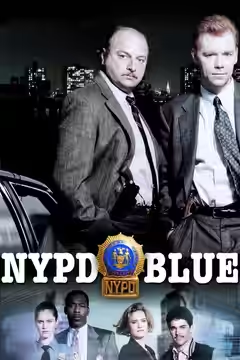
Hoblit began his career in television production and went on to direct and produce episodes of series including Hill Street Blues (1981–1985), L.A. Law (1986–1988), NYPD Blue (1993–1995) and Hooperman (1987–1988). He has won nine Primetime Emmy Awards for his work on these and other programmes, including the television film Roe vs. Wade (1989). His feature film credits as director include Primal Fear (1996), Fallen (1998), Frequency (2000), Hart's War (2002), Fracture (2007) and Untraceable (2008).