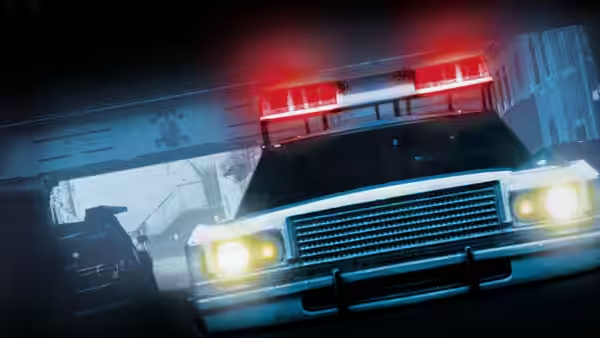
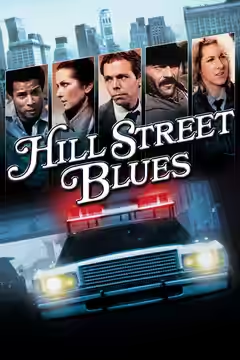
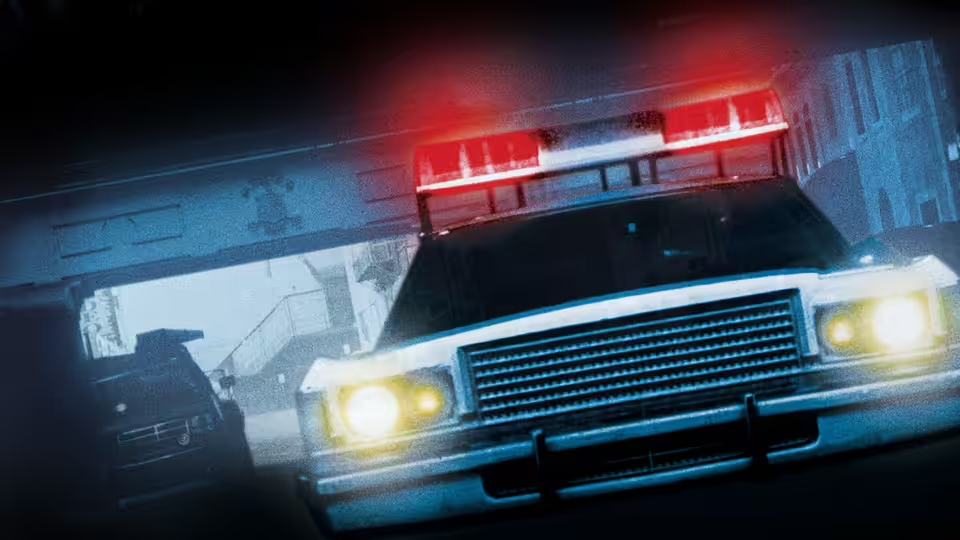
Police car with flashing red lights in a dark tunnel
Series review

Hill Street Blues

1981 · Created by Steven Bochco · Series · 49m · MPA TV-14

In a sentenceA police drama with enough unfinished business to make a day off feel unlikely

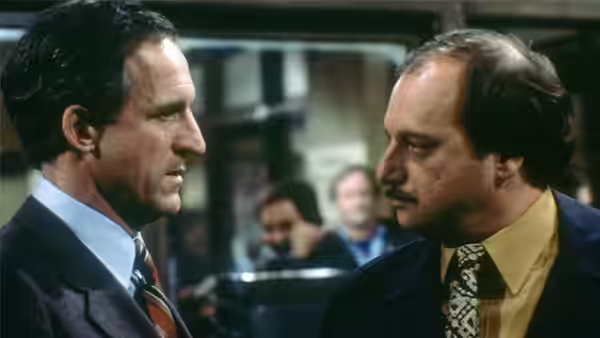
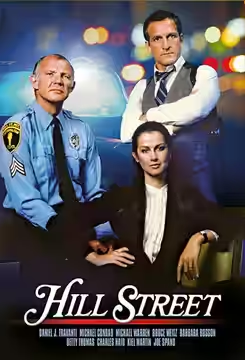
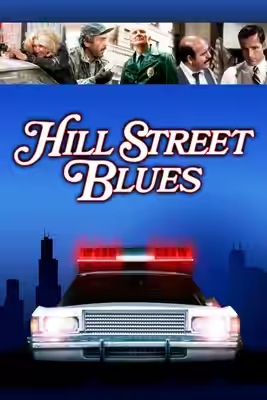
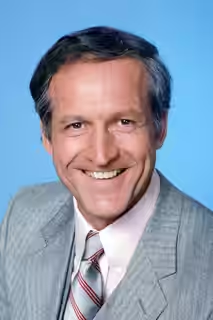
Frank Furillo (Daniel J. Travanti) and his colleagues try to do their jobs while dealing with the emotional strain of police work. Robert Hill (Michael Warren), Mick Belker (Bruce Weitz) and Lucille Bates (Betty Thomas) bring their own convictions and difficulties to the group. Cases compete with personal problems, and the officers face social tensions that cannot be settled simply by completing an investigation. As attention shifts between them, unfinished business carries into the next episode, making each person’s working life part of a longer, overlapping story.

Fi1m review

We recommend Hill Street Blues for the people as much as the police work. Its crowded storytelling asks for attention, and some of its characterisation has dated, but the compassion still holds.

Hill Street Blues is absorbing television, with a demanding ensemble and enough compassion to justify the time spent learning its names. Steven Bochco’s series gives police officers personal difficulties that do not disappear when an investigation ends, and lets stories continue across episodes. The result can be untidy, but tidiness would make these people less convincing. We recommend it with a reservation about some broad characterisation, which occasionally makes the programme look older than its storytelling feels.

Daniel J. Travanti’s Frank Furillo gives the ensemble a valuable steadiness without making calmness look easy. We were moved by the strain beneath his restraint: he makes the effort to remain reasonable seem exhausting. Michael Warren as Robert Hill and Bruce Weitz as Mick Belker bring markedly different energies, so that moving between characters means more than changing the name attached to a problem. Their performances make the continuing stories worth following even when there is no immediate prospect of a neat resolution.

Betty Thomas’s Lucille Bates matters for similar reasons. Her convictions feel like beliefs she has had to defend, and the performance gives the social questions a human weight that a speech alone could not supply. The series takes those questions seriously without requiring its characters to become models of good conduct. Its sympathy for the officers is sometimes generous to a fault, but the attention to their emotional difficulties gives the ensemble plenty to play beyond professional competence.

The cinematography of John C. Flinn III and William Cronjager helps make the ensemble feel like people with lives beyond their allotted scenes. The photography has a roughness that suits the pressure of the work, without turning every difficulty into an occasion for grand visual emphasis. It keeps attention on the performances, which is where the series earns our patience with the number of people and stories it wants us to follow.

Editors Tom Stevens and David Rosenbloom help keep that changing focus clear without draining it of uncertainty. The cutting accommodates unfinished stories; we are allowed to wonder what happens next without constantly being reassured that a solution is coming. Mike Post’s music supplies a welcome tenderness, acknowledging feelings that the officers cannot always stop to examine. Occasionally that warmth does a little too much of the emotional work, but it belongs to a programme interested in what the job costs its characters.

The broadness is harder to forgive. Bruce Weitz’s Mick Belker can seem too insistently colourful, as though the programme is anxious that a quieter eccentricity might go unnoticed. Such characterisation has dated more obviously than the overlapping stories, and it can make an otherwise convincing group briefly resemble a collection of television personalities. The cast usually brings us back, but these are the stretches where we feel the writing asking for an indulgence it has not quite earned.

Later police series have made this mixture of continuing stories and damaged working lives familiar. Hill Street Blues still earns its place beside them through the attention it gives to people who are difficult, tired or simply unable to leave their troubles at work. Knowing its influence is not necessary to enjoy their company. Give it an evening with the phones put away; the changing focus rewards attention.
Critical consensus AI synthesised

85
Positive
4
Mixed
0
Negative
0
The AV Club
29 April 2014 · A · Emily St. James
95

The critic praises the series for its enduring innovations in television storytelling, character development, and compassion despite some dated elements. They single out the ensemble cast and world-building for particular acclaim.

Read the full review →
The Hollywood Reporter
3 November 1981 · Gail Williams
85*

The critic notes that the series retains its cutting edge and unpredictable structure in its second season, with one completed subplot as a concession to broader appeal. The excellent ensemble cast and technical innovations in cinematography and editing are singled out for praise.

Read the full review →
The Times
11 March 2006 · Nigel Kendall
70*

The critic notes that Hill Street Blues has aged better than contemporary British police shows like Z Cars and set the template for later cop dramas. It praises the series for treating serious social issues thoughtfully and presenting strong, conviction-driven female characters.

Read the full review →
Collider
19 October 2025 · Jen Vestuto
90*

The critic hails Hill Street Blues as a groundbreaking, gritty police procedural that revolutionized the genre with its complex characters, serialized storytelling, and realistic portrayal of cops' emotional struggles. She praises its influence on later shows like The Wire and The Shield, and agrees with TV Guide's assessment of it as the greatest cop series of all time.

Read the full review →

Straight answers AI written, from our review

Is Hill Street Blues worth watching?
Hill Street Blues is worth watching for anyone who will follow a crowded police ensemble across episodes, and we scored it 86. Its stories carry over rather than resolving neatly, and Daniel J. Travanti's Frank Furillo gives the group a steadiness that is plainly costing him something. Some broad characterisation has dated, but the compassion has not.
How long is Hill Street Blues, and what is it rated?
Hill Street Blues has episodes of about 49m and is rated TV-14 by the MPA in the US. It is a drama and crime series.
Where can I watch Hill Street Blues in the US?
Hill Street Blues is available to buy from Amazon Prime Video and Apple TV. Availability is checked daily; the links above go straight to each service.
How violent or frightening is Hill Street Blues, and is it suitable for children?
Hill Street Blues is a police drama rated TV-14 in the United States, with no UK certificate, so it is aimed at teenagers and adults rather than children. The review found it more concerned with emotional strain than with violence, and the cases involve social tensions that are not settled by an arrest. Younger children would find little in it for them.
How does Hill Street Blues compare to High and Low?
Hill Street Blues is a television series about a precinct's overlapping working lives, while High and Low is a single film about one kidnapping and the tycoon it puts under pressure. Kurosawa's film is the more exactly staged and the easier recommendation for a single evening; the series asks for more time and repays it with people you come to know.

Cast

If you liked this, try…

  1. The Wire (2002) · not reviewed yetAnother crowded police drama that gives institutions and private lives equal attention.

  2. The Cops (1998) · not reviewed yetBritish police work with awkward people and little appetite for reassurance.

  3. Polisse (2011) · not reviewed yetA French police ensemble with troubling cases and abrasive workplace intimacy.

  4. Police, Adjective (2009) · not reviewed yetFor a slower, drier examination of policing, conscience and bureaucratic language.

  5. High and Low (1963, Fi1m 90)A kidnapping investigation that gives class divisions as much attention as procedure.

Free account

Know what to watch tonight

Two lists that know where things are streaming, collections you can share, your own score beside ours, and Discover that remembers what you have seen.

  • Want to see, sorted by what is streaming now
  • Seen, with your score out of ten
  • No adverts, ever