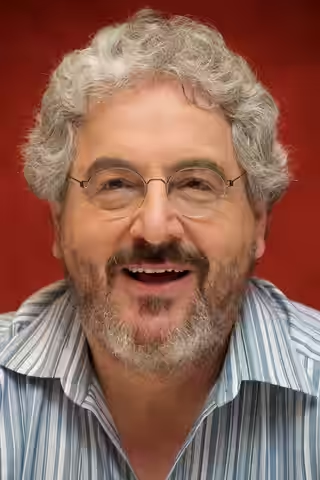
Harold Ramis's gift, as Egon Spengler on screen and as writer and director of Groundhog Day behind it, was for putting a rule-bound man next to Bill Murray and letting the friction do the work. When they were in step, we recommend the result gladly.
Fi1m perspective
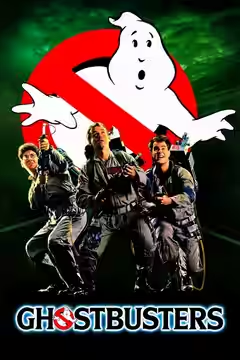
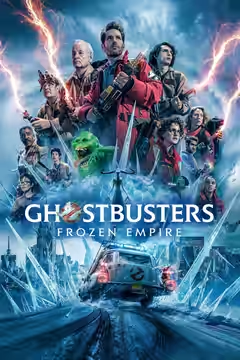
In Ghostbusters (1984) Harold Ramis stands slightly behind the argument. Bill Murray's Venkman refuses to sound impressed by anything, Dan Aykroyd's Stantz believes everything, and Ramis's Egon Spengler answers both with an exactness that makes the nonsense sound like a laboratory result. He is the straight man, and he plays it so quietly that it takes a second viewing to notice how much of the film's rhythm depends on him. The three sound like colleagues who have shared an office for years, and that ease is what we recommended the film for.
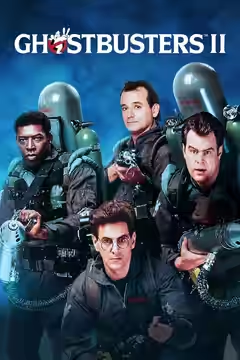
He came out of Second City improvisation and SCTV, and the writing came first: National Lampoon's Animal House (1978), slobs against the college, then Caddyshack (1980), his first film as director, slobs against the golf club. Ghostbusters put him in front of the camera and Ghostbusters II (1989) put him there again, in a script he and Aykroyd wrote as the first film with the names changed. We found it amiable and never once necessary. Its one good scene, Spengler and Stantz drilling into First Avenue at night and finding a river of slime beneath, is his own character at his most useful, and the film hardly uses it.
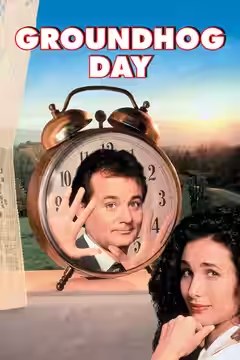
Groundhog Day (1993) is the one that lasts. With Danny Rubin he took a premise that could have made a sketch and found 101 minutes in it, most of them about Murray's Phil Connors being made to endure other people. Ramis directs with restraint; John Bailey's camera stays on Murray's face, so a small change of expression alters a scene we have already watched twice. We laughed at Phil's impatience and then felt slightly ashamed of recognising it, and Ramis leaves that ugliness visible under the joke rather than tidying it away. He said at the time that his comedy training went against sentimentality and that "the one thing we never wanted to do was cross that line into syrup." He mostly kept to it, though George Fenton's score is sweeter than the performances need and Andie MacDowell's Rita gets less room than Phil.
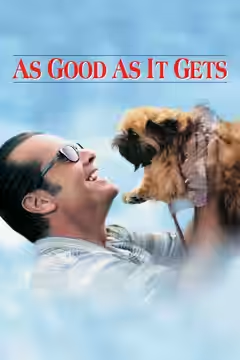
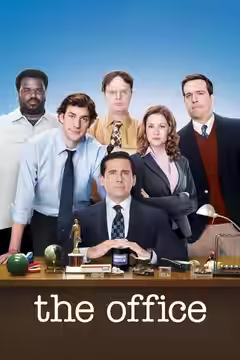
The weakness was there from the start. The Ghostbusters screenplay is thin whenever the central trio is not talking, and the people around them exist because the next stretch requires them. After Analyze This (1999), the later films, Year One (2009) among them, are generally thought to lean on formulas he had already used, which is a charge the second Ghostbusters invites too. His acting in other people's films was small: a doctor in James L. Brooks's As Good as It Gets (1997), and he directed on The Office (2005), neither of which gave us cause to single him out.
What he had was a way of standing next to anarchy and giving it a shape, as a writer and as the man in the glasses holding the meter. Start with Groundhog Day, then the first Ghostbusters, and stop there.
Biography
Harold Ramis was an American actor, writer and director known for his work in comedy films. Born in Chicago, Illinois, he began his career with the Second City improvisational troupe before becoming head writer and performer on the television series SCTV.
He co-wrote National Lampoon's Animal House (1978) and went on to direct Caddyshack (1980). Ramis wrote, directed and produced Groundhog Day (1993), in which he also appeared in a supporting role, and he played Dr. Bettes in As Good as It Gets (1997). Other notable credits include writing and acting in Ghostbusters (1984) and directing Analyze This (1999). He shared a BAFTA Award for Best Original Screenplay for Groundhog Day.
Ramis died in 2014.