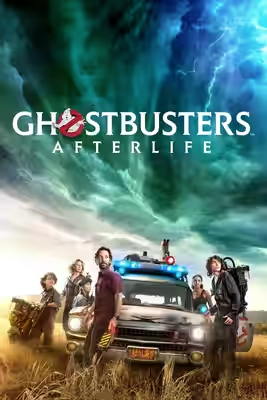
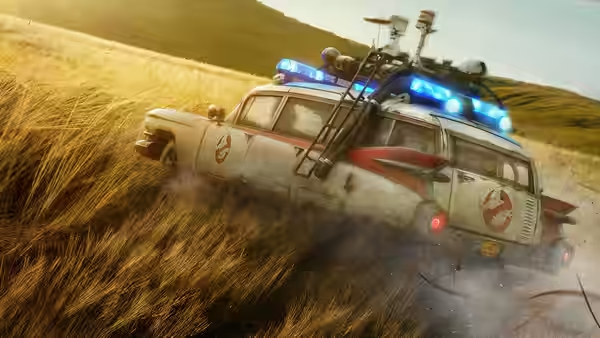
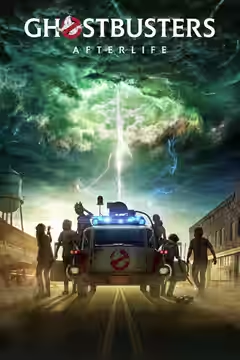
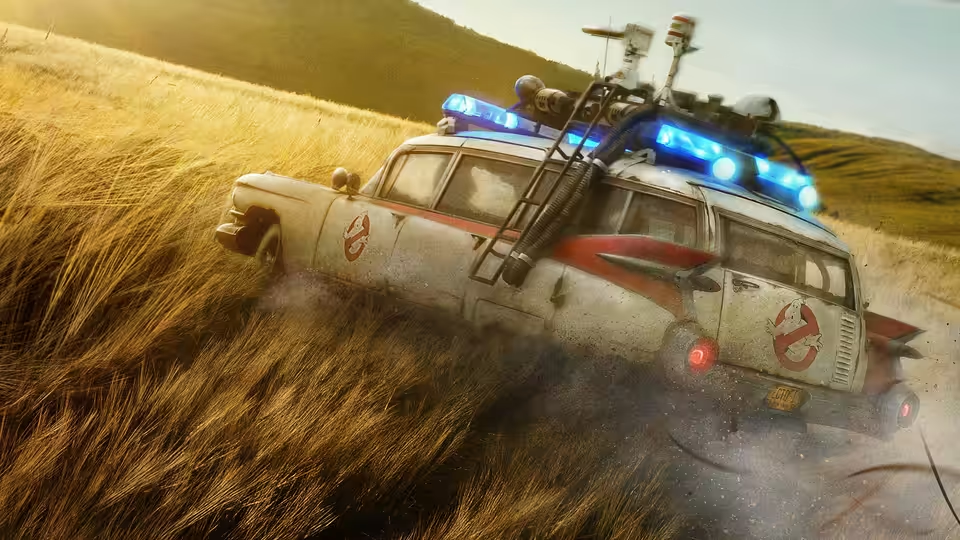
ecto-1 speeding through tall grass with lights flashing and dust trailing
Film review

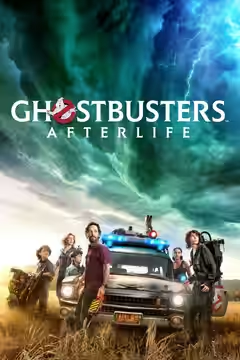
Ghostbusters: Afterlife

2021 · Directed by Jason Reitman · 2h 04m · MPA PG-13

In a sentenceA clever girl, a dead grandfather’s basement, and a film that cannot pass a prop without stopping to salute it

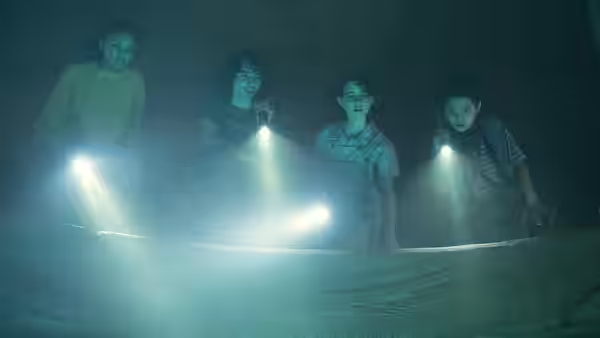
Callie (Carrie Coon), broke and freshly evicted, drives her two children to Summerville, Oklahoma, to clear out the farmhouse left by a father she barely knew. Trevor (Finn Wolfhard), fifteen, wants a car and a girl, and finds a wreck under a tarpaulin in the barn and Lucky (Celeste O’Connor) serving at the drive-in diner. Phoebe (Mckenna Grace), twelve, wants to know why the town shakes every afternoon, and finds a basement full of her grandfather’s equipment: a proton pack, a ghost trap, notebooks nobody has read. Her summer-school teacher Grooberson (Paul Rudd) is measuring the earthquakes and recognises the gear when she brings it in. With her classmate Podcast (Logan Kim), Phoebe sets out to work out what the old man was doing in the middle of nowhere for decades.

Plays from YouTube when you press play; nothing loads from them until then.

Fi1m review

Mckenna Grace and a farmhouse full of old equipment give Jason Reitman’s sequel a first hour worth having. Then the film starts retracing the 1984 original step by step, and a story about a family becomes a guided tour of someone else’s.

Jason Reitman directs and, with Gil Kenan, writes a 124-minute sequel to the film his father Ivan Reitman made in 1984; the father produces. The set-up is a good one. A hard-up mother and two children arrive in a dying Oklahoma town to clear out a dead man’s farmhouse, and the younger child works out, piece by piece, what he was for. For about an hour this is a small, likeable film about a clever girl in a place with nothing to do. Then the film remembers whose name is on the poster, and everything after that is a matter of ticking things off.

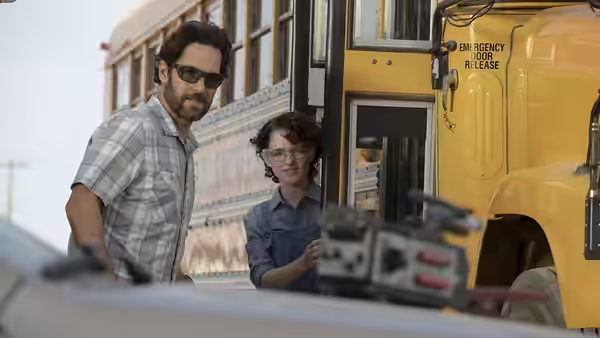
Mckenna Grace is the reason to watch. She plays Phoebe as a child who talks to adults as equals and cannot see why they mind, and she delivers jokes flat, into the middle distance, like someone who has read that jokes help people relax and is testing the theory. It is a performance rather than a cute turn. Carrie Coon gives Callie a tired, funny bitterness, a woman let down by a parent who is not going to pretend otherwise for the children’s sake. Paul Rudd does what he does, which is make a room lighter by standing in it, and his scenes with Coon are the only ones in which two adults seem to enjoy each other’s company.

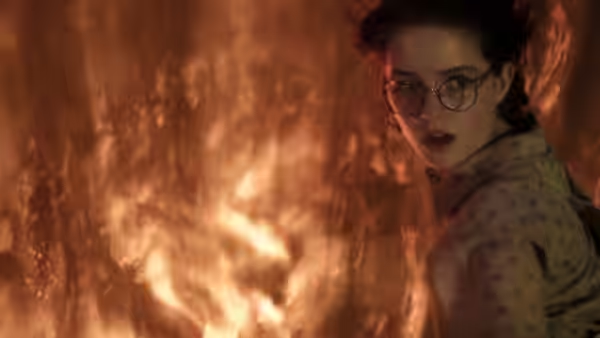
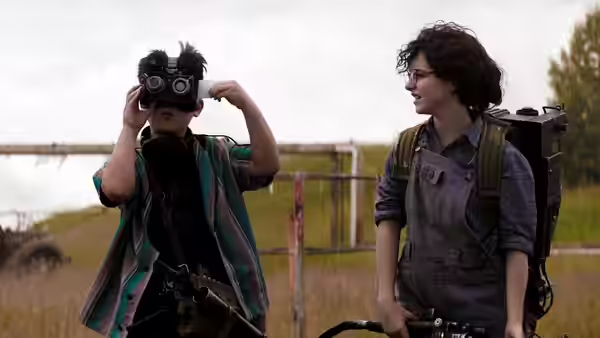
The town is well made. Eric Steelberg shoots Summerville in long, low evening light, a grain elevator, an empty main street, the farmhouse against a flat horizon. François Audouy’s production design fills that house with a lifetime of tinkering: wiring under the floorboards, a basement laboratory, junk in every room that turns out not to be junk. Danny Glicker puts Phoebe in a cut-down flight suit that does not fit her and never quite will. When she takes a proton pack out into a cornfield at night and tries it, we grinned, because for a few minutes the film had found the thing the original had, which is a gadget, a target and a child who is better at this than the grown-ups.

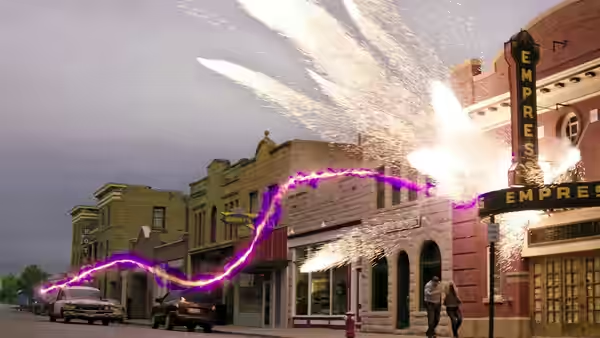
Then the second half arrives, and the film stops being about this family and starts following the 1984 film, in ways we will not describe, almost beat for beat. Every recognisable object is introduced with a pause so we can clock it. Rob Simonsen’s score quotes the old themes so often that it stops being music for these scenes and becomes a reminder of other ones. Dana E. Glauberman and Nathan Orloff cut the action cleanly enough, but it is mostly action we have seen before, staged in a smaller place with fewer people watching.

There is one properly funny sequence, in which a shelf of small marshmallow men in a supermarket aisle set about torching, skewering and eating one another. We laughed out loud, and then noticed it was the only joke in twenty minutes that did not need us to have seen another film to land. The original was a comedy about three men who found a way to bill New York for its ghosts. This is not a comedy. It is a children’s adventure with jokes at the edges, and when Bill Murray, Dan Aykroyd, Ernie Hudson, Annie Potts and Sigourney Weaver turn up, they are treated as visiting dignitaries rather than as performers with anything to do. The closing minutes reach for a tribute we will not describe, and we felt worked on rather than moved, because the film had spent two hours telling us to feel it and had not done the work.

Reitman’s Juno and Up in the Air were about people talking in rooms, and he is good at that; the first hour here shows it, with Grace and Coon and Rudd doing the talking. Against the run of films in which suburban children stumble on something enormous, this one has a better lead than most and a more borrowed plot than any. Most critics have split down the middle on it, and so have we.

Watch it with a child who has not seen the original. They will enjoy the first hour, and then ask you a great many questions about the second, and the answers will be more interesting than what is on screen. The 12A is about right: a few jumps, no real fright, and nothing a bag of sweets will not settle.
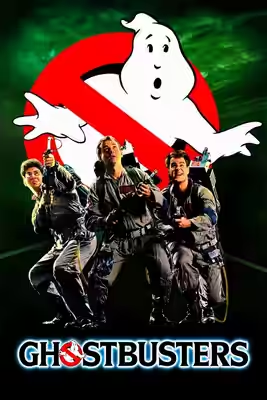
Critical consensus AI synthesised

54
Positive
9
Mixed
5
Negative
9

The reviews split almost exactly down the middle, and the argument is about how much of the film is its own. Where critics agree is on the cast. Mckenna Grace’s Phoebe is praised across the board, including by reviewers who dislike everything around her, and several single out the pairing of Carrie Coon and Paul Rudd. The warmer notices treat it as a Spielbergian family adventure with more heart than the usual reboot, and Variety has a good word for the practical effects.

The reservations cluster around the callbacks. Even positive reviews concede the fan service is heavy; the negative ones, from the Telegraph to the Los Angeles Times, call it a nostalgia exercise with few jokes and nothing at stake. The digital tribute to Harold Ramis divides critics, with Little White Lies finding it manipulative. The spread is wide, from a rave at Deadline to near-dismissal at Vulture, and the early trade reviews are noticeably kinder than the later British ones.

Empire
9 October 2021 · Olly Richards
85*

Jason Reitman’s film is a thoroughly lovely sequel that captures the feeling of the originals without simply imitating them. It focuses on appealing new characters with strong chemistry and is always fun, inventive and full of charm.

Read the full review →
Radio Times
★★★★ · Emma Simmonds
80

Jason Reitman pitches it just right in this spooky though never scary reboot full of humour and nods to the originals. The result is a warm, nostalgic reboot that's as touching as it is crowd-pleasing, led by strong turns from Coon and Grace.

Read the full review →
IndieWire
9 October 2021 · B · Courtney Howard
77

Reitman revives the flailing franchise with a fresh female-forward spin and clever evolutions of its hallmarks, but it suffers from an over-reliance on its previous life and callbacks.

Read the full review →
Evening Standard
17 November 2021 · Charlotte O'Sullivan
75*

This nostalgic sequel is more progressive than the original and benefits from strong chemistry between Carrie Coon and Paul Rudd. It raises more than the ghost of a smile despite some flat moments in the finale.

Read the full review →
Variety
9 October 2021 · Peter Debruge
75*

The film revives the franchise with a fresh jolt of energy, offering fan service alongside a new entry point for younger audiences while honoring its legacy without tarnishing what came before. The critic singles out the practical effects, sight gags like the mini Stay-Puft and the emotional tribute to Harold Ramis.

Read the full review →
The Guardian
21 November 2021
70*

The film is a feelgood nostalgic remake of the 1980s original that will appeal to fans of a certain age and their children. It succeeds as a Spielbergian family adventure thanks to its score and casting of Finn Wolfhard.

Read the full review →

Straight answers AI written, from our review

Is Ghostbusters: Afterlife worth watching?
Ghostbusters: Afterlife is a mixed case, and we scored it 55: a likeable first hour about a clever girl in a dead man's farmhouse, followed by a second half that retraces the 1984 film almost step by step. Mckenna Grace is the reason to watch. It suits children who have not seen the original better than adults who have.
How long is Ghostbusters: Afterlife, and what is it rated?
Ghostbusters: Afterlife runs 2h 04m and is rated PG-13 by the MPA in the US. It is a fantasy and comedy film.
Where can I watch Ghostbusters: Afterlife in the US?
Ghostbusters: Afterlife is streaming on Hulu and Disney+ in the US, and it is also available to rent from Amazon Prime Video and Apple TV from $3.99. Availability is checked daily; the links above go straight to each service.
How violent or frightening is Ghostbusters: Afterlife, and is it suitable for children?
Ghostbusters: Afterlife is a 12A, and that is about right: a few jumps, no real fright, and nothing a bag of sweets will not settle. The one violent sequence is played for laughs, with a shelf of small marshmallow men torching and eating one another. Children of about ten upwards should be fine, and the squeamish have nothing to worry about.
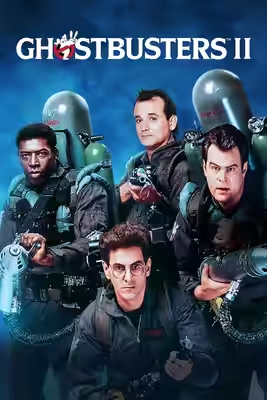
How does Ghostbusters: Afterlife compare to Ghostbusters II?
Ghostbusters: Afterlife is the better-acted and better-made of the two, but Ghostbusters II is the one that is still a comedy. Both rerun the 1984 film rather than find anything new; Afterlife has a stronger lead in Mckenna Grace and a stronger first hour, while the earlier film is the amiable choice for adults who want jokes rather than a children's adventure.
Do you need to have seen the other Ghostbusters films before Ghostbusters: Afterlife?
Ghostbusters: Afterlife can be watched without the earlier films, but it rewards those who have seen the 1984 original, because its second half follows that film closely and treats every old prop and returning face as something to recognise. A newcomer will enjoy the first hour on its own terms and then have a great many questions. It is a fair place to start, though not the best.
What should I watch after Ghostbusters: Afterlife?
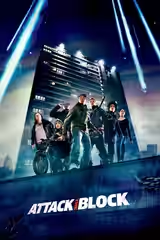
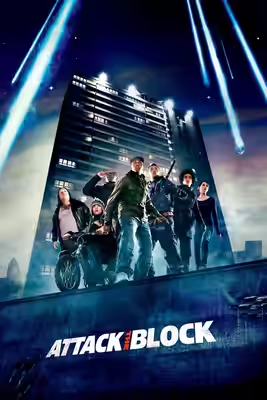
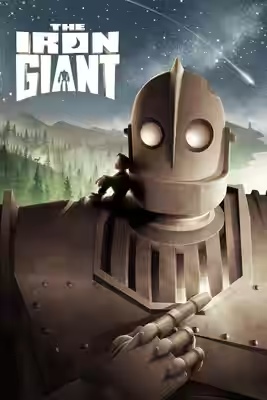
After Ghostbusters: Afterlife, try Ghostbusters (1984, Fi1m 80): The original: three underemployed men, one city, and jokes that do not need footnotes. Then Attack the Block (2011, Fi1m 84): South London teenagers versus aliens; funnier, scarier and shorter than most of its genre; and The Iron Giant (1999, Fi1m 88): A boy, a robot and Cold War Maine, drawn with real feeling and no cynicism.
What order should I watch the Ghostbusters films in?
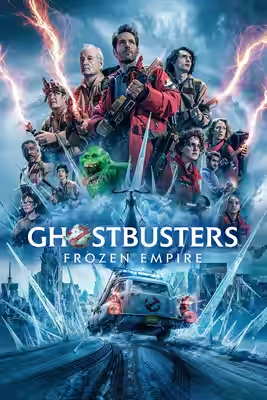
Release order is the safe choice for Ghostbusters, and it is the order our collection page lists them in. Ghostbusters: Afterlife is number 3 of the 4 Ghostbusters titles on Fi1m; before it comes Ghostbusters II and after it Ghostbusters: Frozen Empire. The full order.

Part of · 3 of 4

Ghostbusters

4 films on Fi1m · 1984–2024 · average 62 · best Ghostbusters 80

All 4 in order

Cast

If you liked this, try…

  1. Ghostbusters (1984, Fi1m 80)The original: three underemployed men, one city, and jokes that do not need footnotes.

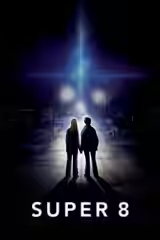
  2. Super 8 (2011) · not reviewed yetSmall-town children, a Super 8 camera and something in the freight train.

  3. Attack the Block (2011, Fi1m 84)South London teenagers versus aliens; funnier, scarier and shorter than most of its genre.

  4. The Iron Giant (1999, Fi1m 88)A boy, a robot and Cold War Maine, drawn with real feeling and no cynicism.

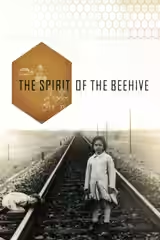
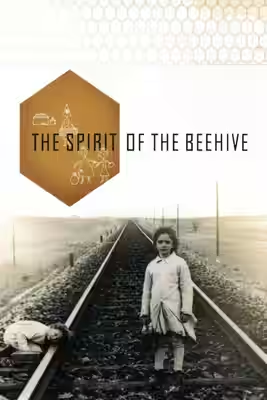
  5. The Spirit of the Beehive (1973, Fi1m 87)A Spanish girl in a dead village decides a monster is real; quiet and unforgettable.

Free account

Know what to watch tonight

Two lists that know where things are streaming, collections you can share, your own score beside ours, and Discover that remembers what you have seen.

  • Want to see, sorted by what is streaming now
  • Seen, with your score out of ten
  • No adverts, ever