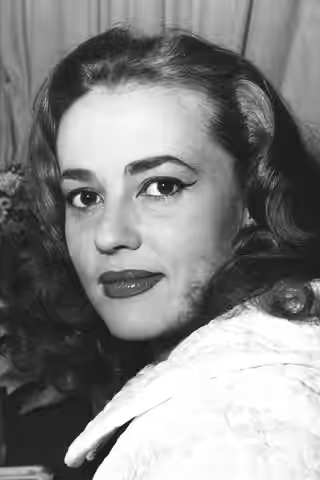
Moreau lets the camera watch her think and does not tell it what she is thinking, which is why the men in her films keep getting her wrong. For a decade from 1958, Malle, Antonioni, Truffaut and Welles all wanted that face.
Fi1m perspective
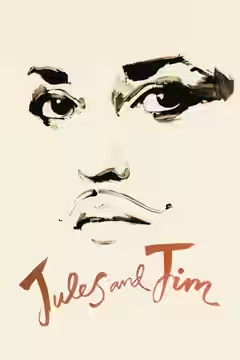
Twenty minutes into Jules and Jim (1962), Catherine puts on a cap, paints on a moustache, marches the two men to a footbridge and shouts go before the count is finished. It is a cheat, and the film is hers from that moment. Moreau's face does most of the work: the mouth turned slightly down even when she is winning, the low, gravelled voice. Critics have spent decades describing that mouth and that voice, and they are right to.
She trained for the stage and joined the Comédie-Française at twenty, then spent the 1950s in supporting film parts. Louis Malle changed that, shooting her in ordinary light with little make-up in Elevator to the Gallows (1958), so that she looked like a woman rather than a poster; The Lovers (1959) made her known abroad. Then came ten years in which the directors who mattered kept asking: Antonioni for La Notte (1961), Buñuel for Diary of a Chambermaid (1964), Truffaut again for The Bride Wore Black (1968), Welles four times, among them Chimes at Midnight (1965). She said she had no special technique, only habits she changed to suit each director, and that list suggests she meant it.
What she does is decline to explain herself and trust the camera to keep watching. La Notte is built almost entirely on her being looked at, and she carries it. In Jules and Jim the scene we remember is the song: Catherine sings a small tune about a whirlwind while the men sit and listen, and Moreau's singing is thin, a little flat and completely unguarded. It moved us more than we expected, because for once nobody is performing. When Jim first looks at her properly, Claudine Bouché's cutting stops on her face several times as if the film cannot choose an expression. The men then talk about Catherine as though she were weather. Moreau keeps stepping out of the frame they have built and being a person: funny, cruel, bored, alert to any slight.
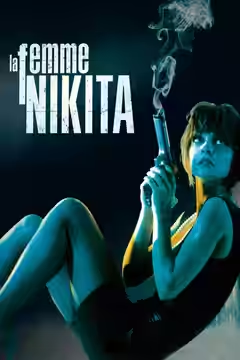
The case against her is a case against the parts. Her reputation outside France rests on the decade from 1958 to 1968; after it the offers thinned into older-woman roles in productions that ranged from decent to forgettable, and critics found the parts restricting. She answered by directing, beginning with Lumière (1976), a film about actresses. Nikita (1990) is the one we have reviewed: as Armande, a mentor to Anne Parillaud's assassin, with Anglade and Karyo she stops Besson's emphatically styled thriller from leaning on its lead alone.
Start with Jules and Jim, then Elevator to the Gallows, then the Welles. Watch Jules and Jim twice, and the second time watch the men instead of her. Nearly everything they say about Catherine turns out to be wrong, and Moreau hardly has to move to prove it.
Biography
Jeanne Moreau was a French actress. She was born on 23 January 1928 in Paris and died on 31 July 2017.
She trained at the Paris Conservatory of Dramatic Art and joined the Comédie-Française in 1947, becoming one of its youngest members. She made her film debut in 1949 and gained prominence with roles in Elevator to the Gallows (1958) and Jules and Jim (1962). She appeared as Armande in Nikita (1990).
Moreau also worked as a director and singer. She received a César Award for Best Actress, a BAFTA Award for Best Foreign Actress and a Cannes Film Festival Best Actress Award.