John Hughes gives young people time to be funny, unhappy and difficult without treating them as a nuisance. We recommend his comedies, though he can keep explaining their feelings after the actors have made them plain.
Fi1m perspective
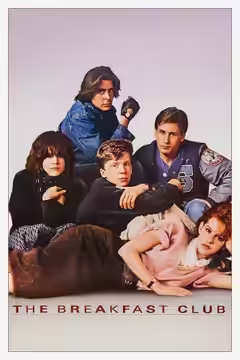
Five teenagers sit in Saturday detention in The Breakfast Club (1985), each checking where they stand with the others. John Hughes lets their embarrassment last longer than the next joke. We like his willingness to listen, even when he agrees with them too readily. His directorial debut, Sixteen Candles (1984), had already established his interest in suburban school hierarchies. The writing is most persuasive when somebody remains uncomfortable.
In The Breakfast Club, Molly Ringwald and Anthony Michael Hall make the school types worth hearing out. Hughes gives resentment room that teenage comedy does not always allow, but the complaints about parents begin to repeat themselves. Judd Nelson’s forcefulness becomes tiring when a louder speech is treated as a better one. We need a little more doubt from the writer about how clearly these teenagers understand their own troubles.
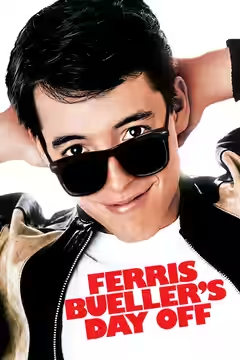
Ferris Bueller’s Day Off (1986) gives Hughes a more confident teenager, and Matthew Broderick’s lightness keeps Ferris’s self-satisfaction bearable. We felt protective of Cameron, because Alan Ruck makes keeping up with his friend look exhausting. Their friendship makes the outing matter, even if Hughes sometimes seems too impressed by Ferris’s ingenuity. Cinematographer Tak Fujimoto makes Chicago inviting enough to explain why school might seem dispensable. John W. Corso’s production design establishes the suburban comfort behind Ferris’s confidence, although the script has little interest in people outside that fortunate circle.
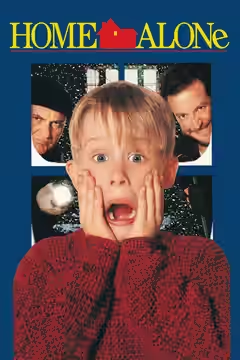
Planes, Trains and Automobiles (1987) took his interest in mismatched characters into adult comedy. By Home Alone (1990), written by Hughes and directed by Chris Columbus, the wish to escape adult supervision belongs to a child left behind at Christmas. The script’s strongest choice is to let that child enjoy his independence without making him especially nice. The physical comedy suits a writer willing to allow some cruelty into a family film.
Macaulay Culkin needs little help making Home Alone funny, and Catherine O’Hara gives the adults an urgency they need. Hughes nevertheless insists on spelling out the family feeling, while Columbus presses the sweetness hard enough to slow the comedy. This habit of explaining an emotion after the actors have made it clear is our main reservation about his writing. Start with Ferris Bueller’s Day Off, and pay as much attention to the friend who struggles to enjoy the outing as to the boy who arranged it.
Biography
John Hughes (born John Wilden Hughes Jr.) was an American filmmaker who wrote, directed and produced numerous comedies. He was born on 18 February 1950 in Lansing, Michigan, and died on 6 August 2009 in New York City.
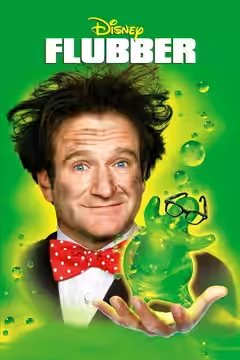
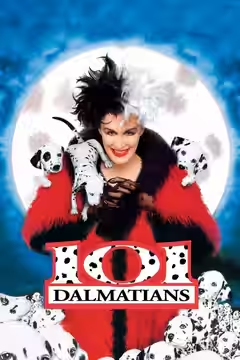
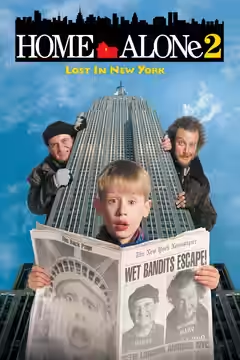
Hughes wrote and produced Home Alone (1990). He also wrote and directed The Breakfast Club (1985) and Ferris Bueller's Day Off (1986), and wrote Planes, Trains and Automobiles (1987), National Lampoon's Christmas Vacation (1989) and 101 Dalmatians (1996). His other credits include Home Alone 2: Lost in New York (1992) and Flubber (1997).