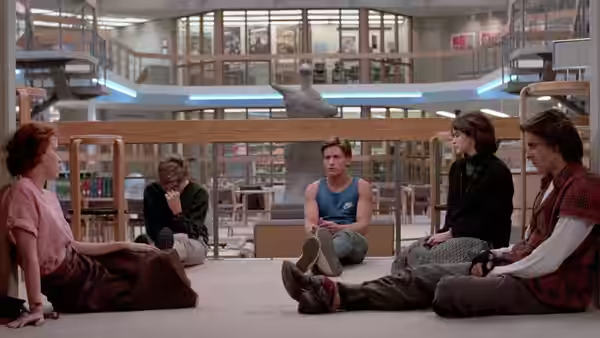
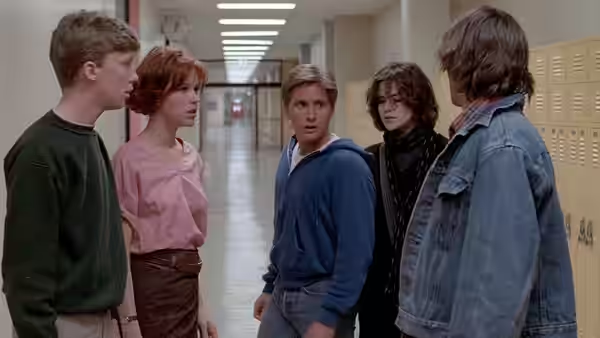
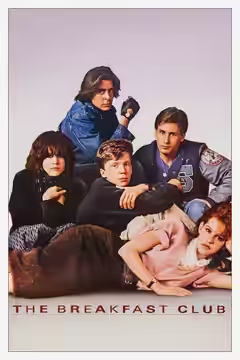
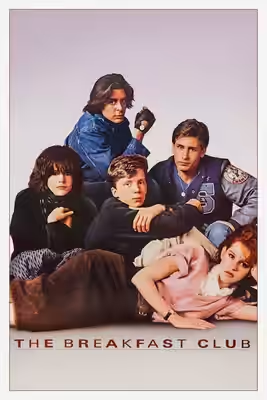
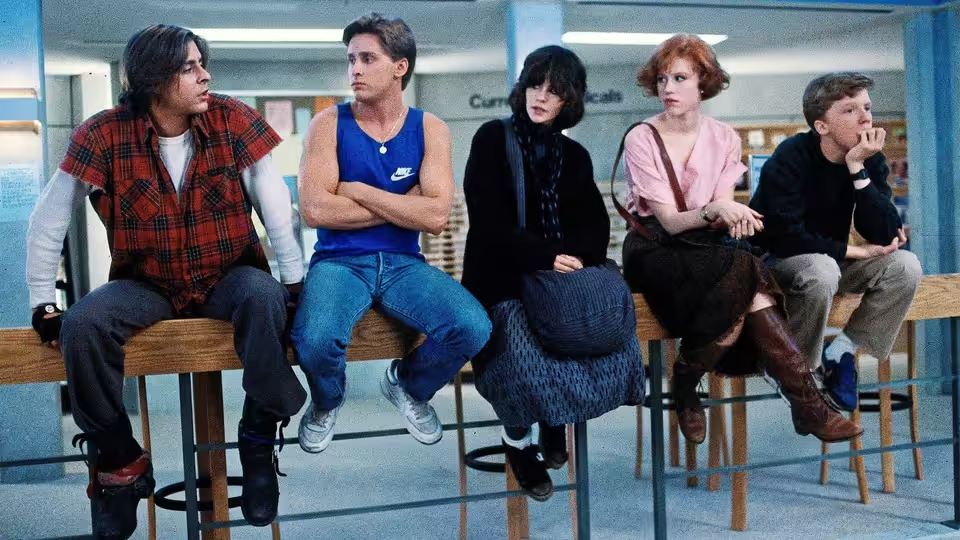
John Bender, Andrew Clark, Allison Reynolds, Claire Standish and Brian Johnson sit on a library railing
Film review

The Breakfast Club

1985 · Directed by John Hughes · 1h 38m · MPA R

In a sentenceMolly Ringwald makes listening to teenage boys look like skilled work

Five teenagers from different school cliques spend a Saturday in detention. Andrew Clark (Emilio Estevez), John Bender (Judd Nelson), Claire Standish (Molly Ringwald), Brian Johnson (Anthony Michael Hall) and Allison Reynolds (Ally Sheedy) face a day together. They bring their assumptions about one another into a conversation about status, authority and home life. John Hughes writes and directs this comedy-drama about teenagers whose parents and classmates each have ideas about who they are supposed to be, and whose own accounts are rather harder to pin down.

Plays from YouTube when you press play; nothing loads from them until then.

Fi1m review

John Hughes’ detention comedy earns our affection through Molly Ringwald and Anthony Michael Hall, who make the school stereotypes worth hearing out. It is funny and perceptive, though Hughes lets the complaints about parents go largely unchallenged.

The Breakfast Club is good company for a film about people who would rather be elsewhere. John Hughes puts five teenagers in Saturday detention and lets their conversation carry a 98-minute comedy-drama. The performances and the ear for teenage talk make it worth an evening, though Hughes is too quick to agree with his characters about their troubles. He takes their unhappiness seriously, sometimes beyond what the writing can support.

Hughes starts with school types so familiar that the actors have some work to do before we are willing to hear them out. Judd Nelson’s aggression gets the conversation moving, and Emilio Estevez gives the quarrelling a credible competitive edge. Ally Sheedy helps keep the group awkward enough to resist instant cosiness. These performances can be broad, but the sense that everyone is checking their place in the school pecking order is convincing.

Hall and Ringwald are more persuasive still. Hall gives Brian the anxious concentration of someone trying to get even a personal conversation right, while Ringwald makes Claire’s guardedness understandable without making it especially attractive. We were moved by Hall during the talk about parents, because he makes the effort to satisfy adults look exhausting. Ringwald is particularly good at listening without letting us assume that listening means agreement.

John W. Corso’s production design gives the pupils a shared school space that makes their determination to remain separate look faintly absurd. Thomas Del Ruth’s photography keeps our attention on the faces, which matters when so much depends on how a remark is received. Dede Allen’s editing gives the exchanges enough rhythm to sustain the single setting, although several arguments could still be shorter. Keith Forsey’s music pushes the emotion harder than we need when the actors have already made it clear.

The chief weakness is Hughes’ willingness to make parents answer for almost everything. The complaints are often credible, but he gives them so much room that the conversation starts repeating itself instead of finding something else to ask. Nelson’s forcefulness becomes tiring here, particularly when volume is allowed to do the work of persuasion. A little more scepticism from the writer would have helped the quieter performances, which already suggest that these teenagers cannot always see themselves clearly.

Teenage comedy does not always leave much room for unhappiness that cannot be cleared away by the next joke. Hughes lets embarrassment and resentment linger, and that patience is welcome even when a speech runs long. His faith in the group finding common ground is harder to accept, because some of the personalities he has drawn seem too firmly opposed for such easy understanding. The writing is most convincing when an exchange stays uncomfortable.

There is enough wit and recognisable hurt to forgive the passages that sound like prepared speeches. The pleasure is in watching the cast complicate people whom the script initially makes so easy to identify. Give it an evening for Hall and Ringwald, with some patience for Hughes when he insists on explaining what they have already shown.

Critical consensus AI synthesised

56
Positive
7
Mixed
2
Negative
5
Empire
1 January 2011 · Simon Crook
75*

The critic acknowledges the film's confused and indulgent qualities but finds enough emotional truth and iconic status to make it the definitive 1980s teen movie. They single out the strong performances from Molly Ringwald and Anthony Michael Hall amid the archetypes.

Read the full review →
Radio Times
· David Parkinson
70*

One of the high-water marks of the 1980s Brat Pack cycle that has lost some freshness due to time and imitators, yet the chat-fest still rings true for many. The girls outshine the boys in bringing life to clichéd characters amid grievances and home truths.

Read the full review →
RogerEbert.com
15 February 1985 · Roger Ebert
70*

The film isolates five teens in detention and lets them talk until they exchange truths and reach new understandings. It succeeds through its accurate ear for teenage speech and strong performances, especially Judd Nelson's aggressive character who breaks the silence.

Read the full review →
The AV Club
8 September 2015 · Gwen Ihnat
70*

The piece celebrates the film's enduring resonance with multiple generations through its focus on teenage social barriers, parental pressures, and unlikely bonds formed in detention. It positions the film as Hughes' best for condensing themes of class, authority, and identity into one story, while noting some dated melodramatic elements.

Read the full review →
The New York Times
15 February 1985 · Janet Maslin
70*

John Hughes lets the five teen stereotypes challenge and confront each other like in Twelve Angry Men, leading to friendships and denunciations of parents. The film has a deadly self-importance but retains playfulness and excellent casting, with standout turns from Molly Ringwald and Anthony Michael Hall.

Read the full review →
The Guardian
15 February 2025
60*

The critic notes that while The Breakfast Club was groundbreaking in its portrayal of teenagers, it has been diminished by imitators and has problematic elements like casual homophobia and a conservative ending that undermines its realism.

Read the full review →

Straight answers AI written, from our review

Is The Breakfast Club worth watching?
The Breakfast Club is worth watching for the performances of Molly Ringwald and Anthony Michael Hall, and we scored it 75. John Hughes has a good ear for teenage talk and lets embarrassment and resentment linger, though he agrees too readily with his characters' complaints about their parents. Give it an evening if you have patience for a speech that runs long.
How long is The Breakfast Club, and what is it rated?
The Breakfast Club runs 1h 38m and is rated R by the MPA in the US. It is a comedy and drama film.
Where can I watch The Breakfast Club in the US?
The Breakfast Club is streaming on Peacock, The Roku Channel, Amazon Prime Video and Disney+ in the US, and it is also available to rent from Amazon Prime Video from $3.99. It leaves Peacock on 1 October. Availability is checked daily; the links above go straight to each service.
How violent or frightening is The Breakfast Club, and is it suitable for children?
The Breakfast Club is a 15 in the UK and rated R in the US, so it is not for children. There is no frightening material: the film is five teenagers talking in a school library, and the certificate reflects the language and the frank discussion of home life rather than violence. Older teenagers are its natural audience.
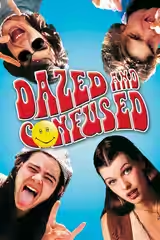
How does The Breakfast Club compare to Dazed and Confused?
The Breakfast Club is the more confined of the two, and the more insistent on explaining what its cast has already shown, while Dazed and Confused observes the same school hierarchies and casual cruelties with more room to wander. Linklater's film is the warmer and looser; Hughes' gives you better individual performances, particularly Hall and Ringwald. Choose Hughes for a single sustained conversation, Linklater for an ensemble and a soundtrack.
What should I watch after The Breakfast Club?
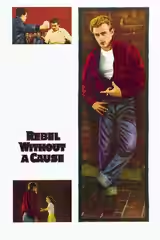
After The Breakfast Club, try Dazed and Confused (1993, Fi1m 86): School hierarchies and casual cruelties, observed with more space to wander and less explaining. Then Rebel Without a Cause (1955, Fi1m 84): Teenage anger and parental bewilderment, played with a dangerous lack of restraint.

Cast

If you liked this, try…

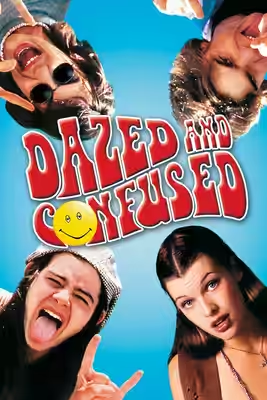
  1. Dazed and Confused (1993, Fi1m 86)School hierarchies and casual cruelties, observed with more space to wander and less explaining.

  2. The Class (2008) · not reviewed yetIts classroom arguments accommodate pupils who will not be neatly understood.

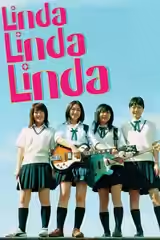
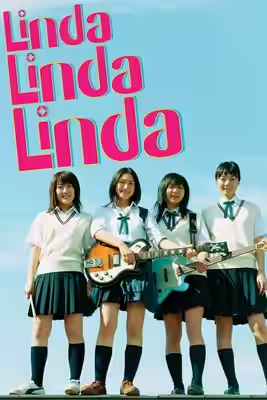
  3. Linda Linda Linda (2005) · not reviewed yetFour schoolgirls prepare a performance, with friendship developing through awkward pauses and practice.

  4. Rocks (2019) · not reviewed yetA girl’s school friendships face pressures that cannot be settled by talking.

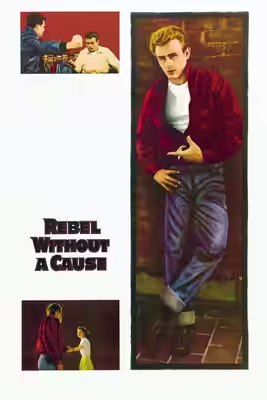
  5. Rebel Without a Cause (1955, Fi1m 84)Teenage anger and parental bewilderment, played with a dangerous lack of restraint.

Free account

Know what to watch tonight

Two lists that know where things are streaming, collections you can share, your own score beside ours, and Discover that remembers what you have seen.

  • Want to see, sorted by what is streaming now
  • Seen, with your score out of ten
  • No adverts, ever