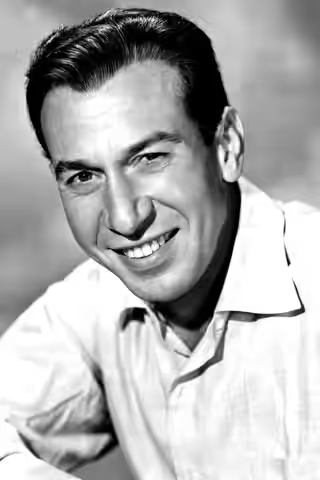
José Ferrer built his parts from the outside in: a harness, a bowler, a low unhurried baritone, and a presence that made a few minutes count for as much as a lead. The films around him were often less careful than he was.
Fi1m perspective
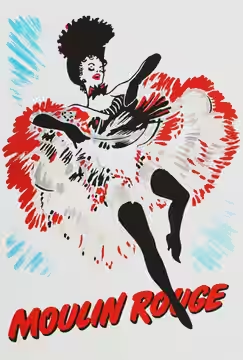
Watch the walk. In Moulin Rouge (1952) Ferrer plays Toulouse-Lautrec on his knees, his lower legs strapped up behind him in a harness, and the way he gets across a room, a quick stiff rock with the cane taking half the weight, tells you more about the man than any of the speeches he is handed. Above it sits the voice, a low baritone that never sounds as though it is working, and he used the same voice for a Dauphin, a painter, a lieutenant in a court-room and a Turkish Bey. He altered his body and left the voice alone, and the voice did the thinking.
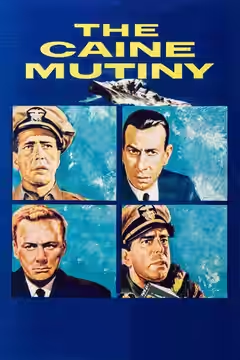
He came to films late and from the stage. He had been on Broadway since 1935, straight out of Princeton, and had played Iago and Cyrano before a camera ever saw him. The film debut was as Charles VII in Joan of Arc (1948), and the Cyrano he had already played on stage reached the screen in 1950. Then came Huston and Lautrec, and The Caine Mutiny (1954), in which he is Lieutenant Barney Greenwald and does his sharpest work in a court-room, where the voice has a case to make. From 1955 he directed as well, starting with The Shrike. After that the leads thinned out and the supporting parts began, and they kept coming, on film and on television, until his death in 1992.
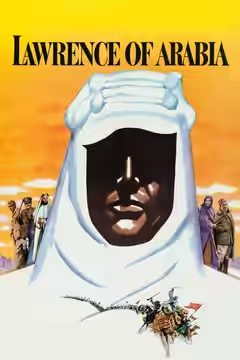
The best of the supporting parts is the shortest. He is on screen for a few minutes in Lawrence of Arabia (1962) as the Turkish Bey, in a scene we will not describe, and he said afterwards: "If I was to be judged by any one film performance, it would be my five minutes in Lawrence." Watching Lean's film again, we found it hard to argue. The Lautrec is the fuller case. What got at us in Moulin Rouge was not the harness but the face above it: he looks at a woman as if he already regrets the drawing, and that regret is the loneliest thing in a film full of colour and noise. Then the script hands him another speech about art and solitude, at roughly ten-minute intervals, and he reads it out because there is no other way to say it. Ferrer himself thought the film stated what it should have suggested, and on that too he was right.
The later work is thinner. The Swarm (1978) is the sort of film that needs a voice of authority for a few scenes, and by then that was largely what he was asked for. Start with Lean, then Huston's first reel and Ferrer's walk, and then The Caine Mutiny for the court-room. He wanted to be judged on five minutes. Most actors would ask for more time; he had worked out that he did not need it.
Biography
José Ferrer (also credited as Jose Ferrer and José Vicente Ferrer de Otero y Cintrón) was a Puerto Rican-born actor and director. Born in Santurce, Puerto Rico, on 8 January 1912, he died in Coral Gables, Florida, on 26 January 1992. A graduate of Princeton University, he began his professional acting career on Broadway in 1935 and later appeared in numerous stage productions, winning three Tony Awards.
Ferrer made his film debut in Joan of Arc (1948). He won the Academy Award for Best Actor for his performance in the title role of Cyrano de Bergerac (1950), becoming the first Hispanic actor to receive an Oscar. His other film roles include Henri de Toulouse-Lautrec in Moulin Rouge (1952), Lt. Barney Greenwald in The Caine Mutiny (1954), the Turkish Bey in Lawrence of Arabia (1962), and Padisha Emperor Shaddam IV in Dune (1984). He also appeared in television series including Columbo, Magnum, P.I. and Murder, She Wrote.