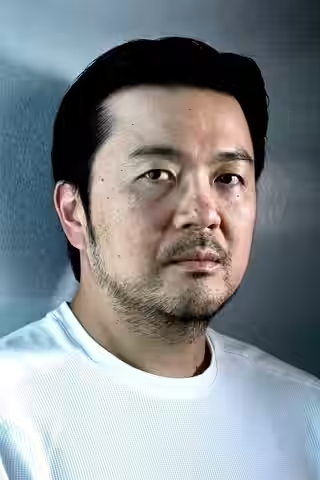
Justin Lin makes big films in which you can always tell where everybody is. He gave the Fast & Furious series its scope and its best entry; the stories have always been his weaker hand.
Fi1m perspective
Watch a Justin Lin action sequence and you will know, at every moment, where the cars are, where the people are and how far the fall is. That sounds like a low bar. It is not; most directors of expensive films clear it rarely and cut fast to hide the fact. Lin builds a set piece so that a street or a room has a map in your head before anyone runs across it, and then he runs them across it.
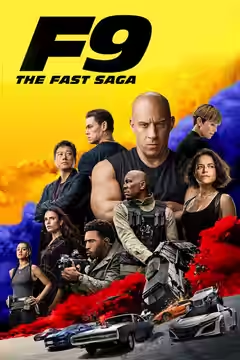
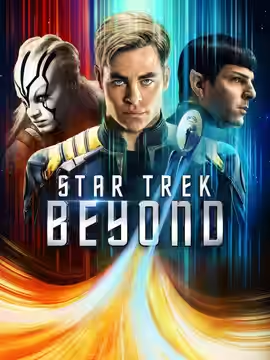
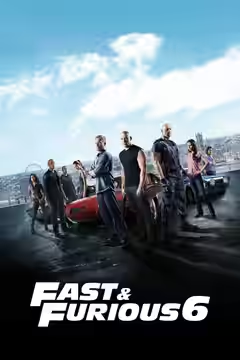
He started small, with Better Luck Tomorrow (2002), an independent film about Asian American students, and went to the studios with Annapolis and The Fast and the Furious: Tokyo Drift, both in 2006. Tokyo Drift took a series about street racers abroad, and Lin stayed for four more entries between 2009 and 2013, then made Star Trek Beyond (2016) before coming back for F9 (2021). He co-wrote Fast X (2023) and stepped back from directing it early in production. He has since returned to independent features, among them Last Days.
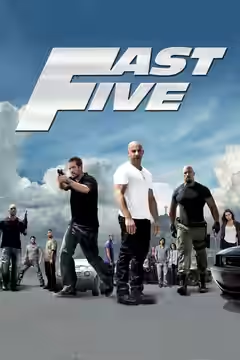
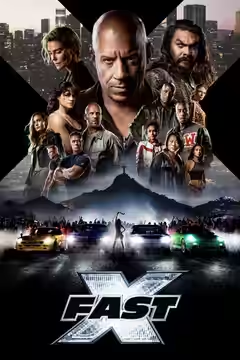
The Fast films are where his habits show clearest, and Fast Five (2011) is the one we would send you to. Lin had one heist and one city, Rio, and let Vin Diesel, Sung Kang and the rest knock about together for two hours; the safe dragged through the streets is the image the later films keep quoting, and it works because we could follow it. Kang and Diesel have each made five films with him, and he directs an ensemble the way he directs a chase, with everybody accounted for. Fast X raids that film for its villain and its safe, then scatters the family across separate continents, and Dan Mazeau and Lin's script never gets them back in a room. We walked out feeling we had seen a first half. Louis Leterrier directed it; the script Lin co-wrote is what fails it.
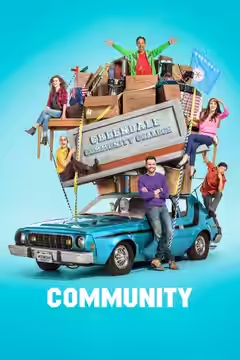
The best proof that the gift is his and not the budget's is a half hour of television. In Community's paintball episode, Modern Warfare, Lin turns a sitcom cafeteria and its corridors into a John Woo film, with Gary Hatfield lighting the flat, bright set as if it had never held a joke and Ludwig Göransson scoring it straight. We laughed at it, and then noticed we were following the geography of a cafeteria as closely as we would a bank vault. That is the whole trick, and he does not need a car to do it.
Story is where he is weaker. Annapolis was found thin by most critics, and on the evidence of Fast X the plotting is not what he should be writing. His films are better when someone else has decided what happens and he has decided where everyone stands. We shall see whether the smaller films he has gone back to give him rooms worth mapping; a director who can make a cafeteria feel like a war zone should not have trouble with a house.
Biography
Justin Lin, also credited as Yipin Lin, is a Taiwanese-American film and television director, producer and screenwriter. He was born in Taipei, Taiwan, on 11 October 1971 and studied film at the University of California, Los Angeles.
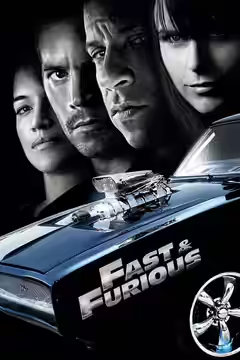
Lin directed episodes of the series Community (2009) and True Detective (2014). He wrote the story and screenplay for, and produced, Fast X (2023). He is also known for directing several entries in the Fast & Furious franchise, including The Fast and the Furious: Tokyo Drift (2006), Fast & Furious (2009), Fast Five (2011), Fast & Furious 6 (2013) and F9 (2021), as well as Star Trek Beyond (2016).