Michael Piller's idea of Star Trek was that the people mattered more than the planet, and that a problem should be there next week. It made Deep Space Nine the best drama the franchise has managed, and it took two slow seasons to show.
Fi1m perspective
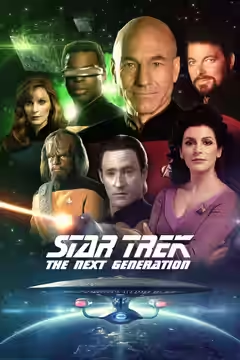
Star Trek's oldest habit is leaving. A ship arrives, somebody is helped or defeated, and the credits roll before anyone has to live with the result. Michael Piller's contribution, first as a writer on Star Trek: The Next Generation from 1989 and then as the man running its writing room from the third season, was to ask what happened to the people afterwards. He turned the alien of the week into a way of finding out what the crew were made of, and he did it while admitting he had little feel for the genre. "I don't know anything about sci-fi, but I can help your characters evolve," he told Gene Roddenberry, and it is a fair account of the whole career.
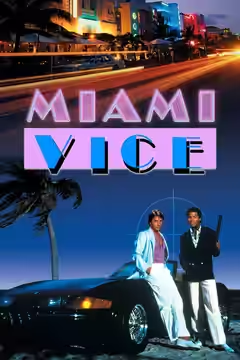
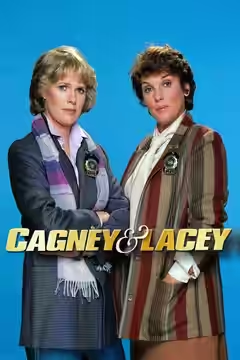
He had come from police shows, writing for Cagney & Lacey (1982) and Miami Vice (1984), and from television news before that, and something of both stuck: an interest in what a job does to the people who hold it, and a preference for stories with a next morning. On The Next Generation he kept an open door, reading scripts from anyone who sent one, which is how an unsolicited submission became 'Yesterday's Enterprise'. It is not the usual way to run a room. It gave the series a settled staff and, with it, a steadier voice.
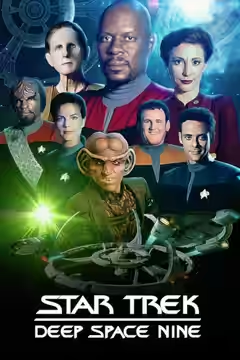
Star Trek: Deep Space Nine, which he created with Rick Berman and which began on 3 January 1993, is the argument made whole. The ship is taken away. The crew are posted to a battered station above Bajor, a planet just out from under a Cardassian occupation, and they have to stay. Piller wrote the pilot, 'Emissary', and ran the series at the start, so the slow first two seasons we complained of in our review are partly his; he was building something that needed time before it was worth watching. What got to us, more than we expected from a franchise we thought we knew, was the refusal to move on. A wrong done on Bajor in one week is still there the next, and the people we like have to carry it. Nobody warps out of the consequences.
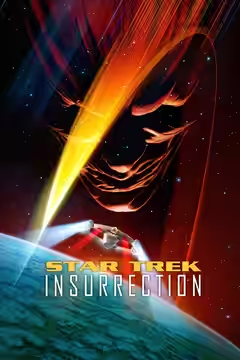
Star Trek: Voyager (1995), again with Berman, put the ship back and sent it further away than ever; he wrote its pilot, 'Caretaker', too. Jeri Taylor worked beside him across three of these shows. He wrote Star Trek: Insurrection (1998) with Berman. Away from the franchise, Legend (1995) did not last, which is the nearest thing to a mark against him that anyone has found. He then made The Dead Zone (2002) and Wildfire (2005) with his son Shawn Piller, and died on 1 November 2005.
Start with Deep Space Nine, and give it the two seasons it asks for. Patience was what he demanded of a franchise built on leaving, and it is the only thing he demands of you.
Biography
Michael Piller (30 May 1948 – 1 November 2005) was an American television writer and producer. He began his career in journalism, working for CBS News and earning Emmy awards for news production in North Carolina and Chicago, before moving to Los Angeles in the late 1970s to work as a censor at CBS.
Piller started writing for series including Simon & Simon, Cagney & Lacey and Miami Vice in the early 1980s. He joined Star Trek: The Next Generation as a writer in 1989, later becoming showrunner and executive producer. With Rick Berman he co-created Star Trek: Deep Space Nine (1993), serving as executive producer and writing its pilot episode 'Emissary', and co-created Star Trek: Voyager (1995). He co-wrote the screenplay for the film Star Trek: Insurrection (1998). Later projects included co-creating The Dead Zone (2002) with his son Shawn Piller and developing Wildfire (2005).
Piller died of cancer at his home in Los Angeles.