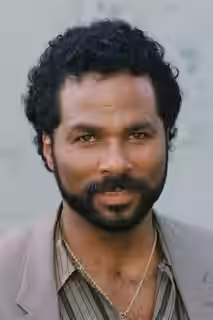
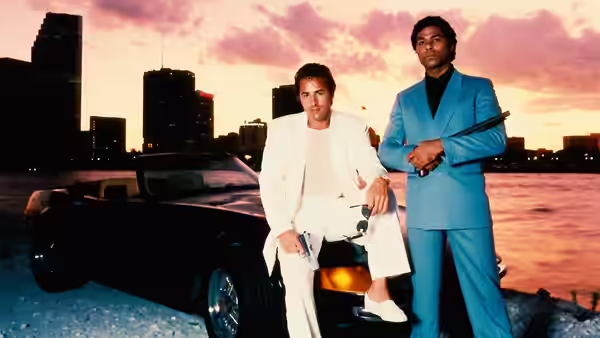
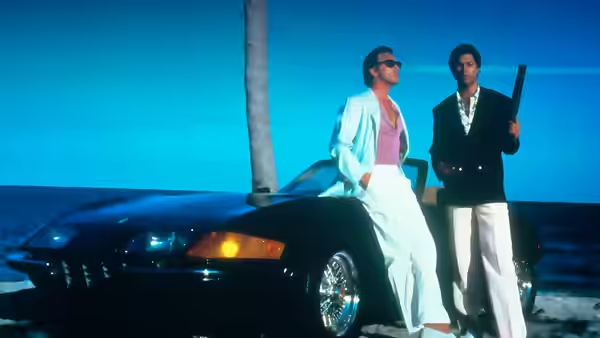
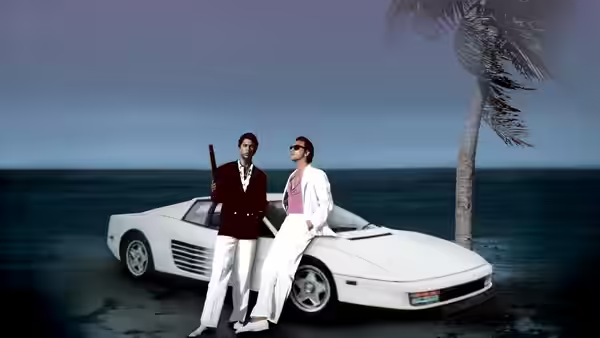
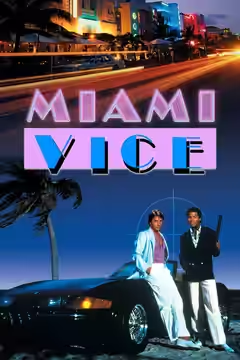
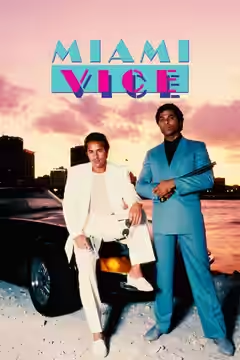
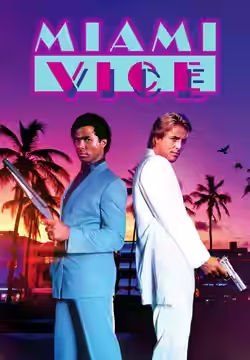
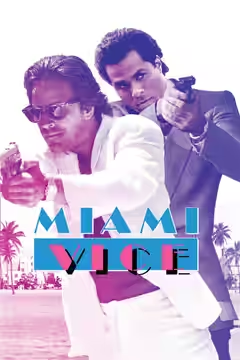
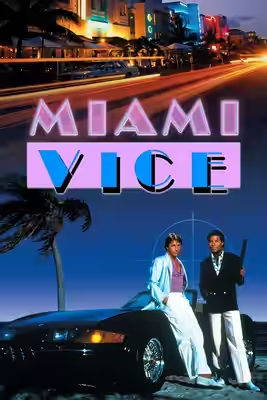
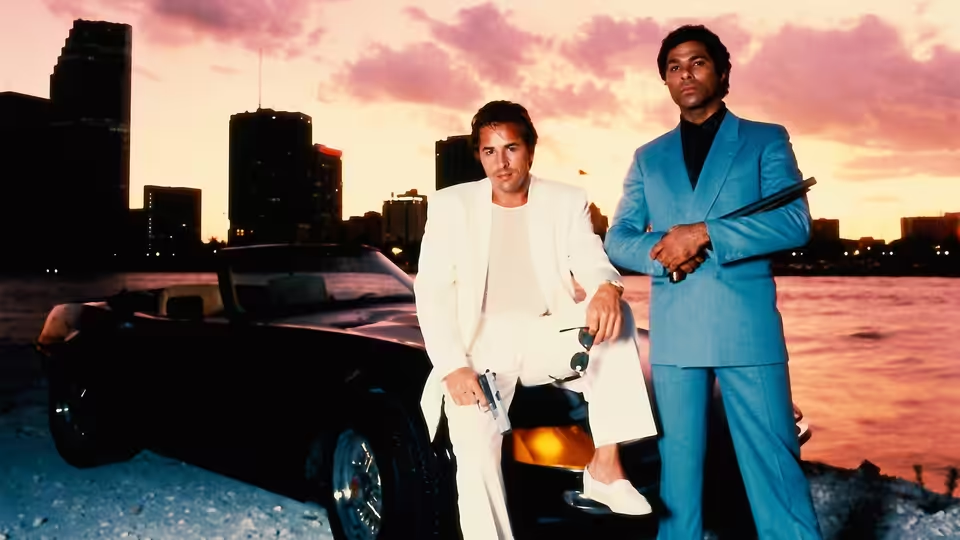
Sonny Crockett (Don Johnson) and Rico Tubbs (Philip Michael Thomas) with guns beside a black car at dusk
Series review

Miami Vice

1984 · Created by Anthony Yerkovich · Series · 48m · MPA TV-14

In a sentencePastel clothes turn out to be a poor defence against a miserable working life

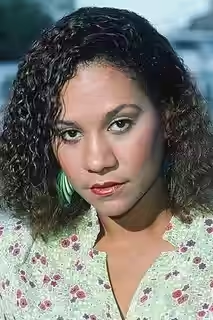
Sonny Crockett (Don Johnson) and Rico Tubbs (Philip Michael Thomas) are the central figures in a police drama that follows crime and the strain of investigating it. Around them are Gina Calabrese (Saundra Santiago), Trudy Joplin (Olivia Brown) and Martin Castillo (Edward James Olmos). The cases unfold amid pastel clothes and music, with montages that pause the police business to dwell on the characters’ unease. Across five seasons, the series follows its leads through investigations while returning to their dissatisfaction with the work.

Plays from YouTube when you press play; nothing loads from them until then.

Fi1m review

We recommend Miami Vice for its compelling leads, expressive music and the sadness beneath the pastel clothes. The early seasons are the strongest; later episodes expose storytelling that cannot always match the care given to the images.

Created by Anthony Yerkovich, Miami Vice makes a persuasive case for taking the appearance of a police drama seriously. The pastel clothes and prominent music can look like distractions, but they help make the central men attractive before the stories start to trouble our pleasure in watching them. We recommend it, with a substantial allowance for uneven storytelling across its five seasons. The strongest stretches give their stylish leads enough unhappiness to make all that polish feel uncomfortable.

Don Johnson, as Sonny Crockett, and Philip Michael Thomas, as Rico Tubbs, make the attention paid to clothes and attitude worthwhile. We need to find these men compelling before their dissatisfaction can trouble us, and the performances make that investment easy. Edward James Olmos gives Martin Castillo a welcome gravity, without making seriousness look like an effort. There is a pleasure in simply spending time with this cast, which matters in a programme that so often lets the case wait.

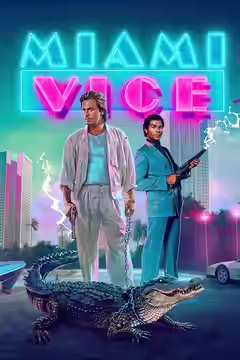
The cinematography, with Oliver Wood and Robert E. Collins among those responsible, gives colour a proper dramatic function. Pastels encourage us to enjoy the surface before the grimmer police stories make that enjoyment uneasy; the visual choices keep affecting how we read the people. There are passages in which the clothes seem to have received more thought than the case. Even when an investigation fails to grip us, we keep watching for the colour and the way the people occupy the screen.

Editors including Douglas Ibold and Dov Hoenig help give the series room for its music-led passages, where the forward movement of a case can briefly stop mattering. Jan Hammer’s music is central to that experience, taking on some of the work that dialogue would otherwise have to do. We found the montages unexpectedly melancholy, because they allow the leads’ unease to linger instead of hurrying towards another piece of police business. The music can carry more feeling than the surrounding script has earned, but those pauses are also where the programme most often gets through to us.

The weaker later episodes expose how much the series depends on those resources. Once the visual approach becomes familiar, weak writing becomes harder to overlook, and a sombre mood can start to feel like an instruction to take ordinary material seriously. We prefer the early seasons, where the stories give the actors more convincing reasons to look so troubled. The writing needs to give these people enough to do; looking burdened cannot sustain every episode.

For a police series, the unusual pleasure is being allowed to sit with a mood after the plot has done its immediate business. We would not make grand claims for every story here, or treat visual influence as a substitute for good writing. There is enough feeling in the strongest episodes to make the commitment worthwhile. Start at the beginning and take it an episode at a time; its unevenness becomes harder to forgive when several cases run together.

Critical consensus AI synthesised

80
Positive
5
Mixed
0
Negative
0
Vulture
19 September 2024 · Matt Zoller Seitz
90*

The critic hails the 1984 pilot and series as the birth of cinematic television, praising its stylish postmodern neo-noir aesthetic, innovative production values, and cultural impact on TV visuals and music integration.

Read the full review →
The Guardian
10 March 2016
80*

The critic praises the series' grit beneath its flashy surface and its influence on modern TV, noting its cinematic style, anti-hero leads, and existential montages that helped pave the way for complex cable dramas. They single out the strong early seasons for their downbeat endings and guest-star cameos while noting weaker later episodes.

Read the full review →
Empire
17 July 2006
75*

This season is the definitive Vice, where the pastel patrol really hit their stride with sharper and often funnier scripts than the first season. The camera and editing styles that would go on to influence MTV are cranked to the full, and the show still holds up as a decent and influential cop show.

Read the full review →
The AV Club
10 September 2014 · Phil Dyess-Nugent
70*

The piece credits Miami Vice with giving television a flashy visual makeover through its MTV-inspired style and production values, while noting it was more successful at reinventing the medium's look than at consistent storytelling depth.

Read the full review →
Collider
19 April 2022 · Ashni Roman
85*

The critic praises Miami Vice as a groundbreaking series that elevated the police drama genre with its bold exploration of crime, corruption, and the psychological toll on officers. It singles out specific episodes for their innovative handling of themes like homophobia, sexual assault, and mental health in law enforcement.

Read the full review →

Straight answers AI written, from our review

Is Miami Vice worth watching?
Miami Vice is worth watching for anyone who wants a police drama that lets a mood linger after the case is done, and we scored it 81. Don Johnson, Philip Michael Thomas and Jan Hammer's music carry it, though the later seasons expose writing that cannot match the images. Start at the beginning and take it an episode at a time.
How long is Miami Vice, and what is it rated?
Miami Vice has episodes of about 48m and is rated TV-14 by the MPA in the US. It is a crime and drama series.
Where can I watch Miami Vice in the US?
Miami Vice is streaming on Tubi in the US. Availability is checked daily; the links above go straight to each service.
How violent or frightening is Miami Vice, and is it suitable for children?
Miami Vice is a crime drama about the strain of police work, carrying an 18 certificate in the UK and TV-14 in the US, so it is for adults and older teenagers rather than children. Our review found its violence secondary to its melancholy; the grimmer police stories unsettle more than they frighten, and the squeamish should manage most episodes.
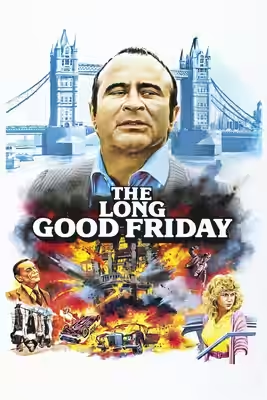
How does Miami Vice compare to The Long Good Friday?
Miami Vice is a five-season American police series built on colour, music and unhappy cops, while The Long Good Friday is a single tight London crime film about a boss whose confidence collapses. The film is the more disciplined piece of storytelling, with Bob Hoskins at its centre; the series offers longer company with its leads but uneven writing. Choose the film for a sharp evening, the series for a slow immersion.

Cast

If you liked this, try…

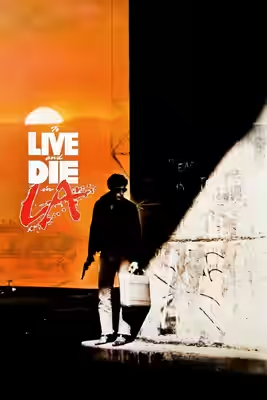
  1. To Live and Die in L.A. (1985) · not reviewed yetSunlit police work and a taste for danger that makes the investigators suspect.

  2. The Long Good Friday (1980, Fi1m 88)A crime boss’s confidence unravels amid money, development and mounting unease.

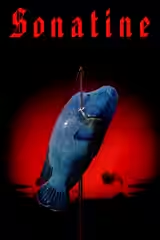
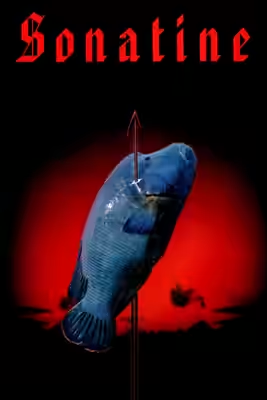
  3. Sonatine (1993) · not reviewed yetFor the stretches when waiting around becomes stranger and sadder than the violence.

  4. The Shield (2002) · not reviewed yetAnother police series where charisma makes bad conduct harder to dismiss.

  5. Gomorrah (2014) · not reviewed yetCrime television with a colder palette and fewer comforting distinctions between its characters.

Free account

Know what to watch tonight

Two lists that know where things are streaming, collections you can share, your own score beside ours, and Discover that remembers what you have seen.

  • Want to see, sorted by what is streaming now
  • Seen, with your score out of ten
  • No adverts, ever