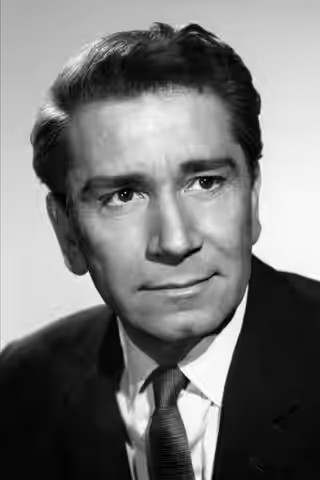
Richard Conte played hard men on both sides of the law for thirty years, nearly always in crime pictures and nearly always with the same hard eyes. In Ocean's Eleven he is the one member of the crew who appears to have read the script.
Fi1m perspective
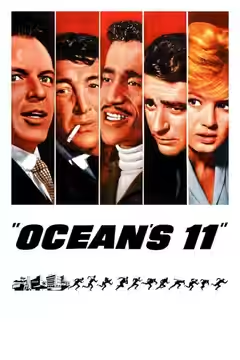
In Ocean's Eleven (1960) eleven men gather in Las Vegas to rob five casinos, and ten of them behave as if the camera has interrupted a drink. The eleventh is Richard Conte. His Anthony Bergdorf is an electrician with a bad heart and a boy he wants to leave money to, and Conte plays him as though those two facts are the whole film. They are not, which is Lewis Milestone's problem rather than his. The picture is only briefly about anything, and it is about something whenever Conte is on. We were surprised how much we minded what happened to him, in a film we otherwise watched with our arms folded, because he is the one man in it who seems to be in Las Vegas for a reason other than the nightclub act.
That is the Conte habit: he takes the part seriously when nobody else does. He came to film from the stage in 1939 and signed with 20th Century-Fox in 1942, and after the war pictures the studio put him into the noirs that are the spine of his reputation. Call Northside 777 (1948) has him as a wrongly imprisoned man opposite James Stewart. Thieves' Highway (1949) has him top-billed for Jules Dassin. When the noir cycle wound down, so did the contract, and the 1950s were B-pictures and crime dramas taken as they came. One of them, Joseph H. Lewis's The Big Combo (1955), gave him the villain Mr Brown, which is the performance most often mentioned when his name comes up.
The cost of all this is plain. He was cast as gangsters, mob bosses and ethnic toughs so often that little outside the crime picture ever reached him, and there are people who file him as a reliable B-picture lead and leave it there. We think that undersells what the crime picture got out of him. The face that made him a convincing gangster made him a convincing man wronged by one, and he moved between the two without adjusting anything we could see. He never seems to be asking to be liked, which is why the wronged men are not sentimental and the villains are not hammy.
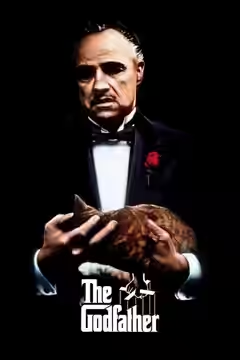
The 1960s took him to television and to Europe, and in 1968 he directed a low-budget war film himself. Then came Don Emilio Barzini in The Godfather (1972), the rival don, the part most people now know him by and the last large one before his death in 1975. It is a small role in a long film, and he is exactly as still in it as he was in Las Vegas twelve years earlier. If you have only the Sinatra film to hand, watch him and wait for the heist. If you can get to the Fox years, start there; that is where the studio, for once, wanted what he had.
Biography
Richard Conte (1910–1975) was an American actor. Born Nicholas Peter Conte in Jersey City, New Jersey, he worked as a singing waiter before being discovered by Elia Kazan and John Garfield, who secured him a scholarship at the Neighborhood Playhouse in New York.
He signed a contract with 20th Century Fox in 1942 and appeared in many films during the 1940s and 1950s, including Call Northside 777 (1948), Thieves' Highway (1949), The Big Combo (1955) and Ocean's Eleven (1960). He later gained recognition for his portrayal of Emilio Barzini in The Godfather (1972).
Conte also made television appearances in series such as The Twilight Zone, Alfred Hitchcock Presents and The Untouchables. He died in Los Angeles in 1975.