Richard E. Grant plays men who take their own grievances seriously and dares us to laugh anyway. He has done it since Withnail & I, mostly from the edge of other people's films, and is best when given someone to need.
Fi1m perspective
Withnail, in Withnail & I (1987), complains about the cold, the countryside and the state of his career as though each were a personal injury, and Grant never once lets us see the actor standing behind him finding it funny. That is the trick, and it has been the trick ever since. Sir James Catton in Saltburn (2023) is delighted to have a guest and cannot remember why. Jack Hock in Can You Ever Forgive Me? (2018) is charming in a way you would not lend money to. None of these men knows he is ridiculous, and Grant refuses to tell them.
The career divides fairly neatly. Bruce Robinson gave him Withnail and then How to Get Ahead in Advertising (1989), a cruder film that fixed the idea of Grant as a mouthpiece for the unpleasant. Hollywood took the hint and gave him supporting parts, several in period dress: Tom Oakley in Robert Altman's The Player (1992), Dr Seward in Francis Ford Coppola's Bram Stoker's Dracula (1992), Larry Lefferts in Martin Scorsese's The Age of Innocence (1993). All three are good films, and in none of them is he the reason. He wrote and directed Wah-Wah (2005), about his own childhood in Swaziland, then went back to the side of the frame, including as the voice of Barkis Bittern in Corpse Bride (2005), the guest nobody invited.
The late turn is Can You Ever Forgive Me?, and it is the performance to see if you see one. Marielle Heller gives Grant a friendship rather than a scene, and Melissa McCarthy gives him someone to be untrustworthy with. His charm has a wobble in it, and the film lets us stay unsure how much either of them has to offer the other. We were moved, more than we expected, by the plain need underneath the insults; the insults are funny, and the film lets us see what they are covering. It is the thing he did as Withnail, thirty years on and much quieter.
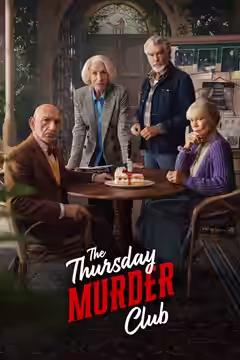
What does not work is easy to name. When a script treats him as furniture, he sits there. Bobby Tanner in The Thursday Murder Club (2025) is a suspect interviewed over tea, and Grant can do nothing with a man nobody in the film is afraid of. Even Saltburn, where he and Rosamund Pike earn the ticket, hands him a running joke rather than a part. He has been cast as the scathing, the vain and the faintly repellent for most of forty years, and he has said as much with some grace: "There is a sweet irony that playing an out-of-work actor proved to be my audition card."
Start with Withnail & I, go straight to Can You Ever Forgive Me?, and treat the rest as good company at other people's dinners. He is often the best-dressed man at the table. Someone should keep writing him a reason to be there.
Biography
Richard E. Grant (born Richard Grant Esterhuysen) is an actor. He was born on 5 May 1957 in Mbabane, Swaziland (now Eswatini), and studied drama at the University of Cape Town before moving to London. He made his film debut as Withnail in the 1987 comedy Withnail and I.
Grant is known for roles in films including Bram Stoker's Dracula (1992), Gosford Park (2001), Jackie (2016), Logan (2017), Can You Ever Forgive Me? (2018), Star Wars: The Rise of Skywalker (2019), Saltburn (2023) as Sir James Catton, Argylle (2024) as Director Fowler, and The Thursday Murder Club (2025) as Bobby Tanner. On television he has appeared in Game of Thrones (2016) as Izembaro and Loki (2021) as Classic Loki.