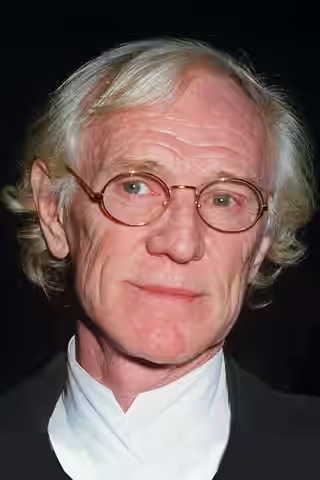
Richard Harris was a big man with a voice built for the back of the stalls, and he never learned to use it quietly. That was his gift in the 1960s and his weakness for years after, until age turned the noise into authority.
Fi1m perspective
Put Richard Harris in a scene and the furniture seems to shrink. He was a large man with a voice that carried without trying, and he did not so much say lines as announce them. In his twenties and thirties, that made him one of the most physical actors of the British New Wave. In his sixties, the same voice, slowed and lowered, made him the natural choice whenever a film needed an emperor or a wise old man to lend it weight.
He started on stage in the mid-1950s, with Joan Littlewood's Theatre Workshop among others, and was on screen from 1958. The breakthrough was This Sporting Life (1963), for Lindsay Anderson, as Frank Machin: a raw, bruising piece of acting that still shows what he could do when he had a whole film to himself. Camelot (1967), as King Arthur, and A Man Called Horse made him an international name. The trouble was that the intensity had no dimmer switch. Through the 1970s and 1980s he was too often the loudest thing in a film that needed something quieter, and the films themselves were frequently not worth the effort he put into them. The 1980s were quiet.
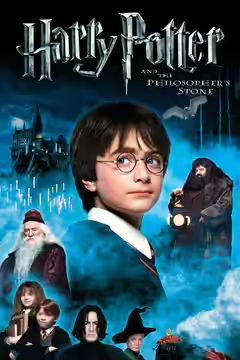
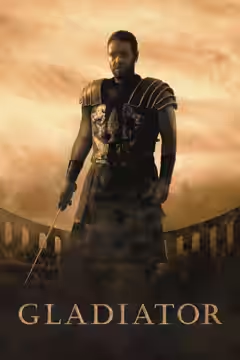
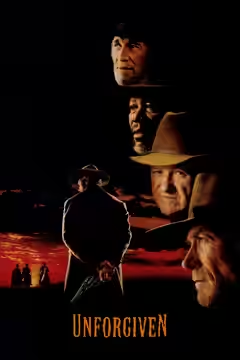
The revival came with The Field (1990), for Jim Sheridan, as Bull McCabe, a role that gave the old force somewhere to go. After it he settled into the kind of supporting part where the voice does most of the work: English Bob in Clint Eastwood's Unforgiven (1992), and Marcus Aurelius in Ridley Scott's Gladiator (2000). Neither film is his. Our review of Unforgiven belongs to Eastwood and our review of Gladiator to Russell Crowe, and neither stops to single him out. But we will admit that in Gladiator we were more moved by the old emperor than we expected to be by a man whose job is to set up the plot, and it was the tiredness Harris put under the dignity that did it. His last major role was Albus Dumbledore in Harry Potter and the Philosopher's Stone (2001), which handed him to a generation who had never seen him young. He died in 2002.
Start with This Sporting Life if you want to know what the fuss was about, and go to Unforgiven to see how well the instrument lasted, in a film good enough to hold it. Between the two lie twenty years of films that did not deserve him, which is a common story for an actor of his size and a rarer one for an actor this good.
Biography
Richard Harris (1930–2002) was an Irish actor. Born in Limerick, he trained at the London Academy of Music and Dramatic Art and worked in stage productions before his film debut in the late 1950s.
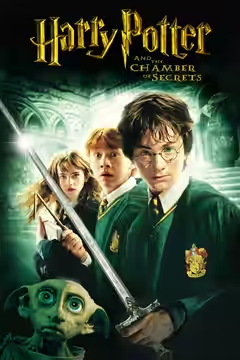
He received Academy Award nominations for This Sporting Life (1963) and The Field (1990). Later roles included English Bob in Unforgiven (1992), Marcus Aurelius in Gladiator (2000), and Albus Dumbledore in Harry Potter and the Philosopher's Stone (2001) and Harry Potter and the Chamber of Secrets (2002).
Harris also recorded the hit song "MacArthur Park" in 1968.