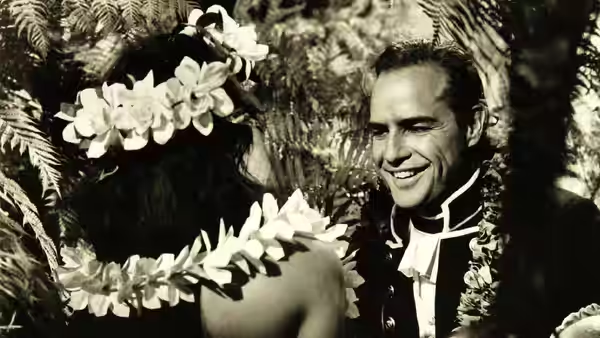
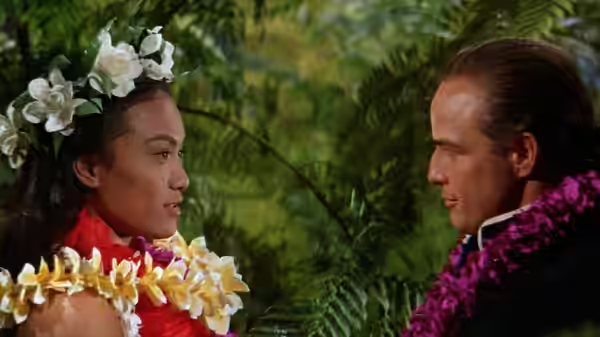
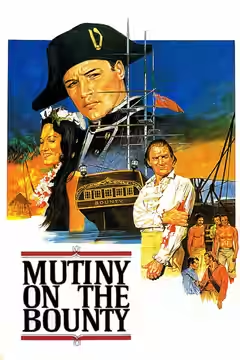
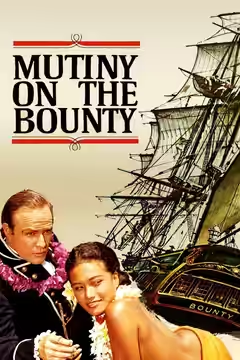
A woman with a flower crown faces a man with leis in close profile amid foliage
Film review

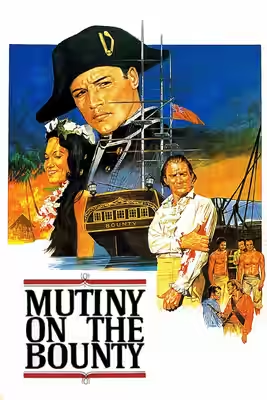
Mutiny on the Bounty

1962 · Directed by Lewis Milestone · 3h 05m · MPA NR

In a sentenceThree hours at sea, and the only man aboard who knows where he is going is the villain

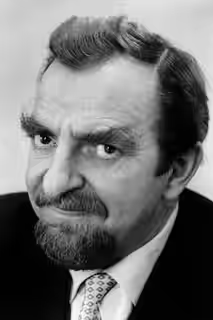
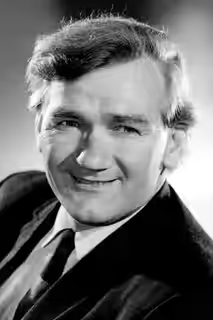
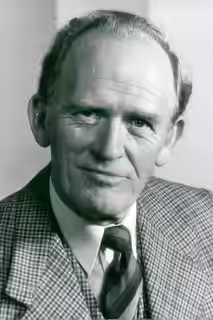
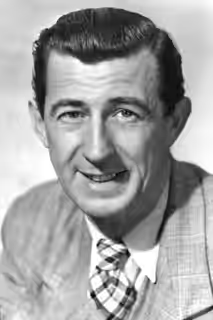
Portsmouth, 1787. HMS Bounty sails for Tahiti under Captain William Bligh (Trevor Howard) to collect a thousand breadfruit plants, meant as cheap food for slaves in the West Indies. His second-in-command, Fletcher Christian (Marlon Brando), arrives at the quay late, in a carriage and in company, and treats the voyage as an inconvenience. Bligh treats it as a race. He drives the crew hard, has two cheeses sent ashore and Seaman John Mills (Richard Harris) flogged for saying where they went, and tries to force a passage round Cape Horn in the teeth of the weather before turning back to go the long way round Africa. Also aboard are the botanist William Brown (Richard Haydn), John Fryer (Eddie Byrne) and Alexander Smith (Hugh Griffith). Tahiti, when they reach it, has Maimiti (Tarita) waiting.

Plays from YouTube when you press play; nothing loads from them until then.

Fi1m review

Trevor Howard’s Bligh is a small, exact, frightening man and the ship around him is a real one; Marlon Brando’s Fletcher Christian is an idea that never becomes a person. At 185 minutes, it is a fine hour of seafaring inside a long afternoon.

Lewis Milestone directs Charles Lederer’s screenplay from the Charles Nordhoff and James Norman Hall novel, and the result runs 185 minutes, which is long enough to sail to Tahiti and in places feels like it. The story has not changed: Bligh (Trevor Howard) drives HMS Bounty and her men too hard on the way out, the men find paradise, and the way back is where it breaks. What is new is the notion of Fletcher Christian (Marlon Brando) as a bored gentleman who has to be dragged into caring. It is a fair notion. The film has one great performance, one strange one and one fine ship, and it needed a firmer hand on the cutting bench than it got.

Howard is the great performance. His Bligh is small, exact and resentful, a man who knows the crew and the officers look down on him and has decided to earn it. He does not bellow. When two cheeses go missing and John Mills (Richard Harris) says out loud where they went, Bligh has him flogged for insolence, and Howard watches the lash the way a clerk watches a column of figures. We were frightened of him, more than we expected to be in a film with this much sunshine, because he never once seems to be enjoying it.

Brando is the strange one. He plays Christian with a clipped, nasal, upper-class English drawl, a handkerchief and a habit of sniffing at everything as if it were slightly off. Moss Mabry dresses him in ruffles and silk, and for the first hour it works as comedy: a fop on a working ship, wrinkling his nose at the salt pork while the yards are being reefed. The trouble is that Brando holds the note for two hours. Christian is supposed to be a man who changes, and when the change comes it registers as a change of clothes. The scenes in which he is meant to be angry have the same temperature as the scenes in which he is meant to be bored.

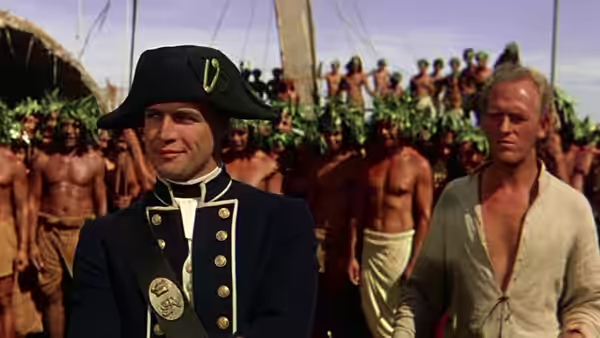
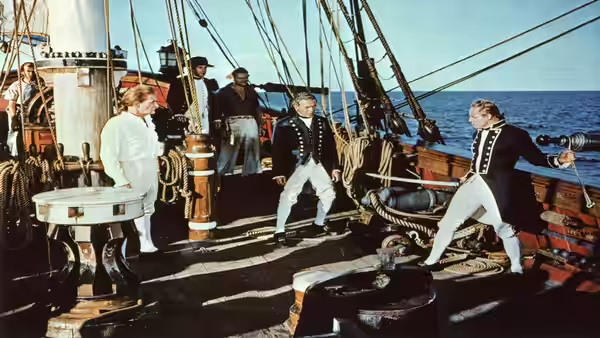
The ship is the reason to watch. Robert L. Surtees shoots her wide, with the whole vessel in frame from bowsprit to mizzen, and the men on the yards look the size they are. The attempt on Cape Horn is the best stretch: green water coming over the bow, men lashed to the wheel, the deck tilting until we lost our sense of which way was down. Bronislau Kaper scores it with heavy brass and lets the wind and canvas do the rest. We sat forward through all of it. The arrival at Tahiti, with what looks like the whole island coming out in canoes, is nearly as good, and Kaper’s drums and chorus give it a size the rest of the film keeps reaching for.

The rest is the problem, and the problem is length. Lederer gives every scene a speech, and John McSweeney Jr. lets every speech finish. The Tahiti section is an hour of soft light and flowers in which nothing much happens except that Christian meets Maimiti (Tarita), who is lovely and given almost nothing to say. Harris starts raw and promising and then largely disappears into the crew. Hugh Griffith’s Smith is the comic drunk and does it well, but the film goes back to him one time too many. What comes after the mutiny we will not describe, except to say that the last forty minutes are talk, and by then we were restless and then irritable about being restless.

Milestone made All Quiet on the Western Front in 1930, a film about men and the officers who spend them that wastes nothing. This one wastes a good deal. Against the 1935 version, it has the better Bligh, the better ship and the weaker Christian, and it is an hour longer. Most critics have been harder on it than we are, and the objection is nearly always Brando; we think Howard and Surtees buy the film more goodwill than the consensus allows, though not a great deal more.

See it for the Horn and for Howard, and see it on the largest screen you can find, because Surtees composed it for one. At home the sea shrinks and the speeches grow, which is the wrong way round for this film.


Critical consensus AI synthesised

45
Positive
1
Mixed
1
Negative
2
Variety
31 December 1961 · Variety Staff
70*

The film emerges as a physically superlative entertainment that is often overwhelmingly spectacular, though short of genuine dramatic greatness. It is generally superior to the 1935 version, with terrific scenes of action and strong performances from the cast.

Read the full review →
The New York Times
9 November 1962 · Bosley Crowther
50*

The sheer magnitude and energy of the sea adventure render it a highmark of filmed adventure, but Brando's eccentric portrayal of Christian dominates and unbalances the drama, with direction credit shared unclearly between Reed and Milestone.

Read the full review →
Empire
2 July 2007 · Will Lawrence
30*

The critic calls the film a stiff, dramatically barren three-hour opus that is visually attractive but colourless overall. They single out Marlon Brando’s foppish performance and nasal accent for particular criticism, noting his excessive creative control turned the film into a vanity project that sank under its budget.

Read the full review →
The New Yorker
10 November 1962 · Brendan Gill
30*

The film is a gaudy bauble of enormous size and negligible value that only children will sit through uncomplaining. The direction and screenplay are competent but fail to achieve genuine success, hampered by Brando's eccentric performance as Fletcher Christian.

Read the full review →

Straight answers AI written, from our review

Is Mutiny on the Bounty worth watching?
Mutiny on the Bounty (1962) is a mixed recommendation from us, and we scored it 56. Trevor Howard's small, exact, frightening Bligh and the Cape Horn sequence, shot wide by Robert L. Surtees with the whole ship in frame, are worth anyone's time. Marlon Brando's Fletcher Christian never becomes a person, and at 185 minutes the speeches outlast the seafaring.
How long is Mutiny on the Bounty, and what is it rated?
Mutiny on the Bounty runs 3h 05m and is rated NR by the MPA in the US. It is an adventure and drama film.
Where can I watch Mutiny on the Bounty in the US?
Mutiny on the Bounty is streaming on Tubi in the US, and it is also available to rent from Amazon Prime Video from $2.99. Availability is checked daily; the links above go straight to each service.
How violent or frightening is Mutiny on the Bounty, and is it suitable for children?
Mutiny on the Bounty (1962) carries a UK 15 certificate, and its harshest moments are the flogging of a seaman for insolence and the storm off Cape Horn, in which men are lashed to the wheel as green water comes over the bow. Bligh's cold cruelty is more unsettling than anything graphic. It is not for young children, but teenagers who can sit through three hours should manage it.
How does Mutiny on the Bounty compare to Master and Commander: The Far Side of the World?
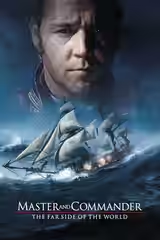
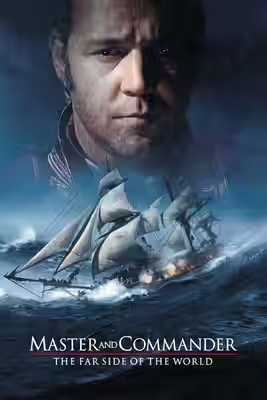
Mutiny on the Bounty (1962) is the weaker of the two, and Master and Commander: The Far Side of the World is the one we recommend without hesitation. Both treat a wooden ship as a working place, but Peter Weir's officers earn their authority where Bligh seizes his, and Weir's film wastes far less time on speeches. Howard's Bligh is the one thing the older film does better.
Is Mutiny on the Bounty based on a true story or a book?
Mutiny on the Bounty (1962) is adapted from the novel by Charles Nordhoff and James Norman Hall, which itself dramatises the real voyage of HMS Bounty under Captain William Bligh in 1787. Charles Lederer's screenplay keeps the familiar story and changes chiefly the idea of Fletcher Christian as a bored gentleman. Knowing the book or the history is no requirement; the film explains itself at length.
What should I watch after Mutiny on the Bounty?
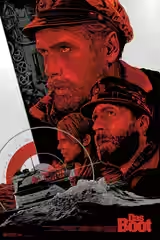
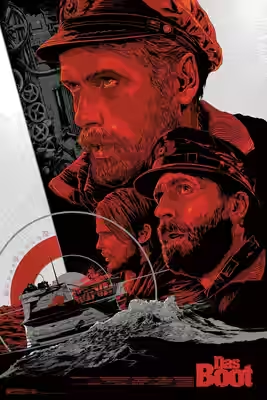
After Mutiny on the Bounty, try Master and Commander: The Far Side of the World (2003, Fi1m 86): A wooden ship as a working place, and officers who earn their authority. Then Das Boot (1981, Fi1m 89): Men in a metal tube, and the sea doing most of the acting.

Cast

Awards

Academy Awards, 1963

Nominated
Best Art Direction, Color
Nominated
Best Cinematography, Color
Nominated
Best Film Editing
Nominated
Best Original Score
Nominated
Best Picture
Nominated
Best Special Effects

If you liked this, try…

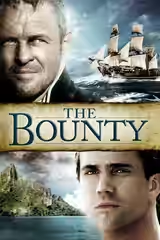
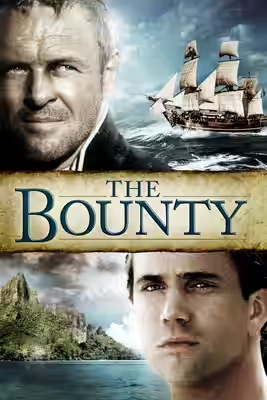
  1. The Bounty (1984) · not reviewed yetThe same voyage told in half the time, with a Bligh you can almost pity.

  2. Master and Commander: The Far Side of the World (2003, Fi1m 86)A wooden ship as a working place, and officers who earn their authority.

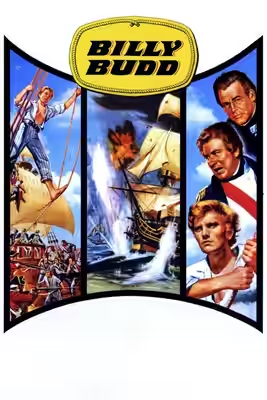
  3. Billy Budd (1962) · not reviewed yetMelville’s innocent seaman and a captain who knows the law is wrong.

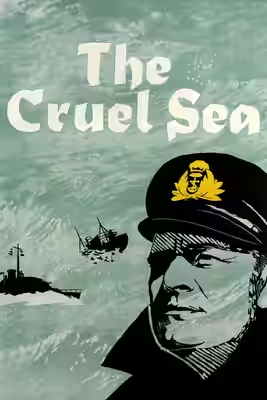
  4. The Cruel Sea (1953) · not reviewed yetCorvettes in the Atlantic; command as exhaustion rather than glamour.

  5. Das Boot (1981, Fi1m 89)Men in a metal tube, and the sea doing most of the acting.

Free account

Know what to watch tonight

Two lists that know where things are streaming, collections you can share, your own score beside ours, and Discover that remembers what you have seen.

  • Want to see, sorted by what is streaming now
  • Seen, with your score out of ten
  • No adverts, ever