Richard Haydn spent thirty years playing one man: the pinched, over-enunciated Englishman, fussy and faintly aggrieved, wanted for a scene and no longer. The voice was the whole act, and it worked best where the voice was all there was.
Fi1m perspective
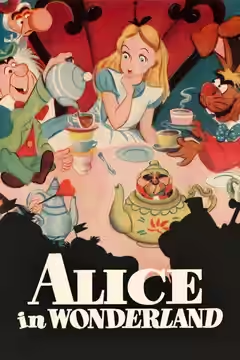
Start with the vowels. Richard Haydn's Caterpillar in Alice in Wonderland (1951) blows them out as coloured smoke, each syllable stretched until the animators have something to draw, and the joke is that the sound plainly came first and the picture is only keeping up. That is Haydn's method in a single puff. He spoke through his nose, bit down on every consonant and let a faint air of grievance settle over the lot, as if the world were being slightly common at him. We laughed, and then noticed we were laughing at a noise rather than a drawing, which does not happen often in Disney.
He came to films at thirty-six, after music hall and a spell running a banana plantation, and the music hall shows: this was a performer who had learned to land a character from the back of the stalls with nothing but his delivery. Hollywood put him straight to work in 1941, in Charley's Aunt and in Ball of Fire, where his Professor Oddley set the pattern he kept for the rest of his career: the fussy academic, the pompous official, the butler who disapproves. And Then There Were None (1945) gave him Thomas Rogers, the manservant, and a chance to do the type with the comedy turned down. In the late 1940s he directed three films for Paramount, and then went back to standing in front of the camera.
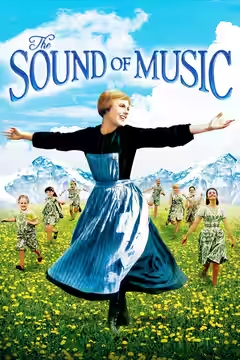
Most people now meet him as Detweiler in The Sound of Music (1965), the family friend and promoter. Our own review did not find room to mention him, and that is about right. It is Julie Andrews's film, and the songs', and Detweiler belongs to the adult half of it, which we found slow in places. Haydn does what he was hired to do, which is to be recognisably Haydn for a few minutes at a time and then get out of the way of the next number. He turned up once more in Young Frankenstein (1974), as Herr Falkstein, his last big film, and the casting makes sense: Mel Brooks wanted exactly the over-articulated eccentric Haydn had been supplying since 1941.
The limit is built into the gift. A voice that distinctive is a stamp, and it marks every part the same. He does not disappear into a role; he arrives in it and stays himself, which is why he was cast in one-scene parts and why the parts stayed one scene. It is also why the animation suits him so well, since nobody expects a caterpillar to disappear into anything. If you want the case for him in a few minutes, find the garden in Alice, in among Mary Blair's flat slabs of magenta and teal, and listen. If you want the case against, count how many times you have watched The Sound of Music without thinking about Detweiler once.
Biography
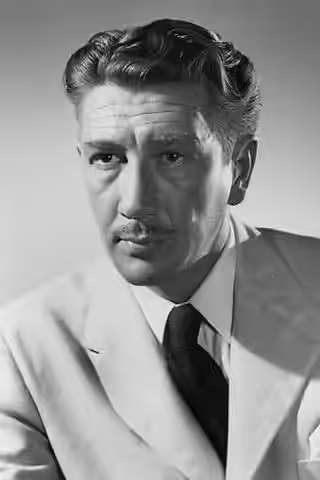
Richard Haydn, born George Richard Haydon, was a British actor. He was born on 10 March 1905 in Camberwell, London, and died on 25 April 1985 in Pacific Palisades, California.
After working as a music hall entertainer and on a banana plantation in Jamaica, he joined a touring British theatre troupe and shortened his surname. He made his Broadway debut in 1939 in Set to Music.
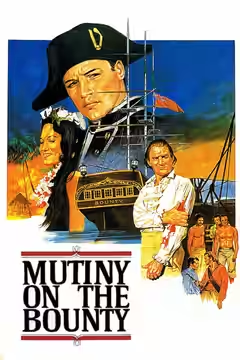
Haydn appeared in films including Ball of Fire (1941) as Professor Oddly, And Then There Were None (1945) as Thomas Rogers, voicing the Caterpillar in Alice in Wonderland (1951), Mutiny on the Bounty (1962) as William Brown, Max Detweiler in The Sound of Music (1965), and Herr Falkstein in Young Frankenstein (1974). He also appeared in television series such as The Twilight Zone (1960) and Bewitched.