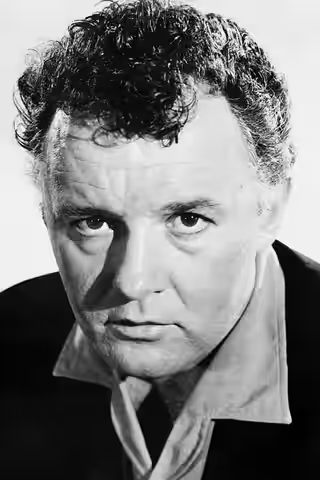
Steiger acted with his whole body, jaw included, and the question was always whether the director could hold him. When one could, in On the Waterfront and The Pawnbroker, he was as good as anyone. When nobody could, he ate the set.
Fi1m perspective
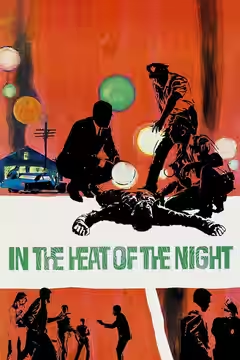
Bill Gillespie, the police chief in In the Heat of the Night (1967), chews gum. He chews it while he is being a fool and he chews it while he works out that he has been one, and the speed of the jaw tells you which. That is Steiger's way of working in a single habit: find one thing the man's body does and let it say what the man will not. Raoul Peck cuts that jaw into I Am Not Your Negro (2017) as evidence for James Baldwin's case against Hollywood, and even shown as a symptom it is plainly acting of a high order.
He came out of live television, more than 250 productions in the late 1940s and early 1950s, including the title part in the 1953 teleplay Marty, with a first film in Teresa (1951). Elia Kazan gave him Charley Malloy in On the Waterfront (1954) and he spent the rest of the decade in character parts. The 1960s were the peak: Sol Nazerman in Sidney Lumet's The Pawnbroker (1964), Komarovsky in David Lean's Doctor Zhivago (1965), Gillespie for Norman Jewison, and then Juan Miranda in Sergio Leone's Duck, You Sucker (1971). After that he kept working, in films and on television, into the 1990s and beyond, and the later work is where the complaints gather.
Our review of On the Waterfront said Steiger keeps his scenes with Brando from turning into a solo exhibition, and that undersells it. The scene in the back of a taxi, which we will not describe, belongs to Brando by reputation, and we went in expecting to watch him. We came out thinking about the older brother, whose face gives up on the argument a full beat before his mouth does. Steiger said later of that scene, "I stayed to deliver my lines from off-camera to Brando when he did his close-ups, but when it came time for my close-up, Mr. Brando left, walked away." So he is listening to nobody, and it looks like the most attentive listening in the film.
The other Steiger is loud. He was a Method actor, drawing on himself and going a long way into the part, and when nobody was minding him the result was volume. No Way to Treat a Lady (1968) is the usual example, and much of what followed in the 1970s and after ran the same way, the mannerisms doing the work the character should have. Kazan, Lumet and Jewison knew how to hold him, and The Pawnbroker is by common account his most inward performance and the one he rated himself. Steiger was as good as the person telling him to do less.
Start with On the Waterfront, then The Pawnbroker, then In the Heat of the Night, in that order. After 1971, check who directed it before you commit the evening.
Biography
Rod Steiger was an American actor. Born on 14 April 1925 in Westhampton, New York, he served in the US Navy during the Second World War before studying at the Actors Studio in New York. He appeared in more than 250 live television productions and originated the title role in the 1953 teleplay Marty.
Steiger made his film debut in Teresa (1951) and received his first Academy Award nomination for Best Supporting Actor as Charley Malloy in On the Waterfront (1954). He later won the Academy Award for Best Actor for his performance as Police Chief Bill Gillespie in In the Heat of the Night (1967). Other notable film roles include The Pawnbroker (1964), Doctor Zhivago (1965) and The Hurricane (1999). He died on 9 July 2002 in Los Angeles.