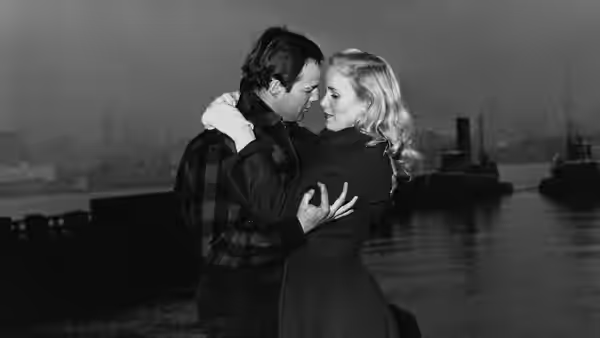
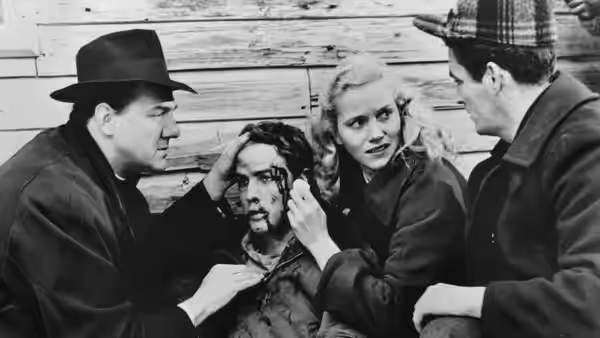
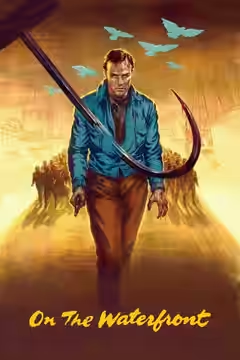
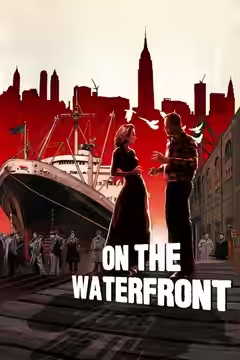
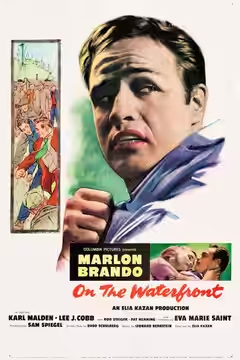
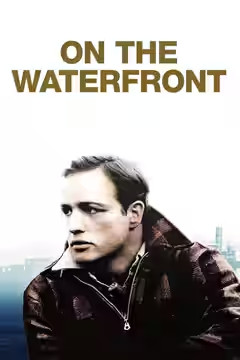
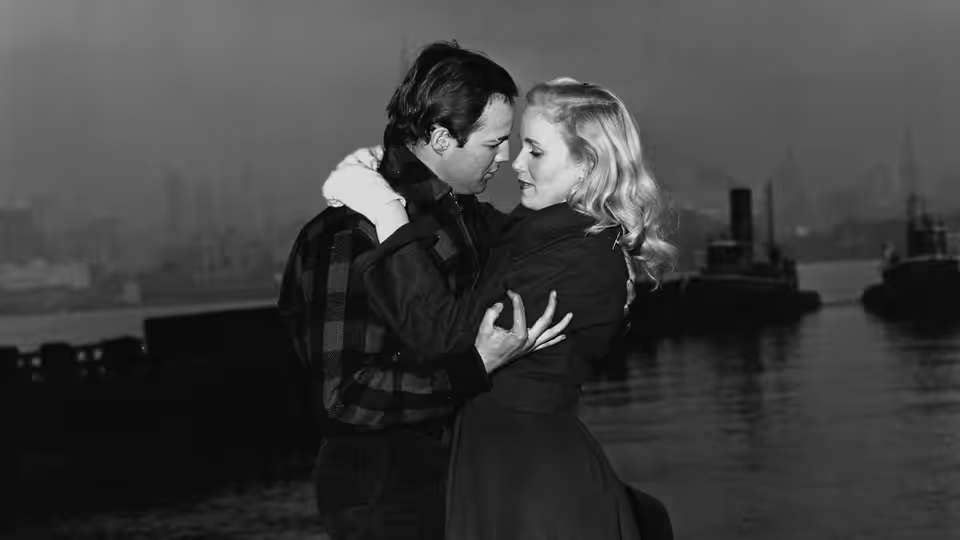
Terry Malloy (Marlon Brando) and Edie Doyle (Eva Marie Saint) embracing by the waterfront
Film review

On the Waterfront

1954 · Directed by Elia Kazan · 1h 48m · MPA NR

In a sentenceBrando makes the speeches seem unnecessary, which does not stop anyone delivering them

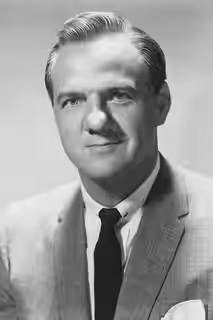
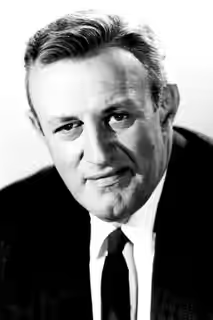
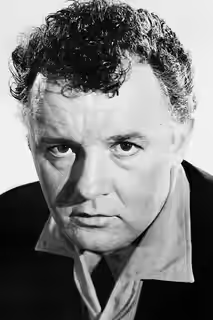
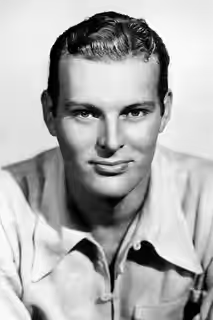
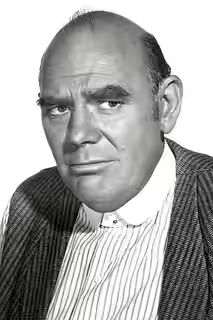
Marlon Brando plays Terry Malloy, a docker and former boxer caught up in corruption on the waterfront. Union boss Johnny Friendly (Lee J. Cobb) holds power over working men whose livelihoods give them little room to resist. Terry faces the question of speaking out against that power, with loyalty, conscience and love pulling him in different directions. Eva Marie Saint plays Edie Doyle, Karl Malden is Father Barry and Rod Steiger plays Charley Malloy. Elia Kazan directs this crime drama, written by Budd Schulberg.

Fi1m review

Marlon Brando makes Elia Kazan’s waterfront drama painfully human, and we recommend it for the performances alone. The moral lecturing is harder to accept, particularly when the acting has already made the point.

Elia Kazan’s On the Waterfront asks how a working man finds the courage to challenge corruption when keeping quiet is the easier way to get through the day. It is a forceful crime drama, and we recommend it, chiefly for Marlon Brando’s Terry Malloy. Budd Schulberg’s screenplay is certain about right and wrong; Terry takes longer to work things out. Brando gives that delay enough interest to make us patient with a film that sometimes explains more than it needs to.

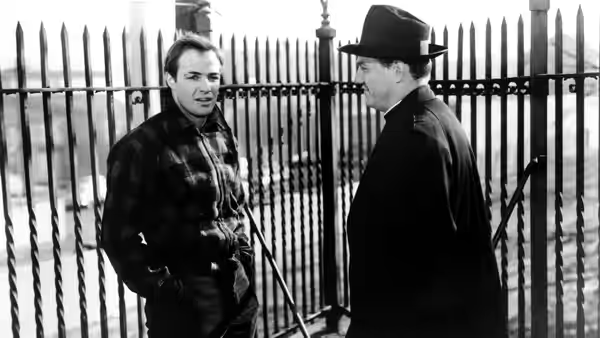
Terry is a docker and former boxer, facing a union boss played by Lee J. Cobb. Brando lets his speech sound difficult, as though admitting anything about himself requires an effort he would prefer not to make. We were moved by that difficulty: Terry can scarcely admit to his own hurt, and Brando keeps making us wait for the words. Even before we decide what we think of his choices, we want him to finish a sentence without having to protect himself.

Eva Marie Saint’s Edie Doyle gives Terry someone whose attention he cannot comfortably shrug off. Saint never looks as though she is merely waiting for Brando to finish; her attention makes his unease harder to hide. Rod Steiger’s Charley Malloy gives Brando a demanding partner, keeping their exchanges from becoming a solo exhibition. Lee J. Cobb is broader as Johnny Friendly, but his bullying authority is useful: we need to feel the power Terry has grown accustomed to living under.

Boris Kaufman’s cinematography makes the waterfront locations feel inhospitable even when nobody is making a threat. The sense of a working place gives the crime story credibility, and keeps the tender meetings from feeling detached from the men’s daily lives. Gene Milford’s editing is patient with the performances, allowing their hesitations to matter without losing the pressure of the plot. There is room to watch someone struggle for an answer, and the film is better for taking that time.

Leonard Bernstein’s music is less inclined to leave us alone, and much of it earns that insistence. It gives the dockside struggle a scale larger than one man’s troubles, though there are moments when the emotional emphasis is more than the acting needs. Karl Malden’s Father Barry brings conviction to the religious side of Schulberg’s writing. Malden can make an exhortation sound urgent, but the Christian symbolism presses too hard for a response that Brando has already secured.

The film’s treatment of informing is the reservation that matters most. Kazan and Schulberg’s own histories of naming names make its insistence on the righteousness of speaking out worth questioning. A story about resisting a corrupt union cannot settle every question about informing, however decisively it arranges its villains. Schulberg leaves so little doubt about where virtue lies that Terry’s hesitation has to do nearly all the difficult work, and Brando makes us feel the personal cost even when the script seems impatient with doubt.

As a gangster picture, it pays unusual attention to the people who must live under the boss, whose own ambitions matter less here. Kazan keeps returning us to the man who has learnt to accommodate that power, and makes his fear of challenging it credible. Give it the evening, and watch what Brando does before the next line arrives.

Critical consensus AI synthesised

88
Positive
14
Mixed
0
Negative
0

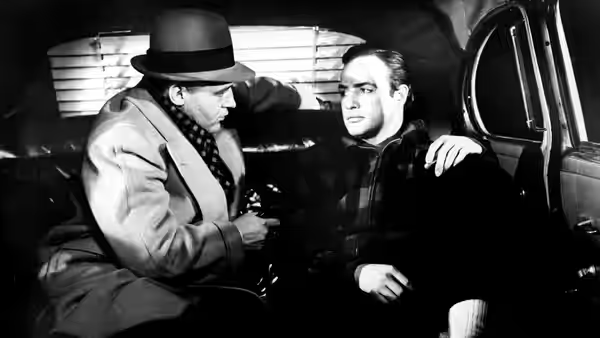
Every one of the fourteen reviews is positive, and the praise goes first to Marlon Brando. Critics keep returning to his Terry Malloy, and in particular to the taxi scene with Rod Steiger, which several treat as a turning point in American screen acting. Elia Kazan’s direction and Budd Schulberg’s script draw nearly as much credit, along with the Hoboken locations, which the earliest notices single out for their grime. Eva Marie Saint, Karl Malden and Lee J. Cobb are named in support, and Leonard Bernstein’s score is noted.

The reservations are about meaning rather than craft. Time Out and The Guardian both find the Christian symbolism sits awkwardly against the realism, and several reviews read the film as a plea on behalf of informers, given Kazan and Schulberg’s own histories; some find that fascinating, others a flaw. Den of Geek, unusually, argues the mobsters’ case against the story’s betrayal theme. The spread is narrow.

Radio Times
★★★★★ · Tony Sloman
100

The critic calls Brando unforgettable as Terry Malloy and notes his Oscar win, describing the film as a well-crafted entertaining drama that also serves as an apologia for informing, made fascinating by Kazan's own history of naming names. It highlights Leonard Bernstein's score, memorable dialogue, and great performances from Eva Marie Saint and Rod Steiger, stating the film deserved its eight Oscars.

Read the full review →
RogerEbert.com
21 March 1999 · ★★★★/4 · Roger Ebert
100

Ebert praises the film as a powerful justification for Kazan's personal decisions and a landmark in American acting. He singles out Marlon Brando's performance, particularly the taxi scene with Rod Steiger, for its emotional depth and influence.

Read the full review →
Time Out
25 February 2015 · ★★★★★ · GA
100

The critic praises the superb performances, especially Brando's as Terry Malloy, the colourful script by Budd Schulberg, and sure control of atmosphere, calling the account of struggles against union corruption powerful and electrifying. It notes that the film is undermined by religious symbolism turning the protagonist into a Christ figure and special pleading on behalf of informers, linked to Kazan and Schulberg's McCarthy-era actions.

Read the full review →
The AV Club
27 February 2013 · A · Noel Murray
95

The review celebrates the film's landmark status as a hybrid of neo-realism and noir with powerful Method acting and themes of honesty and conscience informed by its creators' histories. It singles out the iconic taxi scene and Brando's nuanced performance as standout elements.

Read the full review →
The Hollywood Reporter
28 July 2017 · Jack Moffitt
90*

The review hails the film as a brutally realistic and gripping gangster drama that exposes waterfront corruption while urging workers to fight for their rights. It singles out Budd Schulberg's masterful script, Elia Kazan's superb direction, and Marlon Brando's heartbreaking performance for particular praise.

Read the full review →
The New Yorker
24 July 1954
90*

The film is solidly based on real waterfront exposés and benefits from authentic Hoboken locations and Kazan's direction. Marlon Brando delivers an unmatched performance as the longshoreman redeemed through love, supported by superb work from Karl Malden and Eva Marie Saint.

Read the full review →

Straight answers AI written, from our review

Is On the Waterfront worth watching?
On the Waterfront is worth watching for Marlon Brando's performance as Terry Malloy above all, and we scored it 89. Budd Schulberg's screenplay is more certain about right and wrong than the acting needs it to be, and the religious symbolism presses hard. Sit through the sermonising for what Brando does before each line arrives.

How long is On the Waterfront, and what is it rated?
On the Waterfront runs 1h 48m and is rated NR by the MPA in the US. It is a crime and drama film.
Where can I watch On the Waterfront in the US?
On the Waterfront is streaming on Tubi and Amazon Prime Video in the US, and it is also available to rent from Amazon Prime Video from $3.99. It leaves Tubi on 1 October. Availability is checked daily; the links above go straight to each service.
How violent or frightening is On the Waterfront, and is it suitable for children?
On the Waterfront carries a UK PG certificate, so its violence is mild by the standard of later crime films. The threat comes from Lee J. Cobb's bullying union boss and the fear of the men living under him rather than from anything graphic. Older children may follow it; younger ones are likely to find a talkative drama about dockside corruption slow.
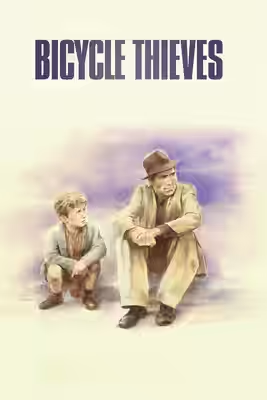
How does On the Waterfront compare to Bicycle Thieves?
On the Waterfront and Bicycle Thieves both put a working man's dignity under pressure, but Vittorio De Sica's film keeps its sentiment under firmer control while Elia Kazan's lectures where Brando has already made the point. Both have music that presses too hard. Choose Kazan for a star performance and a crime plot, De Sica for the plainer, quieter picture of poverty.
What should I watch after On the Waterfront?
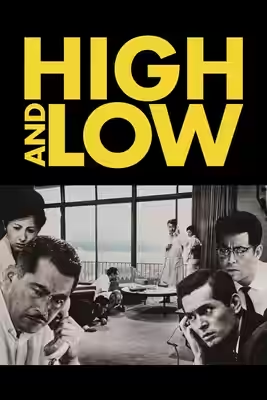
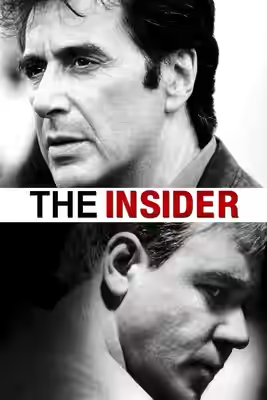
After On the Waterfront, try Bicycle Thieves (1948, Fi1m 93): Another working man’s dignity comes under pressure, with sentiment kept under firm control. Then High and Low (1963, Fi1m 90): A crime drama that makes money and class matter to every moral choice; and The Insider (1999, Fi1m 89): Speaking out carries personal costs in another drama held together by watchful performances.

Cast

Awards

Academy Awards, 1955

Nominated
Best Original Dramatic or Comedy Score
Nominated
Best Supporting Actor
Won
Best Actor
Won
Best Art Direction, Black and White
Won
Best Cinematography, Black-and-White
Won
Best Director
Won
Best Film Editing
Won
Best Picture
Won
Best Supporting Actress
Won
Best Writing, Original Screenplay

If you liked this, try…

  1. Bicycle Thieves (1948, Fi1m 93)Another working man’s dignity comes under pressure, with sentiment kept under firm control.

  2. High and Low (1963, Fi1m 90)A crime drama that makes money and class matter to every moral choice.

  3. The Insider (1999, Fi1m 89)Speaking out carries personal costs in another drama held together by watchful performances.

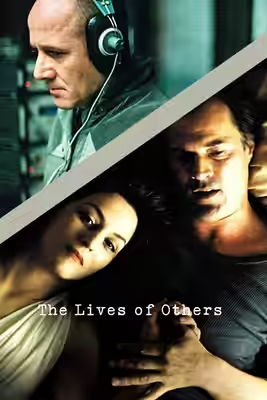
  4. The Lives of Others (2006, Fi1m 84)Another story of conscience and complicity, carried by an actor who trusts stillness.

  5. Two Days, One Night (2014, Fi1m 88)A worker asks colleagues to help her keep her job; each conversation matters.

Free account

Know what to watch tonight

Two lists that know where things are streaming, collections you can share, your own score beside ours, and Discover that remembers what you have seen.

  • Want to see, sorted by what is streaming now
  • Seen, with your score out of ten
  • No adverts, ever