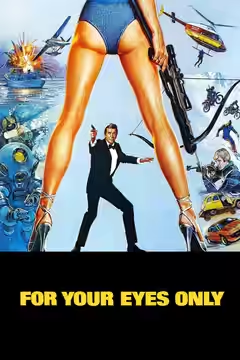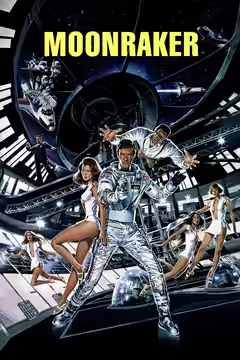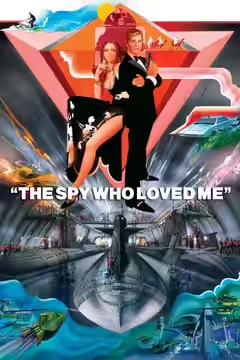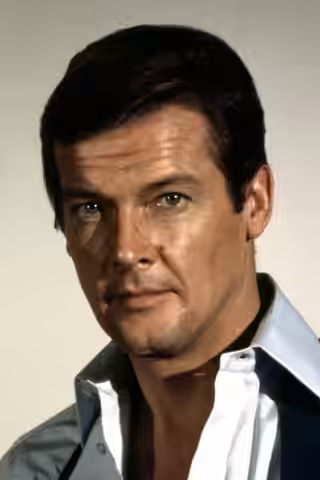
Roger Moore played James Bond as a man never in danger, only inconvenienced, and for seven films the series bent to fit him. It suits a good line and a dinner jacket, not cruelty, and the films that asked for it found him out.
Fi1m perspective
Watch what Roger Moore does when a gun is pointed at him. Sean Connery's Bond looked at a gun as a problem to be got round. Moore's looks at it as a lapse in manners, and the eyebrow goes up about a quarter of an inch. He never seems to be in danger, only inconvenienced, and your tolerance for that decides how you feel about his seven Bond films. We are somewhere in the middle, and so, we suspect, was he.
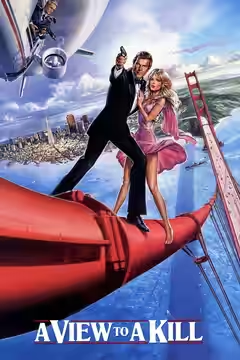
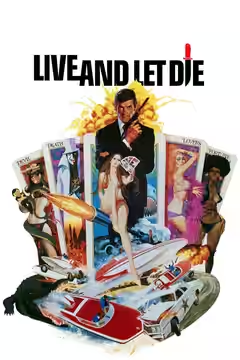
He learned the manner on television. Simon Templar in The Saint (1962–1969), after earlier runs in Ivanhoe and Maverick, was a gentleman adventurer who smiled through everything, and Moore played him for seven years without visibly breaking sweat. When he was cast as Bond at 45 in Live and Let Die (1973), replacing Connery, he brought Templar with him and left the coldness at the door. The series lightened to fit. Albert R. Broccoli produced all seven of his Bonds; Guy Hamilton directed two of them and John Glen three. By Moonraker (1979) the films had gone into orbit, in every sense, and he stayed until A View to a Kill (1985), twelve years in the part.
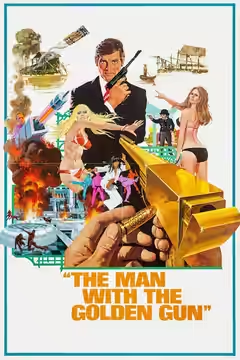
What he does well is the line after the explosion. He delivers a quip as if it had only just occurred to him and he were slightly embarrassed by it, and The Spy Who Loved Me (1977), the film most often named as his best, gives him room to do it. What he does badly is cruelty. In The Man with the Golden Gun (1974) the script asks him to twist Maud Adams's arm in a Hong Kong hotel room and threaten to break it, and we winced, not because the scene is hard to watch but because Moore so plainly does not want to be in it. He plays the rough stuff as if someone off camera were reading him the stage directions. Adams comes out of the scene with her dignity; he does not. We did not think much of that film, and most of what is wrong with it is not his fault. The arm is.
He knew this about himself. "I'm not that cold-blooded killer type. Which is why I play it mostly for laughs," he said, and he was right on both counts. The charge of woodenness, made most often about Moonraker, is really a charge that he had nothing to do once the joke was over, and Moore was not an actor who generated feeling from nothing. Give him a good line and a good dinner jacket and he was as watchable as anyone in the series. Give him grief or rage and he would look politely at the middle distance until the scene ended.
Start with The Spy Who Loved Me, and take The Man with the Golden Gun as a warning of what happened when a script forgot who it had hired.
Biography
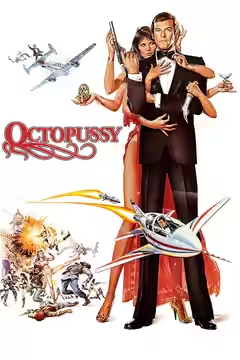
Sir Roger Moore (14 October 1927 – 23 May 2017) was an English actor. He played James Bond in seven Eon Productions films: Live and Let Die (1973), The Man with the Golden Gun (1974), The Spy Who Loved Me (1977), Moonraker (1979), For Your Eyes Only (1981), Octopussy (1983) and A View to a Kill (1985).
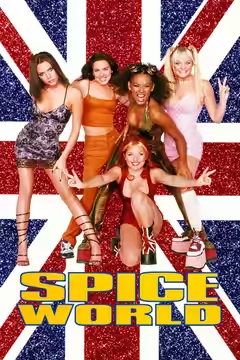
On television, Moore starred as Simon Templar in the series The Saint (1962–1969) and appeared in Maverick (1960–1961) and The Persuaders! (1971–1972). He played The Chief in the film Spice World (1997).
Moore was appointed a UNICEF Goodwill Ambassador in 1991 and was knighted in 2003 for services to charity.