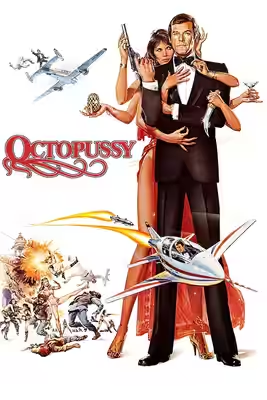
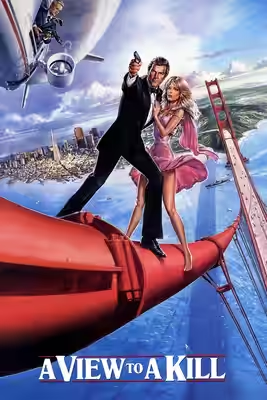
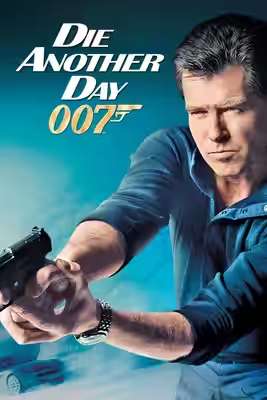
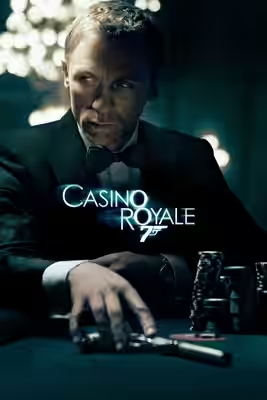
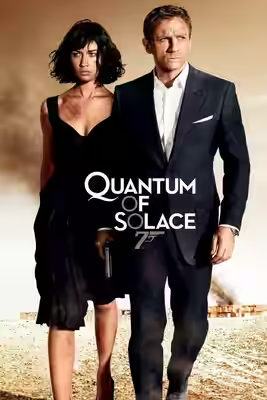
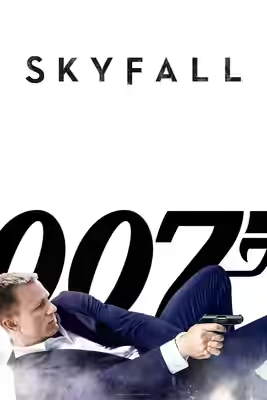
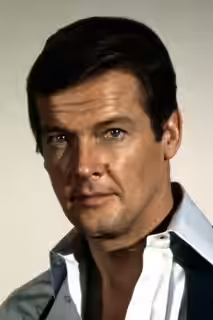
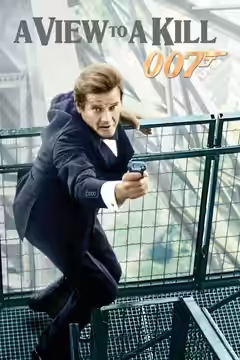
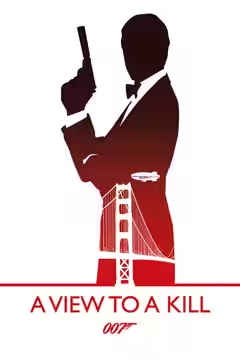
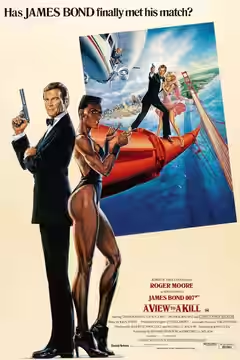
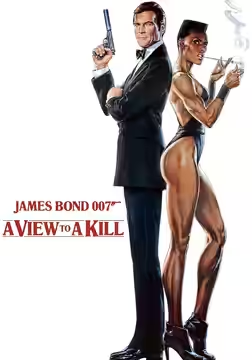
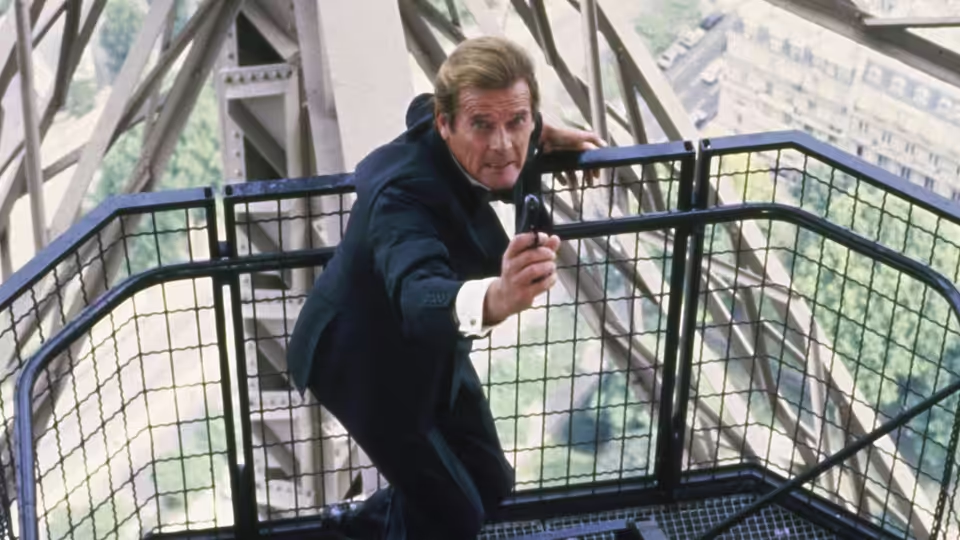
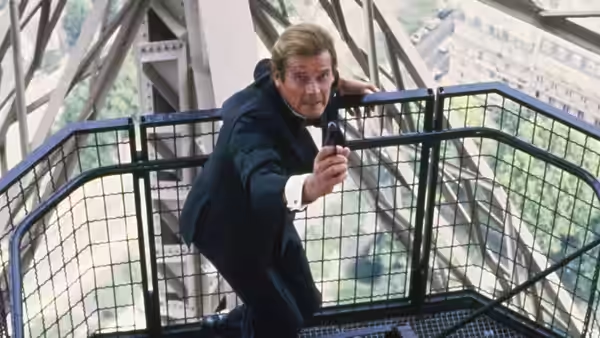
James Bond (Roger Moore) holding a gun on a high metal platform
Film review

A View to a Kill

1985 · Directed by John Glen · 2h 11m · MPA PG

In a sentenceGrace Jones jumps off the Eiffel Tower in the first half hour and the film never gets that high again

Siberia. James Bond (Roger Moore) recovers a microchip from the body of a dead agent and skis out through a Soviet patrol. The chip is traced to Zorin Industries and its owner Max Zorin (Christopher Walken), a French-based industrialist whose racehorses keep winning. Bond watches one of them win at Ascot, then follows a lead to Paris, where a contact is killed in the restaurant at the top of the Eiffel Tower and the killer, May Day (Grace Jones), parachutes off it into the traffic below. Posing as a horse buyer, with Tibbett (Patrick Macnee) as his valet, Bond takes a room at Zorin’s château outside Chantilly to find out how the horses are winning and what a horse breeder wants with microchips.

Fi1m review

Roger Moore’s last Bond hands the picture to Christopher Walken and Grace Jones and lets Moore stroll along behind them. Two villains, one parachute jump and a John Barry score are worth something; the rest is a series going through its motions.

Roger Moore’s seventh and last outing as James Bond runs 131 minutes and follows the series template to the letter. A microchip is recovered from a dead agent in Siberia. It is traced to Zorin Industries and its owner, Max Zorin (Christopher Walken), who breeds racehorses that win too often. Bond goes to Ascot, then Paris, then Zorin’s stud farm outside Chantilly, then San Francisco, collecting a geologist called Stacey Sutton (Tanya Roberts) on the way. Richard Maibaum and Michael G. Wilson have written this film before, and John Glen has directed it before. The parts that work are the parts that stray from the template, and nearly all of them belong to the villains.

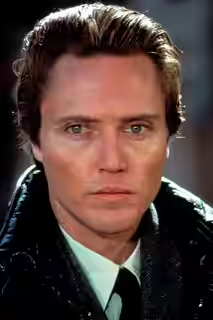
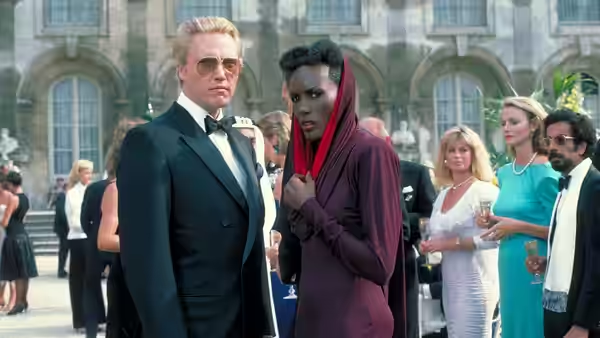
Walken plays Zorin as a rich boy who has got hold of the matches. He grins through Ascot, grins through a horse sale, grins at Bond across a dinner table, and the grin never reaches his eyes; he is not menacing in the old way but unstable, which is better. Grace Jones’s May Day is the other reason to watch. Emma Porteous dresses her in hoods, capes and shoulders you could stand a lamp on, and Jones moves as if the costume is only just containing her. When she steps off the Eiffel Tower under a parachute and Bond’s stolen taxi comes apart beneath her in the Paris traffic, we sat up. It is the one stretch of the film that knows exactly what it has.

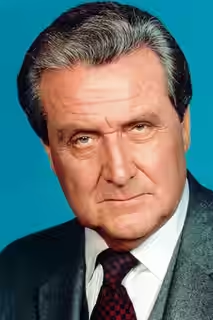
The Chantilly section has the best writing in the script, and it is a comedy. Bond arrives as a horse buyer with Tibbett (Patrick Macnee) posing as his valet, and Moore and Macnee spend several scenes being rude to each other in front of the staff for the pleasure of it. Two old professionals enjoying a game; the film could have used more of that. John Barry’s score is the other thing holding it up. The Duran Duran title song is the loudest thing the series had yet put over its credits, and Barry’s own writing under the Paris chase has an ease the images do not.

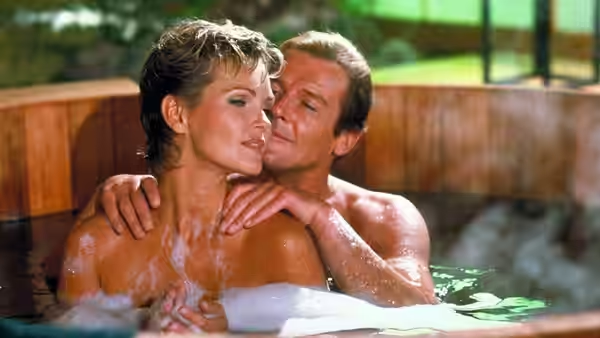
The trouble is Bond. The pre-credits ski chase turns into a snowboard gag scored with the Beach Boys, and we laughed at it once and then felt something we had not felt in six previous films: embarrassed for him. Peter Davies’s editing cannot hide the joins in the fights, and Alan Hume’s bright, even daylight does the doubles no favours. A hot-tub scene with Pola Ivanova (Fiona Fullerton) is played as though it were 1973. Moore still has the eyebrow and the timing, and when the script gives him a line to throw away he throws it well. It gives him fewer than it used to.

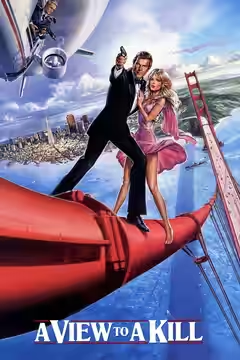
Tanya Roberts’s Stacey Sutton is a geologist written as someone who needs carrying. She shouts his name a good deal. The San Francisco half of the film is built around her, and it is the weaker half: a fire-engine chase that outstays its one joke, and a climax on the Golden Gate Bridge that we will not describe except to say it is careful work and it did not quicken our pulse. Peter Lamont’s sets are what they always are for this series, a château that looks expensive and a mine that looks like a mine. Nothing in the second half asks them to be more.

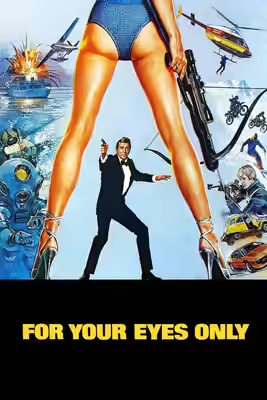
Set against Glen’s own For Your Eyes Only, from 1981, which was lean and stayed close to the ground, this is soft and long. Zorin’s scheme, when it is explained, is a rich man removing his competitors by force, and the mechanics would not have surprised anyone who saw Goldfinger in 1964. Most critics have it lower than we do, and several call it the worst in the series. We think that overlooks two villains and a composer doing more than the film around them earns.

Watch it for Walken, Jones, Macnee and Barry, and for Paris, which is over before the hour mark. After that you are watching a courteous actor being kind to a series that should have let him go one film earlier. The PG certificate is fair; this is a Sunday-afternoon film that once wanted to be a Saturday-night one.
Critical consensus AI synthesised

40
Positive
3
Mixed
0
Negative
6

Most critics do not think much of it. Six of the nine reviews are negative, and the complaints are the same ones: a plot that feels lifted from earlier entries, action that stops and starts, and Roger Moore, whom nearly everyone judges too old for the part by this point. Where there is praise, it clusters around the villains. Christopher Walken and Grace Jones are named as the reason to keep watching even by critics who otherwise dislike the film, and Jones’s parachute jump from the Eiffel Tower is the moment most often picked out.

The spread is wide. Two critics call it the worst Bond film outright; two others reckon it a good deal better than its reputation. The Guardian defends it as camp, knowingly silly and the high point of Moore’s run, and Den of Geek argues it is charming, escapist fun with quotable jokes. Even the defenders concede that Moore looks tired.

The Guardian
9 April 2021
80*

The critic defends the film as a glorious, silly and camp romp that represents the pinnacle of Roger Moore's Bond tenure. They single out Christopher Walken's villainous performance and Grace Jones's memorable character for praise.

Read the full review →
Radio Times
★★ · Adrian Turner
40

Roger Moore's final outing as Bond is a below-average entry in the series. The action provides some excitement and Christopher Walken and Grace Jones make for memorable villains, but the plot feels unconvincing and overly familiar.

Read the full review →
Empire
3 August 2006 · Ian Nathan
30*

The critic finds the film a creaking, beyond-redemption Bond adventure that shows Roger Moore is long past his prime as 007. The only standout is Grace Jones as May Day, with her parachute jump from the Eiffel Tower singled out as a cool moment amid otherwise failed stunts and a boring plot.

Read the full review →
Variety
31 December 1984 · Variety Staff
30*

The film winks at the audience with its campy humor and dated elements, with Roger Moore only half-convincing as Bond due to his age. The horse-racing sequences entertain moderately, but the plot and action feel abrupt and unconvincing overall.

Read the full review →
RogerEbert.com
29 April 2015
10*

The film is the worst entry in the James Bond series, scoring poorly across nearly every category despite some visual appeal and a strong title song. It stands out as a curiosity due to its cast, locations, and misguided attempts at humor like the Beach Boys song in a chase scene.
Read the full review →
Slant Magazine
21 June 2010 · Robert Cashill
10*

The critic declares it the worst Bond film, a jumble of half-baked ideas with poor storytelling and weak performances from the leads. He singles out the lack of invention and the embarrassing finale for criticism, while noting some technical competence in locations and score.
Read the full review →

Straight answers AI written, from our review

Is A View to a Kill worth watching?
A View to a Kill is worth watching for Christopher Walken, Grace Jones, Patrick Macnee and John Barry's score, and we scored it 46. The Paris section, ending with Jones parachuting off the Eiffel Tower, is the best of it and is over before the hour mark. After that, Roger Moore's last Bond goes through the series' motions for another hour and a bit.
How long is A View to a Kill, and what is it rated?
A View to a Kill runs 2h 11m and is rated PG by the MPA in the US. It is an adventure and action film.
Where can I watch A View to a Kill in the US?
A View to a Kill is available to rent from Amazon Prime Video and Apple TV from $3.99. Availability is checked daily; the links above go straight to each service.
How violent or frightening is A View to a Kill, and is it suitable for children?
A View to a Kill is a PG in the UK and the US, and the certificate is fair: the violence is bloodless fights and chases, and nothing in it is frightening. There is some mild flirting, including a hot-tub scene, of the sort the series was doing in the early 1970s. It is a Sunday-afternoon film that children of about eight and up can sit through.
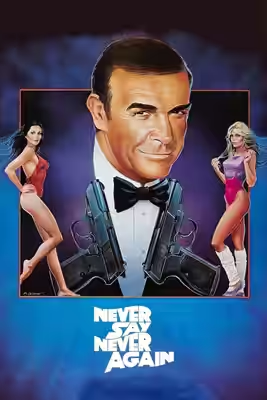
How does A View to a Kill compare to Never Say Never Again?
A View to a Kill and Never Say Never Again have the same shape: an ageing Bond, two good villains, and a film around them that is slack and too long. Connery is the drier, better company, and Moore here looks embarrassed by his own stunts. A View to a Kill has the better score in John Barry and the better single sequence in Paris; Never Say Never Again has the better leading man.
Is A View to a Kill based on a true story or a book?
A View to a Kill is not a true story; it takes its title from a novel credited to Ian Fleming, the creator of James Bond. The film's plot, in which an industrialist breeds racehorses and deals in microchips, is the work of the screenwriters Richard Maibaum and Michael G. Wilson. You do not need to have read Fleming to follow it.
Do you need to have seen the other James Bond films before A View to a Kill?
A View to a Kill stands alone: it is Roger Moore's seventh and last James Bond film, and nothing in it depends on the previous six. It is not a good place to start, because the series' habits are on show here without much of its energy. Newcomers should begin elsewhere and come back for Walken and Jones.
What should I watch after A View to a Kill?
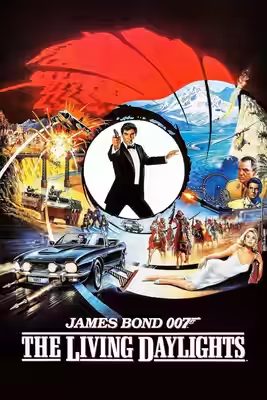
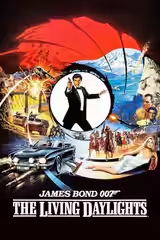
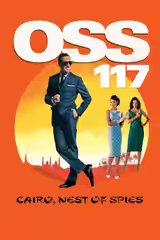
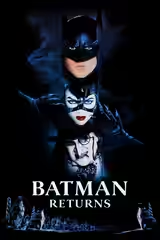
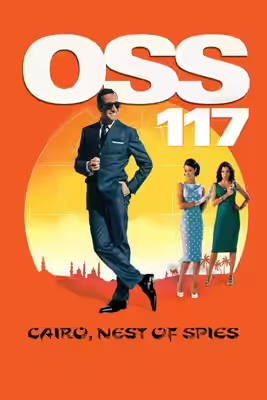
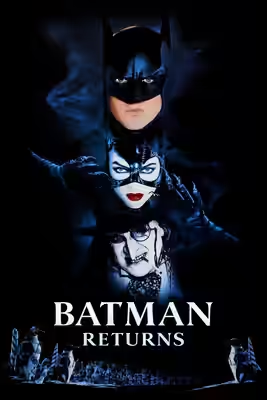
After A View to a Kill, try The Living Daylights (1987, Fi1m 74): The series’ own correction: colder, soberer and a Bond who can run. Then OSS 117: Cairo, Nest of Spies (2006, Fi1m 76): A French spoof of exactly this kind of spy, and sharper about him; and Batman Returns (1992, Fi1m 81): Walken as another grinning industrialist, given a film that knows what to do with him.
What order should I watch the James Bond films in?
Release order is the safe choice for James Bond, and it is the order our collection page lists them in. A View to a Kill is number 16 of the 27 James Bond titles on Fi1m; before it comes Never Say Never Again and after it The Living Daylights. The full order.

Part of · 16 of 27

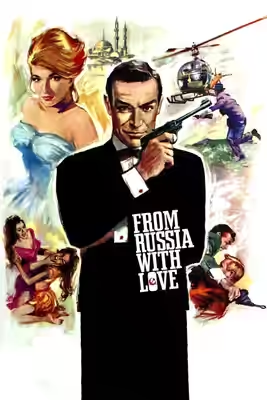
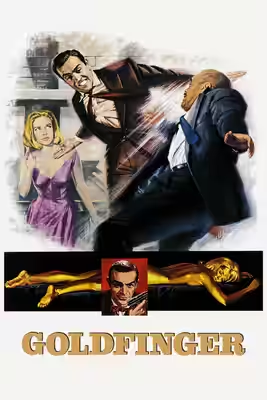
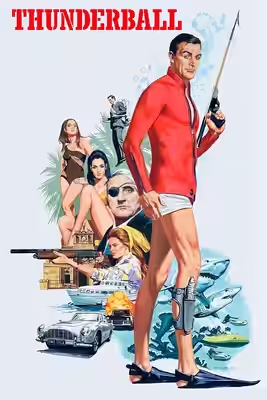
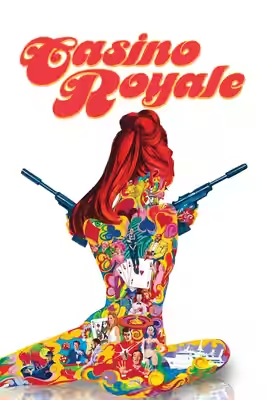
James Bond

27 films on Fi1m · 1962–2021 · average 67 · best Casino Royale 86

All 27 in order

Cast

Awards

Golden Raspberry Award for Worst Actress, 1986

Nominated
Golden Raspberry Award for Worst Actress

If you liked this, try…

  1. The Living Daylights (1987, Fi1m 74)The series’ own correction: colder, soberer and a Bond who can run.

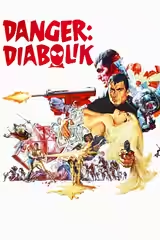
  2. Danger: Diabolik (1968) · not reviewed yetMario Bava’s comic-strip caper does camp with conviction and a Morricone score.

  3. OSS 117: Cairo, Nest of Spies (2006, Fi1m 76)A French spoof of exactly this kind of spy, and sharper about him.

  4. Batman Returns (1992, Fi1m 81)Walken as another grinning industrialist, given a film that knows what to do with him.

  5. North by Northwest (1959, Fi1m 89)The well-tailored man chased across national monuments, done properly.

Free account

Know what to watch tonight

Two lists that know where things are streaming, collections you can share, your own score beside ours, and Discover that remembers what you have seen.

  • Want to see, sorted by what is streaming now
  • Seen, with your score out of ten
  • No adverts, ever