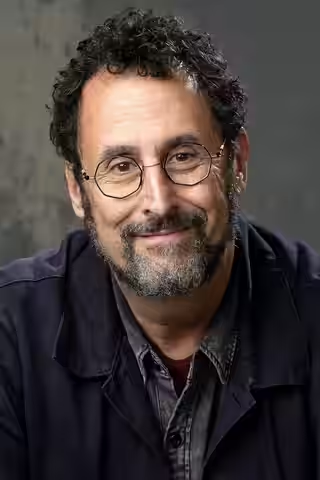
Tony Kushner writes people who talk in paragraphs and know they are being overheard, and he makes the talk move. At his best the argument is the action. When it goes wrong, his characters explain what the actors have already shown.
Fi1m perspective
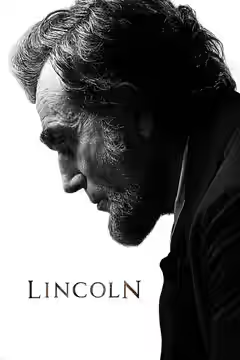
In Lincoln (2012) the thing to watch is a conversation, because a vote can be gained, weakened or lost inside it before it is over. In Angels in America (2003) two rows in two flats are cut into each other until Louis seems to be answering Joe's wife. That is Tony Kushner's habit and his method. He puts the argument where most screenwriters put the pursuit, and he trusts that people who are ill, frightened or appalling will still find the words, usually more of them than they need.
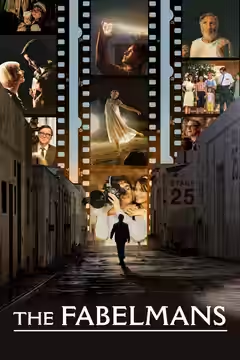
He began as a playwright in the 1980s, and Angels in America, two plays first staged between 1991 and 1993, runs to about seven hours in a theatre. He adapted it himself for Mike Nichols as six episodes of roughly an hour, first shown on 7 December 2003, and cut very little. From 2005 he became Steven Spielberg's screenwriter of choice: Munich (2005), Lincoln (2012), West Side Story (2021) and The Fabelmans (2022), the last written with Spielberg. On paper it is an odd pairing, a writer who lives in dialogue and a director who tells stories with a camera. In practice it has worked more often than not.
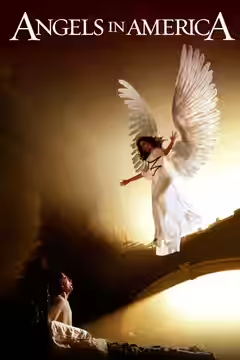
It works best when the talk has somewhere to get to. Lincoln gives the bargaining over the 13th Amendment the concentration a thriller gives a siege. The dubious methods used to bring reluctant men round are allowed to stay dubious, and the film never pretends a good cause excuses anyone from negotiating. We were more absorbed by men being talked into a vote for their own poor reasons than by most chases, and it was the writing that did it: every exchange leaves the count different from how it found it. Angels has the same virtue in a different key, and the split scenes, which the editors Antonia Van Drimmelen and John Bloom keep intact, work better on screen than on stage.
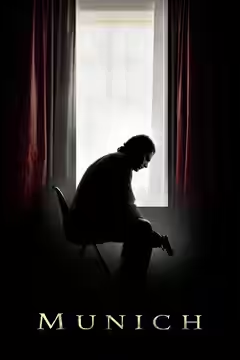
It works worst when the talk arrives after the point has been made. In Munich, written with Eric Roth, speeches put into words what Eric Bana's face had already told us, and the dialogue can sound prepared for the discussion the film wants us to have afterwards. Perestroika, the second half of Angels, goes round its arguments about God and blame at least three times, and somewhere in the fifth hour we looked at the clock. The word that follows him around is overstuffed. He would not argue: "I like big, splashy, juicy plays. I like the audience to feel space to roam around in." The roaming is the pleasure. The trouble comes when he walks us back over ground we have already covered.
Start with Lincoln, where Spielberg holds him to 150 minutes and every paragraph has to earn a vote. If the counting holds you, give Angels its two nights, three episodes each, and forgive it the angel.
Biography
Tony Kushner is an American playwright, author and screenwriter. Born on 16 July 1956 in Manhattan, New York City, he is best known for his two-part play Angels in America, which premiered on Broadway in 1993 and won the Pulitzer Prize for Drama and Tony Awards for Best Play.
He adapted Angels in America for a 2003 HBO miniseries directed by Mike Nichols. Kushner has written screenplays for several films directed by Steven Spielberg, including Munich (2005), Lincoln (2012), West Side Story (2021) and The Fabelmans (2022). He also wrote the book and lyrics for the musical Caroline, or Change.