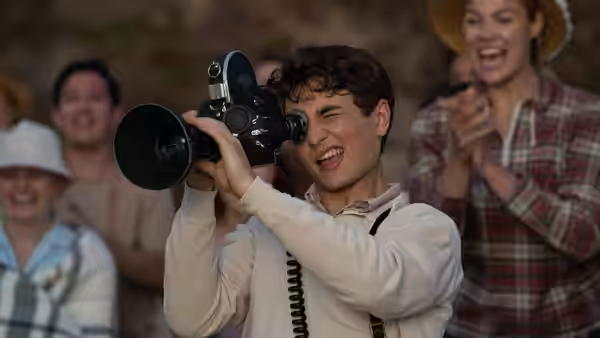
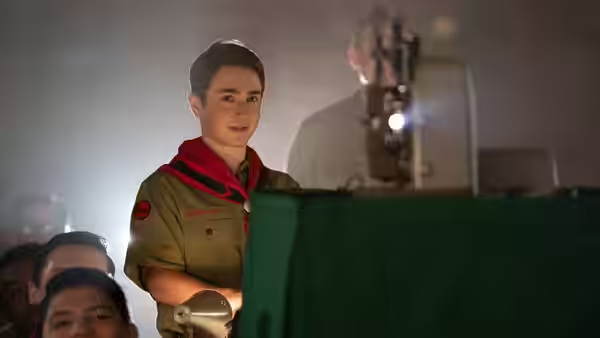
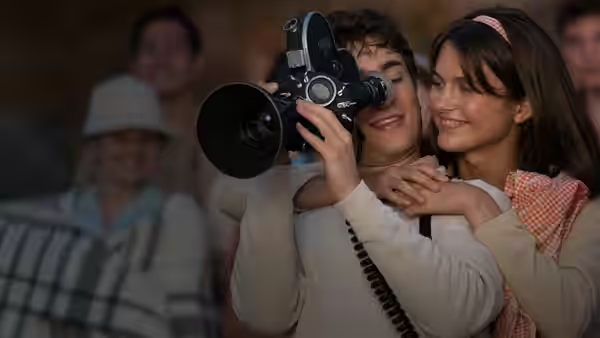
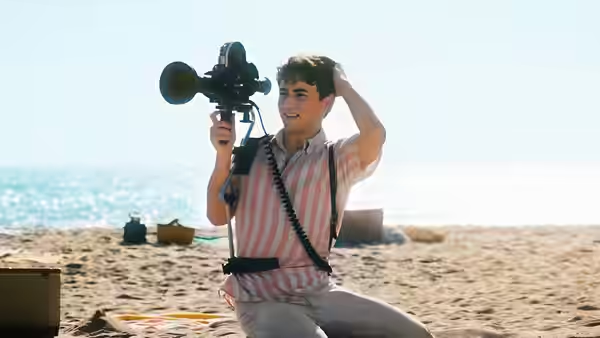
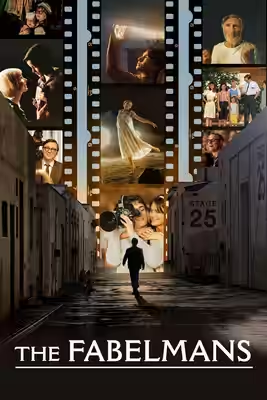
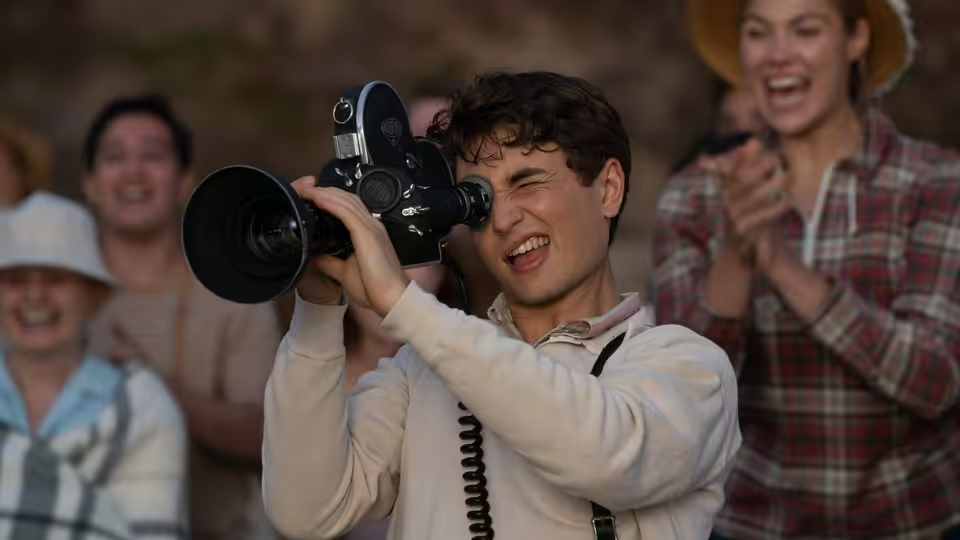
Sammy Fabelman (Gabriel LaBelle) operating a film camera at an outdoor gathering
Film review

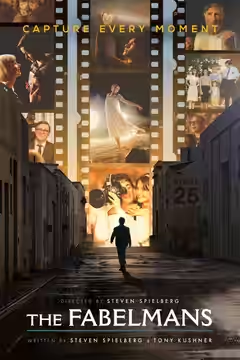
The Fabelmans

2022 · Directed by Steven Spielberg · 2h 31m · MPA PG-13

In a sentenceEvery child of divorce has a version of this story; only one of them had John Williams on hand

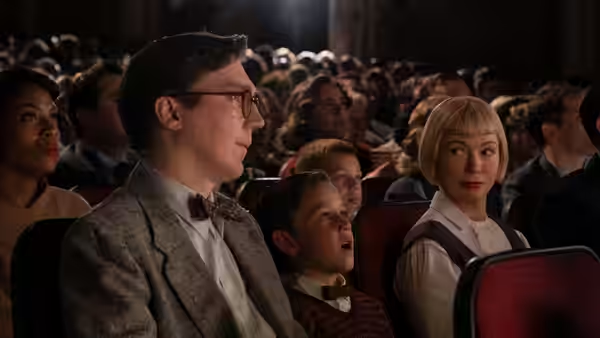
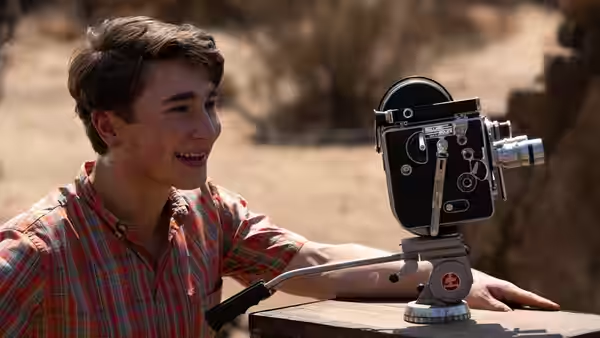
New Jersey, 1952. Burt Fabelman (Paul Dano), an engineer, and his wife Mitzi (Michelle Williams), a pianist who gave up performing, take their small son Sammy (Mateo Zoryan Francis-DeFord) to his first film, The Greatest Show on Earth. The train crash terrifies him. He asks for a train set for Hanukkah and, with his mother’s help, films it crashing on his father’s 8mm camera so he can watch it without fear. Burt’s work moves the family, three daughters and all, to Phoenix, Arizona; his best friend Benny Loewy (Seth Rogen) comes too. The teenage Sammy (Gabriel LaBelle) shoots westerns and war films with his scout troop, films a family camping trip, and gets a night-time visit from Mitzi’s Uncle Boris (Judd Hirsch), a circus man with a warning.

Plays from YouTube when you press play; nothing loads from them until then.

Fi1m review

Spielberg’s account of his own childhood is honest about his parents, generous to almost everyone and finely acted by Michelle Williams and Paul Dano. It is also 151 minutes long and knows exactly how it wants to be remembered. Worth your evening, with reservations.

Steven Spielberg, writing with Tony Kushner, is telling his own story with the names changed, and he does not pretend otherwise. Sammy Fabelman is a boy in New Jersey in 1952 who sees a train crash at the pictures and cannot sleep until he has staged it himself with a toy train and his father’s camera. That is the film’s first idea and its best: a child discovers that if he films the frightening thing he can control it. Everything that follows tests whether that is true, and The Fabelmans is honest enough to answer that it is not, quite.

The parents are the film. Michelle Williams plays Mitzi as a woman who gave up the piano for a family and has never stopped performing, in white dresses, in the headlights of the family car, at the keyboard at two in the morning while the children listen from the stairs. Paul Dano’s Burt is an engineer who loves her and speaks to her in the tone he would use to a circuit that has stopped working. Rick Carter’s Phoenix house is open-plan, glass and low walls, so that nobody in this family can ever quite get out of anybody else’s sight. Seth Rogen’s Benny, Burt’s best friend, is in every room too, and he is better fun than Burt, and the film lets us see that before Sammy does.

We expected Judd Hirsch’s Uncle Boris to be a warm turn by an old pro and instead found the scene frightening. Boris arrives for one night, sits on the boy’s bed and tells him, without softening it, what art will do to his family and what his family will do to his art. Hirsch delivers it like a sentence being passed. Spielberg, who has spent a career being liked, has put in his own film the argument that this may not have been worth it, and he does not cut away from it.

Janusz Kamiński lights the whole thing in the colour of a lamp left on in another room. The New Jersey cinema is amber, Arizona is bleached, and the beam of a projector falls across almost every important face. The film’s happiest stretch is the boy’s own films, a western and a war picture shot with his scout troop, and Spielberg shows the tricks: pinholes pricked in the celluloid so the rifles flash, dust kicked up for a stagecoach. Michael Kahn and Sarah Broshar cut the boy’s footage into the adult film so that we watch him learn to edit while they edit him, and the sequence in which he runs the camping-trip reels alone in his room, over and over, moved us more than anything with an orchestra behind it. We will not say what he finds. John Williams’s score is sparing, mostly piano, and knows to stay out of that room.

Then the family moves again and the film goes slack. The high-school stretch that follows belongs to a broader, jokier picture, and it runs for the best part of half an hour. We were bored, and we noticed we were bored, which in a Spielberg film is a rare and unhappy sensation. The whole is 151 minutes and would lose nothing at 125.

There is a harder complaint. Spielberg is candid about his mother and clear-eyed about his father, and he is kind to the boy. Sammy does some ugly things with his camera and with what it shows him, and each time the film forgives him within a scene. Every anecdote is also cut so that it teaches him something he will plainly use later, and after a while you can feel the lesson being lined up before the scene starts.

Set against his own work, this is the film he has been circling since Close Encounters of the Third Kind and E.T., the divorce he kept putting into other families’ houses. Here it is in his own, and it is the better for it. Watch it with a parent if you have one to hand. You will disagree afterwards about who Mitzi really was, and that is the point.

Critical consensus AI synthesised

80
Positive
23
Mixed
1
Negative
1
Radio Times
17 January 2023 · ★★★★★
100

The critic calls the film a dazzling and bittersweet movie memoir that Spielberg had to make, praising its brio and ability to make the mundane wondrous. It singles out the strong performances by Paul Dano, Michelle Williams and Gabriel LaBelle along with the nods to Spielberg's oeuvre.

Read the full review →
The AV Club
10 November 2022 · A · Todd Gilchrist
95

The critic praises it as a fantastic, measured, and intimate look at Spielberg's upbringing and his development as a storyteller through film. It singles out the way the camera captures more than expected and the film's exploration of the relationship between art, audience, and personal truth.

Read the full review →
Empire
16 January 2023 · Alex Godfrey
90*

The review describes a hugely empathetic tribute to Spielberg’s parents and the birth of his filmmaking passion, full of tenderness, humour and humanity. It praises the cast, especially Michelle Williams, and calls the film a glowing, transcendent piece of joy.

Read the full review →
Little White Lies
12 September 2022 · festival review · Mark Asch
90*

The review hails the film as a late-career masterwork and bittersweet origin story that locates the roots of Spielberg's cinema in family trauma and artistic compulsion. It singles out Michelle Williams' extravagant performance as Mitzi and the film's meta-references to Spielberg's life and work for particular note.

Read the full review →
Los Angeles Times
10 November 2022 · Justin Chang
90*

Spielberg comes close to a personal best in this luminous ramble through his early years, described as piercing, rollicking and marvelous. The film is slick and orchestrated yet funny, stirring and sad, leaving a recognizable bittersweet ache.

Read the full review →
Screen Daily
11 September 2022 · festival review
90*

The review describes the film as one of Spielberg's most touching and mature pictures, a potent memory piece about an imperfect marriage delivered with compassion and restraint. It singles out the remarkable performances by Michelle Williams and Paul Dano for praise.

Read the full review →

Straight answers AI written, from our review

Is The Fabelmans worth watching?
The Fabelmans is worth watching for anyone with a parent to argue with afterwards, and we scored it 76. Michelle Williams and Paul Dano are finely matched as the mother and father, and Spielberg is honest about both of them. It runs 151 minutes and the high-school stretch goes slack for the best part of half an hour.
How long is The Fabelmans, and what is it rated?
The Fabelmans runs 2h 31m and is rated PG-13 by the MPA in the US. It is a drama film.
Where can I watch The Fabelmans in the US?
The Fabelmans is streaming on Peacock, Amazon Prime Video and The Roku Channel in the US, and it is also available to rent from Apple TV and Amazon Prime Video from $3.99. Availability is checked daily; the links above go straight to each service.
How violent or frightening is The Fabelmans, and is it suitable for children?
The Fabelmans is a 12A family drama with almost no violence, and the only frightening thing in it is a train crash at the pictures that terrifies a small boy. The real weight is a marriage coming apart in an open-plan house, which younger children will find slow rather than upsetting. Teenagers who have lived through a divorce may find it lands harder than they expect.
How does The Fabelmans compare to Cinema Paradiso?
The Fabelmans is the colder and more honest film; Cinema Paradiso is the warmer one and more determined to make you cry. Both follow a boy who falls in love with films, but Spielberg is franker about what that love costs a family, while Tornatore is funnier and sometimes too sweet. Choose Spielberg for the parents, Tornatore for the friendship.
What should I watch after The Fabelmans?
After The Fabelmans, try Cinema Paradiso (1988, Fi1m 84): A Sicilian boy, a projectionist and the lie that films will love you back. Then Hope and Glory (1987, Fi1m 82): Boorman’s Blitz childhood, funnier and shorter than most memoirs dare to be; and Roma (2018, Fi1m 86): Cuarón rebuilds his Mexico City childhood house and watches the marriage inside it fail.

Cast

Awards

Academy Awards, 2023

Nominated
Best Picture
Nominated
Best Supporting Actor
Nominated
Best Writing, Original Screenplay

Golden Globes, 2023

Won
Best Motion Picture – Drama

If you liked this, try…

  1. Cinema Paradiso (1988, Fi1m 84)A Sicilian boy, a projectionist and the lie that films will love you back.

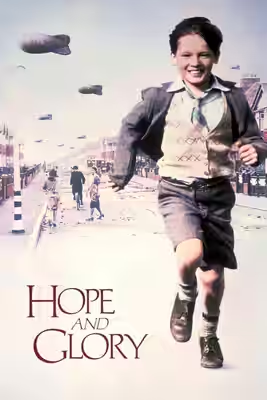
  2. Hope and Glory (1987, Fi1m 82)Boorman’s Blitz childhood, funnier and shorter than most memoirs dare to be.

  3. Roma (2018, Fi1m 86)Cuarón rebuilds his Mexico City childhood house and watches the marriage inside it fail.

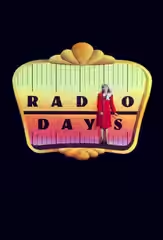
  4. Radio Days (1987) · not reviewed yetAllen’s Rockaway family remembered as a string of anecdotes, each one a small argument.

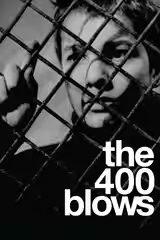
  5. The 400 Blows (1959, Fi1m 91)Truffaut’s boy is not forgiven by anyone, which is why it still stings.

Free account

Know what to watch tonight

Two lists that know where things are streaming, collections you can share, your own score beside ours, and Discover that remembers what you have seen.

  • Want to see, sorted by what is streaming now
  • Seen, with your score out of ten
  • No adverts, ever