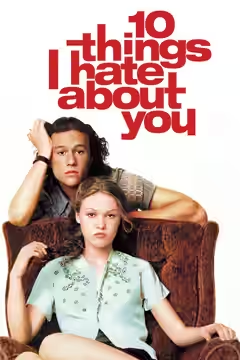
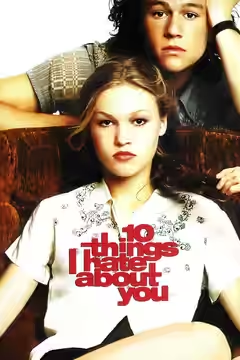
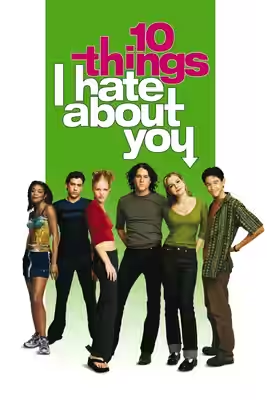
Julia Stiles and Heath Ledger give this Shakespearean school romance warmth without sanding away all its bad temper. The plotting is patchy and the party scenes drag, but the courtship is funny enough to forgive both.
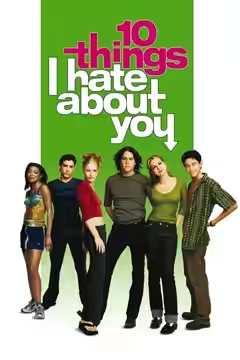
10 Things I Hate About You is a funny, warm teen romance whose leads make its mechanical plotting easy to forgive. Gil Junger directs with a useful willingness to let an actor be more interesting than the joke. Writers Karen McCullah and Kirsten Smith borrow from The Taming of the Shrew without treating Shakespeare as an excuse to give everyone homework. Their strongest decision is to take Katarina Stratford’s anger seriously, even when the comedy finds her difficult.
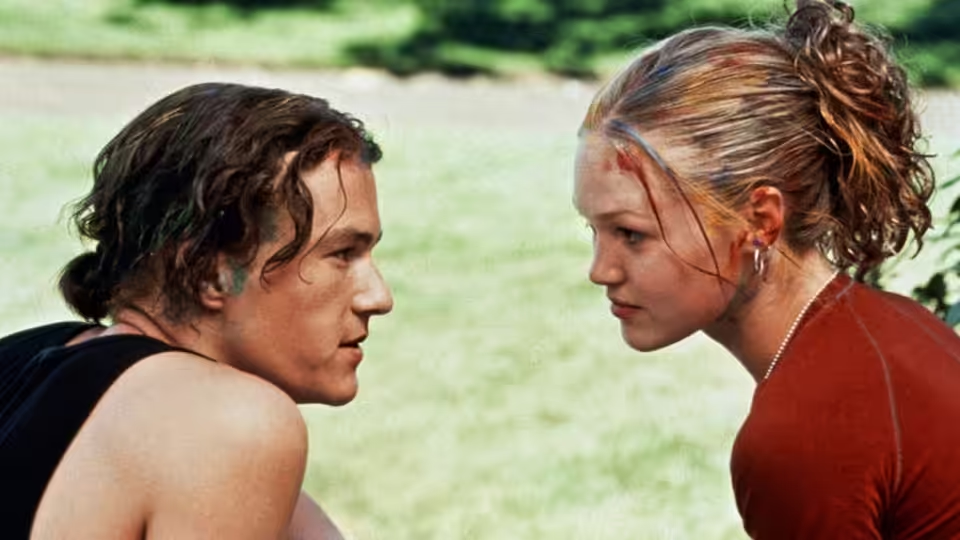
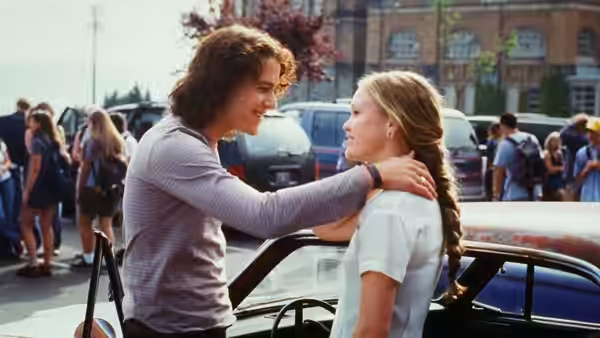
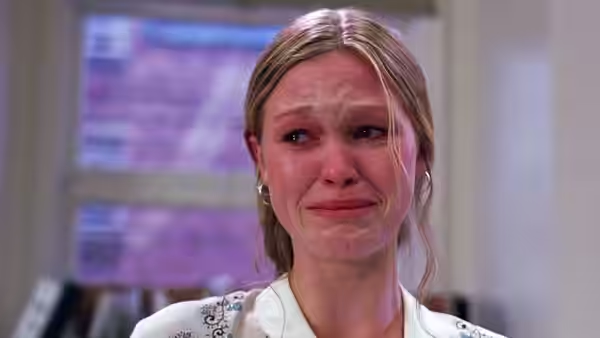
Julia Stiles gives Katarina the impatience of someone who expects to be patronised and has prepared accordingly. Her delivery is clipped without turning every remark into a performance of cleverness. We laughed at her hostility, then felt protective of her, because Stiles makes the irritation look exhausting to carry around. The film allows her to be funny without suggesting that every objection she raises is silly. That matters when the plot begins asking us to care about her romantic life.
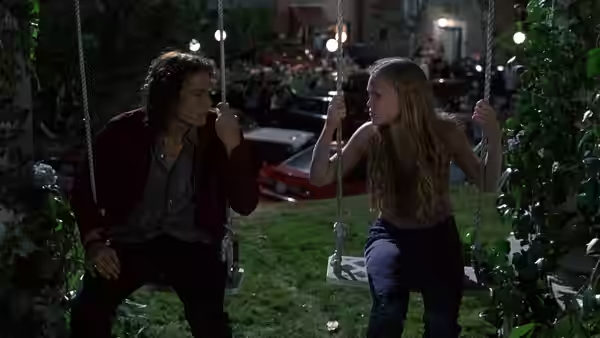
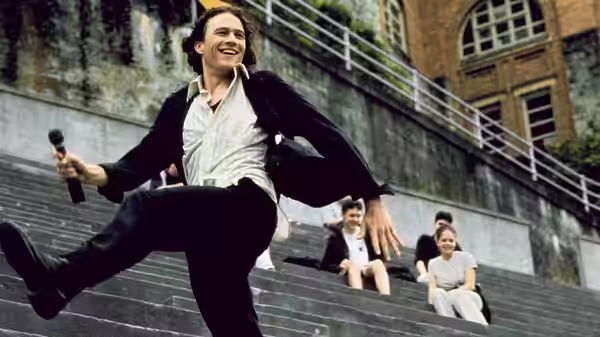
Heath Ledger’s Patrick Verona gives that romance the ease it needs. Ledger is charming without looking as though he has stopped to check whether the charm is working, and he lets Stiles keep the sharper edges of their exchanges. They are plausibly mismatched: there is enough friction to make their conversations entertaining, and enough interest in each other to make the softer passages credible. The attraction develops through the performances even when the writing takes a convenient shortcut.
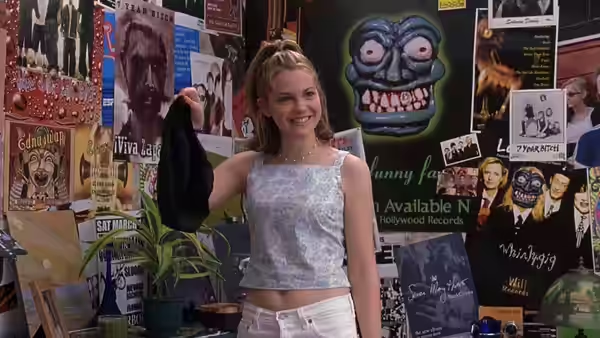
Mark Irwin’s bright cinematography suits the comic bustle, and Carol Winstead Wood’s production design makes the high-school setting an agreeable place to spend time. The images are not the main attraction, but they give the performances room without insisting that every conversation be a visual event. That restraint helps when Stiles and Ledger are together. The film knows that watching their faces is usually enough.
O. Nicholas Brown’s editing keeps the exchanges brisk, though the party scenes are where the rhythm slackens. At 97 minutes, the film still finds time to repeat business whose outcome is already clear. Richard Gibbs’s score supports the lighter passages capably; the wider use of music can feel insistent when the romance has already made its point. The actors are persuasive enough for the film to ease off, and Junger does not always seem to realise it.
McCullah and Smith also rely on familiar romantic complications to move things along, and the ingenuity of individual lines sometimes exceeds that of the plotting. Some jokes settle for a juvenile nudge when the surrounding dialogue has encouraged us to expect better. The literary references vary in usefulness, too: a few sound pleased with themselves rather than natural in the conversation. These are noticeable weaknesses, though the script keeps returning to characters whose company we enjoy.
As teen romances go, its willingness to take an angry girl seriously puts it ahead of films that regard an improved wardrobe as character development. There is still more reassurance here than risk, and anyone wanting a harsher account of school life should look elsewhere. For an evening when the jokes need to be good and the romance needs to feel possible, we would choose this.