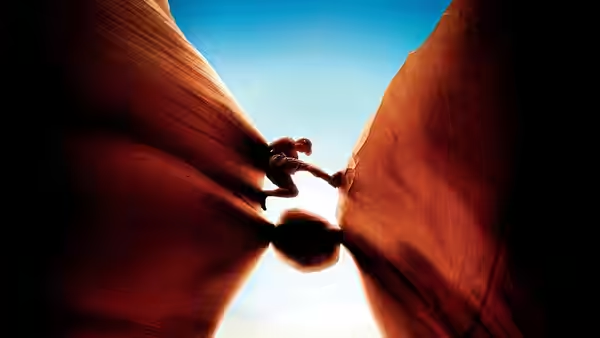
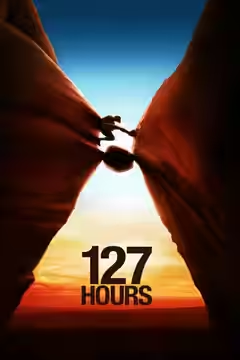
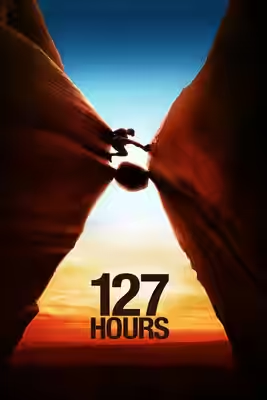
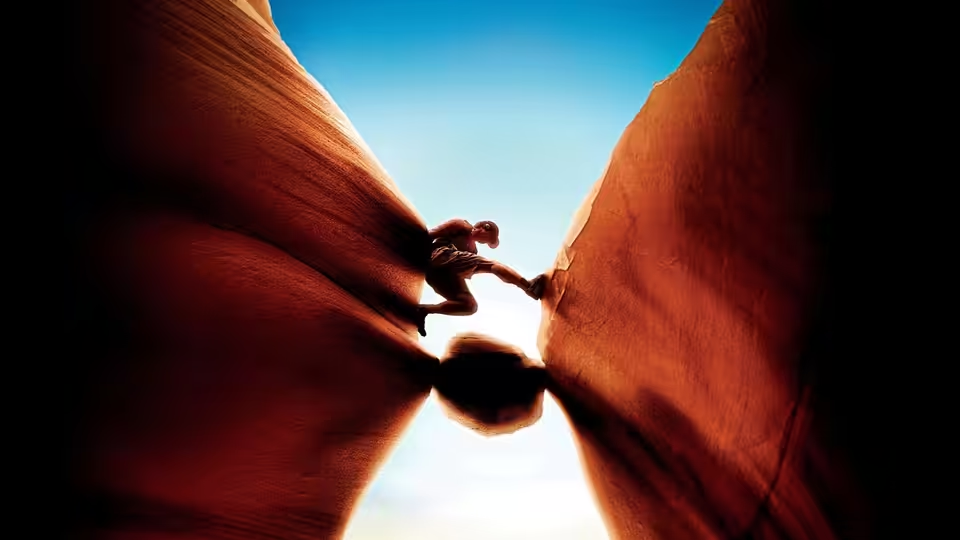
a climber wedged between towering canyon walls under blue sky
Film review

127 Hours

2010 · Directed by Danny Boyle · 1h 34m · MPA R

In a sentenceJames Franco makes a quiet evening indoors look like sound judgement

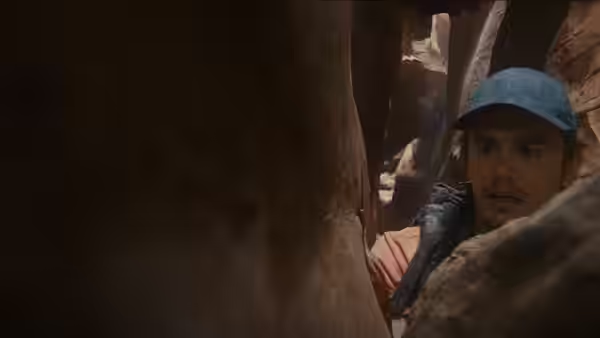
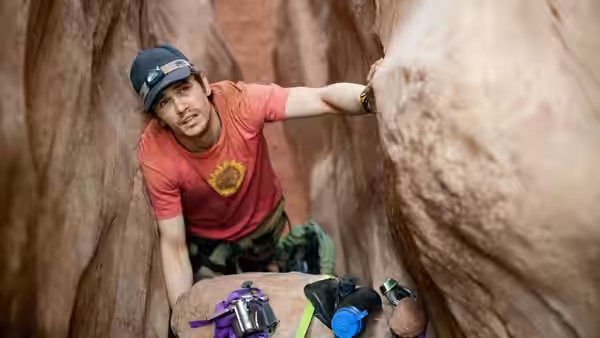
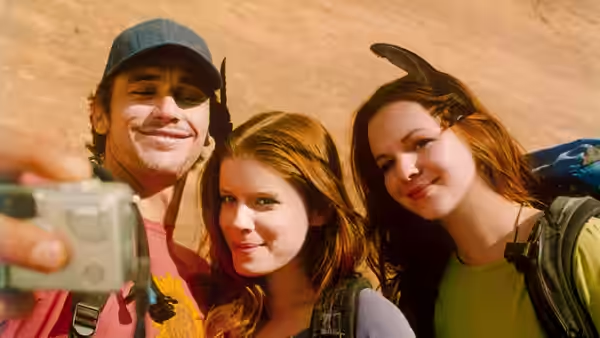
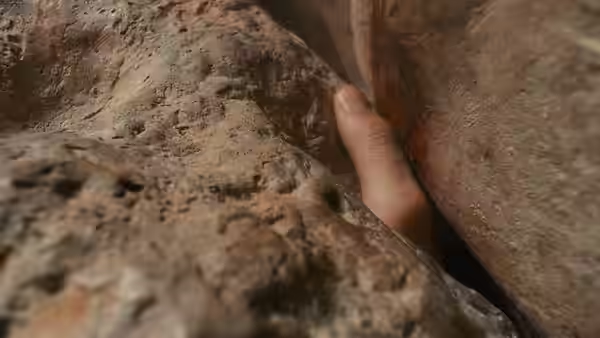
Aron Ralston (James Franco) is alone in a canyon, confined and struggling to stay alive. He needs to find a way out, but his surroundings leave little room to act. The story also includes Kristi Moore (Kate Mara) and Megan McBride (Amber Tamblyn), while its focus narrows from an energetic opening to Aron’s immediate predicament. Ingenuity and self-belief become necessary as he tries to manage the practical problems of survival. With physical movement restricted, his efforts to keep thinking clearly matter as much as what he can do.

Plays from YouTube when you press play; nothing loads from them until then.

Fi1m review

Danny Boyle makes a gripping survival drama from one man’s confinement, with James Franco supplying the humour and fear that keep it human. The restless technique sometimes crowds him, and the physical suffering demands a strong stomach.

Danny Boyle approaches 127 Hours as though enforced stillness were a direct challenge to his way of making films. He keeps the images moving while Aron Ralston cannot, and the result is a gripping survival drama with an occasional surplus of encouragement. James Franco gives the film enough human awkwardness to withstand most of the stylistic fuss. We recommend it, with a firm warning that the physical distress is difficult to sit through.

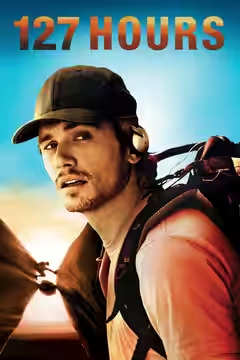
Franco makes Ralston’s self-belief useful and faintly ridiculous, which matters in a story so easily reduced to admirable endurance. His performance allows fear, ingenuity and embarrassment to occupy the same stretch without announcing a change of mood. We were more upset than we expected by his attempts to remain capable as panic presses in. The small touches of humour make it worse, because they preserve the recognisable person beneath the suffering.

The cinematography by Enrique Chediak and Anthony Dod Mantle refuses to leave us looking at the canyon from a single, settled position. The changing viewpoints keep Ralston’s confinement absorbing: there is always something else to examine, even when there is nowhere to go. That restlessness is effective at conveying a mind searching for options. It can also be tiring, and there are moments when we would rather stay with Franco than be given another visual surprise.

Editor Jon Harris gives the early movement a speed that makes the confinement register sharply. Flashbacks and hallucinations interrupt the immediate ordeal, giving Ralston’s thoughts room alongside the practical difficulties of survival. Yet the constant changes occasionally shorten an uncomfortable moment just when it is becoming interesting, as though Harris and Boyle were worried about leaving us there. The film runs for 94 minutes.

Suttirat Anne Larlarb’s production design provides a credible cramped environment without needing the camera to inventory every surface. We believe in the restriction, which is essential when so much of the filmmaking is trying to get beyond it. A.R. Rahman’s score helps sustain that forward drive and gives the emotional passages warmth. The music is less persuasive when it seems to promise reassurance on our behalf. Some of the suffering would be more affecting without quite so much help towards feeling hopeful.

The screenplay by Simon Beaufoy and Danny Boyle is strongest when Ralston has something immediate to work out. The wider insistence on human connection is understandable, and Franco keeps it from feeling entirely prescribed. But the film presses that lesson harder than it needs to, treating an individual disaster as an occasion to explain how people ought to live. We can accept the sentiment while wishing the writing allowed the loneliness to remain awkward for longer.

As a survival thriller, this makes the process of working through a physical predicament absorbing. The weakness is Boyle’s reluctance to let that be enough, though his energy also keeps a largely solitary performance engaging without diminishing its difficulty. Those who dislike his busy style will have cause to object, but Franco gives us good reason to tolerate the interruptions. Watch it if physical ordeal is something you can bear; the force of the performance justifies the discomfort.

Critical consensus AI synthesised

76
Positive
17
Mixed
1
Negative
3

Most critics respond warmly to 127 Hours, with praise clustering around James Franco’s convincing portrayal of Aron Ralston and Danny Boyle’s ability to keep a confined survival story moving. The reviews credit Franco with making Ralston compelling company, finding humour, vulnerability and resourcefulness amid the physical ordeal. Flashbacks, hallucinations, restless editing and heightened sound help turn an apparently static situation into an intense, often unexpectedly buoyant film.

The spread is wide, however, and Boyle’s style is the main dividing point. Even some favourable reviews find that the constant activity weakens the tension or crowds out the human drama. Vulture regards the visual flourishes as spectacle without enough substance, while Slant Magazine argues that they overwhelm the story, though it still praises Franco. Film Comment’s mixed assessment questions the sentimentality beneath the brutality: what most critics find moving, the dissenters tend to find forced.

Empire
13 August 2010 · Damon Wise
90*

The critic finds the film a surprisingly fun and effervescent against-the-odds drama that delivers an upbeat moral without survival-story clichés. They single out Boyle's zen-like calm in portraying Ralston's painful liberation and personal turnaround.

Read the full review →
Evening Standard
10 April 2012 · festival review
90*

The critic calls the film compelling and surprisingly kinetic, noting Boyle uses every device to keep things moving in a confined space. They single out James Franco's convincing, deep performance as Ralston throughout the ordeal.

Read the full review →
Los Angeles Times
5 November 2010 · Betsy Sharkey
90*

The review highlights the film's intense, life-affirming energy that draws viewers into the canyon with Franco's Ralston, balancing escalating tension with masterful release. Boyle and Franco succeed in making the harrowing survival story emotionally and intellectually gripping.

Read the full review →
The Guardian
6 January 2011 · Peter Bradshaw
90*

The critic praises Danny Boyle's assured and tremendously crafted direction in this true survival story, along with James Franco's overwhelmingly convincing and outstanding performance. It singles out the film's visceral, poetic depiction of the central ordeal and Boyle's enormous skill in delivering an exciting, touching experience.

Read the full review →
The New York Times
5 November 2010 · Critic's Pick · A.O. Scott
90*

The critic praises Boyle for turning a confined ordeal into a kinetic, surprising film that captures the protagonist's ingenuity and resolve. James Franco's performance anchors the story, making the immobilized hero compelling company.

Read the full review →
Total Film
1 January 2011 · Kevin Harley
90*

The critic praises how the film brims with life-boosting feeling despite its grim central scene, crediting Boyle's kinetic filmmaking and illuminating of Ralston's interior life. They single out the emotional and near-mystical connections to other lives that make the story moving.

Read the full review →

Straight answers AI written, from our review

Is 127 Hours worth watching?
127 Hours is worth watching for anyone who can sit through sustained physical distress, and we scored it 81. Danny Boyle makes a gripping survival drama from one man's confinement, and James Franco keeps it human with fear, ingenuity and small, awkward humour. The restless camerawork and hopeful score sometimes crowd him, but the performance justifies the discomfort.

How long is 127 Hours, and what is it rated?
127 Hours runs 1h 34m and is rated R by the MPA in the US. It is an adventure and drama film.
Where can I watch 127 Hours in the US?
127 Hours is streaming on Amazon Prime Video in the US, and it is also available to rent from Amazon Prime Video and Apple TV from $3.99. Availability is checked daily; the links above go straight to each service.
How violent or frightening is 127 Hours, and is it suitable for children?
127 Hours is a UK 15 and a US R, and the physical suffering demands a strong stomach. There is little in the way of violence between people; the distress comes from watching one man manage pain and panic in a confined space, which we found more upsetting than we expected. It is not for children, and the squeamish should think twice.
How does 127 Hours compare to Touching the Void?
127 Hours is the more restless and stylised of the two, while Touching the Void is the calmer and, in stretches, the more frightening. Boyle keeps the images moving and offers encouragement; Kevin Macdonald lets the climbers tell their own story over convincing reconstructions and lets the suspense breathe. Choose Boyle's film for a performance, Macdonald's for a slower, steadier dread.
What should I watch after 127 Hours?
After 127 Hours, try Touching the Void (2003, Fi1m 87): Another survival ordeal where practical decisions become almost unbearable to watch. Then All Is Lost (2013, Fi1m 82): A solitary survivor, dwindling options and considerably less directorial fuss; and The Ascent (1977, Fi1m 88): For survival under pressure, with human obligation made harder to escape.

Cast

Awards

Academy Awards, 2011

Nominated
Best Actor
Nominated
Best Film Editing
Nominated
Best Original Score
Nominated
Best Picture
Nominated
Best Writing, Adapted Screenplay

If you liked this, try…

  1. Touching the Void (2003, Fi1m 87)Another survival ordeal where practical decisions become almost unbearable to watch.

  2. All Is Lost (2013, Fi1m 82)A solitary survivor, dwindling options and considerably less directorial fuss.

  3. The Ascent (1977, Fi1m 88)For survival under pressure, with human obligation made harder to escape.

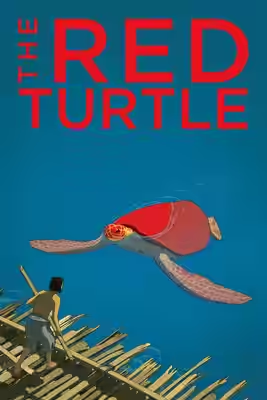
  4. The Red Turtle (2016, Fi1m 84)Island isolation and human vulnerability, approached with patience and almost no speech.

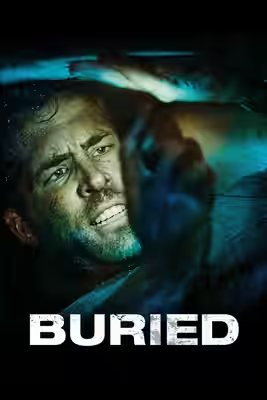
  5. Buried (2010) · not reviewed yetAnother confined performance that makes resourcefulness compelling and helplessness difficult to bear.

Free account

Know what to watch tonight

Two lists that know where things are streaming, collections you can share, your own score beside ours, and Discover that remembers what you have seen.

  • Want to see, sorted by what is streaming now
  • Seen, with your score out of ten
  • No adverts, ever