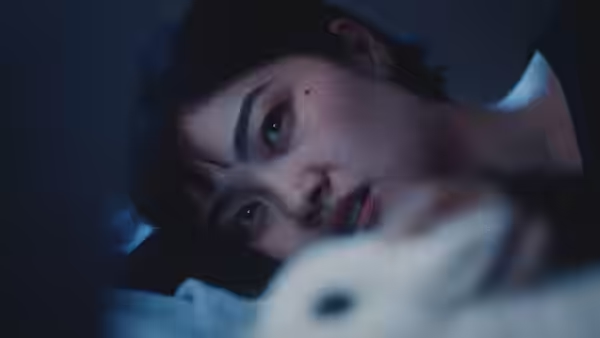
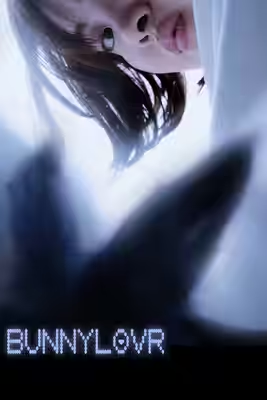
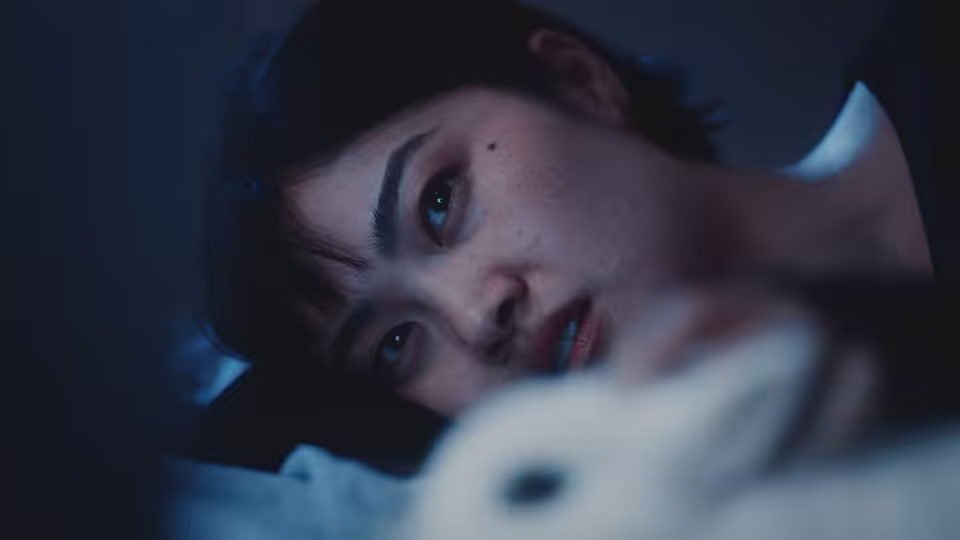
A young woman with short dark hair lies in bed beside a white stuffed rabbit
Film review

Bunnylovr

2026 · Directed by Katarina Zhu · 1h 26m

In a sentenceRebecca is sent money, a rabbit and a father, and receives all three with the same polite blankness

Rebecca (Katarina Zhu) is a woman in her twenties in New York who earns her living as a camgirl, performing for strangers from her flat while they type compliments and send money. One regular, John (Austin Amelio), pays more than the others and wants more than the show; he posts her a live rabbit and keeps asking to meet in person. Her father, William (Perry Yung), long absent, has come back into her life, unwell and hoping to make peace before it is too late. Around her drift an ex, Carter (Jack Kilmer), and a friend, Bella (Rachel Sennott), who has opinions about all of it. Rebecca wants to be wanted and cannot say by whom, and the film follows her through weeks of streaming, unanswered calls and a rabbit she did not ask for.

Plays from YouTube when you press play; nothing loads from them until then.

Fi1m review

Katarina Zhu’s first feature is gentle, closely observed and well acted, particularly by Zhu herself and Perry Yung as her father. It is also a film about a woman who cannot decide what she wants, and for long stretches it cannot decide either.

Katarina Zhu writes, directs, produces and plays the lead in her first feature, and Bunnylovr has the virtues and the faults of a film made by one person about one person. Rebecca performs for strangers on a webcam from her New York flat, takes their money and their compliments, and has stopped being able to tell the two apart. Zhu has an eye for what loneliness looks like in a lit room, and a good deal of patience. She has less of a story, and at 86 minutes the film still finds room to drift. It is a promising debut we cannot quite recommend.

What works is the acting, starting with Zhu’s own. She plays Rebecca with a face that gives the camera almost nothing, on purpose, and lets us watch the small effort it costs her to smile for a paying audience and then let the smile go when the laptop shuts. Perry Yung is better still as William, the father who left. He plays him as a man who has practised his apology for years and cannot get it out, and the scenes between them, mostly small talk in kitchens and waiting rooms, are the only ones in which Rebecca plainly wants something. We did not expect to be moved by two people failing to have a conversation, and we were; a moment where he asks about her work and she answers with the truth, and he nods and changes the subject, caught in the throat.

Daisy Zhou shoots close and soft and often lets the laptop do the lighting, so that Rebecca’s face is lit from below by the people watching her. It is a simple idea and it holds. Carol Kim dresses the flat with a ring light, an unmade bed and not much else, and Holly McClintock puts Rebecca in performance underwear for the camera and the same grey hoodie for everything else, so we always know which version of her we are getting. Eli Keszler’s score is brushed drums and small clicks that sound like a clock rather than a mood, and it is the one part of the film that seems aware time is passing.

The trouble is the people who are not her father. John (Austin Amelio) is a regular who wants a relationship with a woman he pays to look at him, and the film wants him to be both a threat and a comfort and never settles on either, so he ends up as neither. Carter (Jack Kilmer) wanders in and out as an ex without leaving a mark. Rachel Sennott, who also produces, plays the friend Bella at a pitch the rest of the film does not share; every time she arrives it turns into a louder, broader picture for two minutes and then turns back. And the rabbit, a creature that must be fed by a woman who cannot feed herself, is a metaphor we understood on delivery. The film keeps unwrapping it.

Stephania Dulowski cuts most scenes a beat before they resolve, which is a choice, and it works the first two or three times. After that it becomes the film’s only rhythm, and the effect is of watching someone leave a series of rooms. Around the hour mark we found ourselves checking how much was left. There were twenty-six minutes, and for a film this short that is not a good sign.

Most critics are split down the middle on this one, and so, in a sense, are we. It is better than most first features at faces and rooms and the specific way a young woman can be surrounded by attention and starved of it. It is worse than most at shape. Zhu clearly knows this woman; she has not yet worked out what happens to her, and the film ends roughly where a second draft might have started.

Watch it at home, on a quiet evening, where its long silences will not have to compete with anything and Yung’s few scenes can land as they deserve. If Zhu makes a second film we will be there early. This one is for people who like their dramas small and their endings withheld, and who do not mind being handed a rabbit and asked to work out what it means.

Critical consensus AI synthesised

56
Positive
3
Mixed
2
Negative
3
The New York Times
9 April 2026 · Jeannette Catsoulis
70*

The critic finds the debut feature confident yet meandering, with various themes touched on but none fully realized. Zhu’s intimate directing style and unselfconscious lead performance create a sweet symbiosis that makes the aimlessness rarely grate, painting an empathetic portrait of 20-something indecision.

Read the full review →
IndieWire
9 April 2026 · Katie Rife
55*

The review portrays the film as an empathetic but aimless NYC indie about an alienated camgirl facing a unique quarter-life crisis in her feature debut. It highlights the authentic character work while noting issues with narrative direction.

Read the full review →
The Hollywood Reporter
26 January 2025 · festival review · Lovia Gyarkye
40*

The critic finds the film a delicate but diffuse debut that excels in its character study of a lonely camgirl but falters narratively as a series of vignettes. It praises the portrayal of online malaise and the lead performance but criticizes the lack of narrative cohesion.

Read the full review →
RogerEbert.com
28 January 2025 · festival review · Robert Daniels
30*

The critic finds the debut feature laborious and on the nose in its metaphors, with a compassionate but meandering approach guided by the protagonist’s ennui and inability to distinguish attention from love. Zhu creates atmosphere effectively but leaves realist details thin, leaving viewers distant from the character.

Read the full review →
Collider
26 January 2025 · 8/10 · Therese Lacson
80

The critic praises Katarina Zhu's intimate and personal feature debut as a standout at Sundance, highlighting its exploration of digital relationships and the protagonist's life as a camgirl. They single out the strong on-screen chemistry and nuanced script for praise, while noting the pacing might not suit everyone.

Read the full review →
Deadline
25 January 2025 · festival review · Glenn Garner
80*

The critic praises the film as a personal, cathartic portrait of a drifting people-pleaser finding self-fulfillment and agency amid toxic relationships and digital intimacy, highlighting the nuanced exploration of daddy issues and self-love. They single out the emotional arc with the rabbit and father as symbols of taking agency and making peace.

Read the full review →

Straight answers AI written, from our review

Is Bunnylovr worth watching?
Bunnylovr is a gentle, well-acted first feature that we cannot quite recommend, and we scored it 58. Katarina Zhu and Perry Yung are quietly affecting as a camgirl and the father who left her, but the story drifts even at 86 minutes and the supporting characters never come into focus. It suits viewers who like small dramas and withheld endings, watched at home on a quiet evening.
How long is Bunnylovr, and what is it rated?
Bunnylovr runs 1h 26m. It is a drama and comedy film.
Where can I watch Bunnylovr in the US?
Bunnylovr is available to rent from Apple TV and Amazon Prime Video from $3.99. Availability is checked daily; the links above go straight to each service.
How does Bunnylovr compare to Frances Ha?
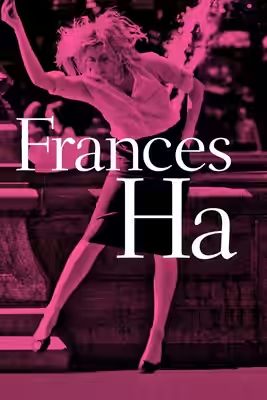
Bunnylovr is the smaller and less finished of the two, and Frances Ha is the better film. Both follow a New York woman in her twenties who cannot say what she wants, but Gerwig and Baumbach give their heroine a script that knows where it is going, while Zhu's ends roughly where a second draft might begin. Choose Frances Ha for warmth and shape; choose Bunnylovr for quieter faces and longer silences.
What should I watch after Bunnylovr?
After Bunnylovr, try Frances Ha (2012, Fi1m 82): Another New York twenty-something drifting with grace, and a script that knows where it is going. Then The Farewell (2019, Fi1m 84): A Chinese-American daughter, an ailing elder and the things nobody in the family will say aloud; and Tangerine (2015, Fi1m 84): Sex work, friendship and a city at night, shot on phones and moving at a sprint.

Cast

If you liked this, try…

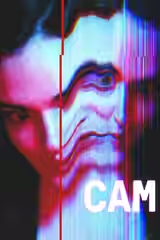
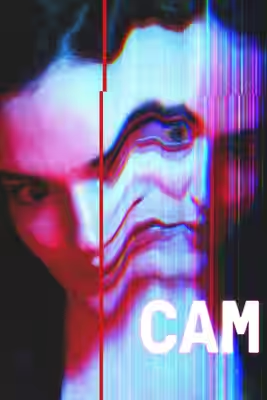
  1. Cam (2018) · not reviewed yetThe camgirl film as a thriller: sharper, nastier and much clearer about what it wants.

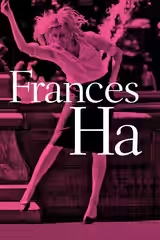
  2. Frances Ha (2012, Fi1m 82)Another New York twenty-something drifting with grace, and a script that knows where it is going.

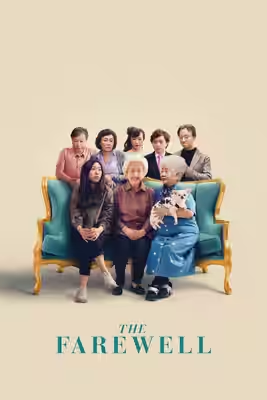
  3. The Farewell (2019, Fi1m 84)A Chinese-American daughter, an ailing elder and the things nobody in the family will say aloud.

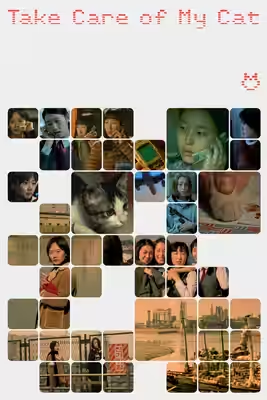
  4. Take Care of My Cat (2001) · not reviewed yetFive young women in Incheon, a stray cat passed between them, and a debut with real shape.

  5. Tangerine (2015, Fi1m 84)Sex work, friendship and a city at night, shot on phones and moving at a sprint.

Free account

Know what to watch tonight

Two lists that know where things are streaming, collections you can share, your own score beside ours, and Discover that remembers what you have seen.

  • Want to see, sorted by what is streaming now
  • Seen, with your score out of ten
  • No adverts, ever