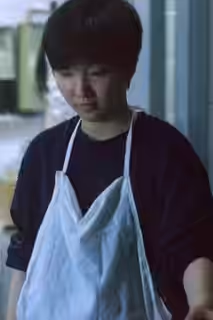
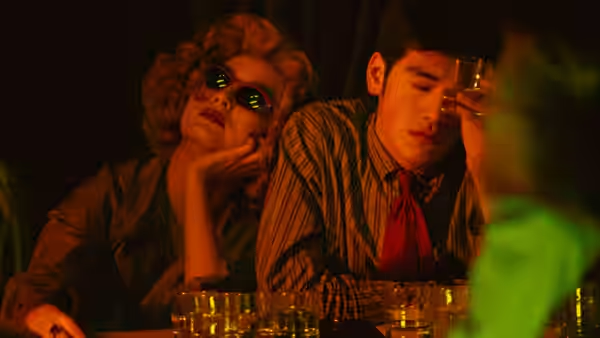
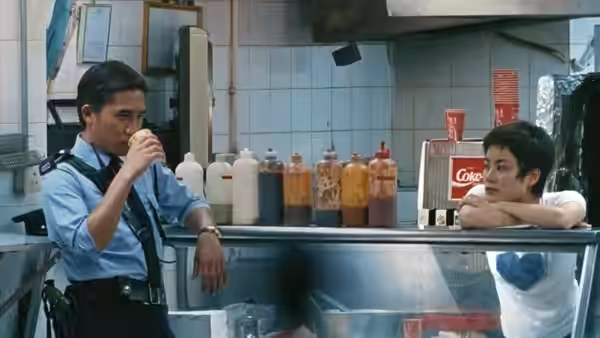
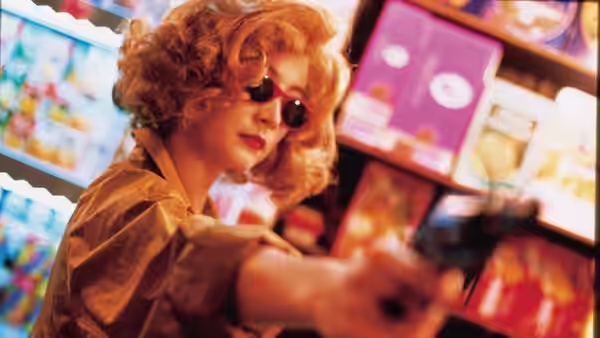
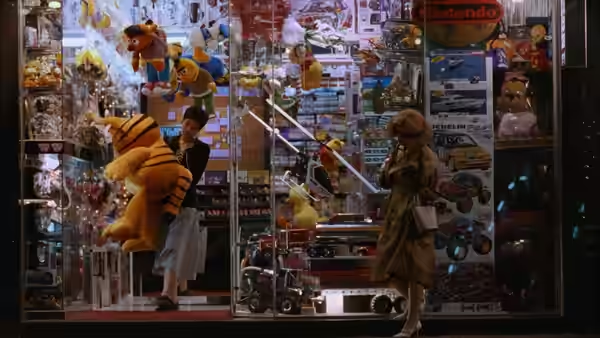
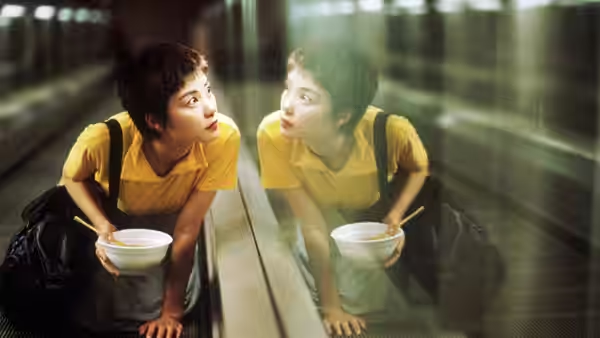
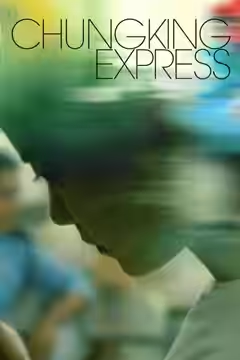
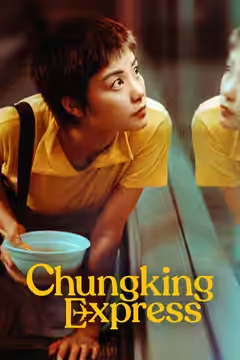
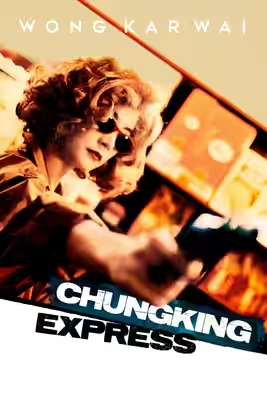
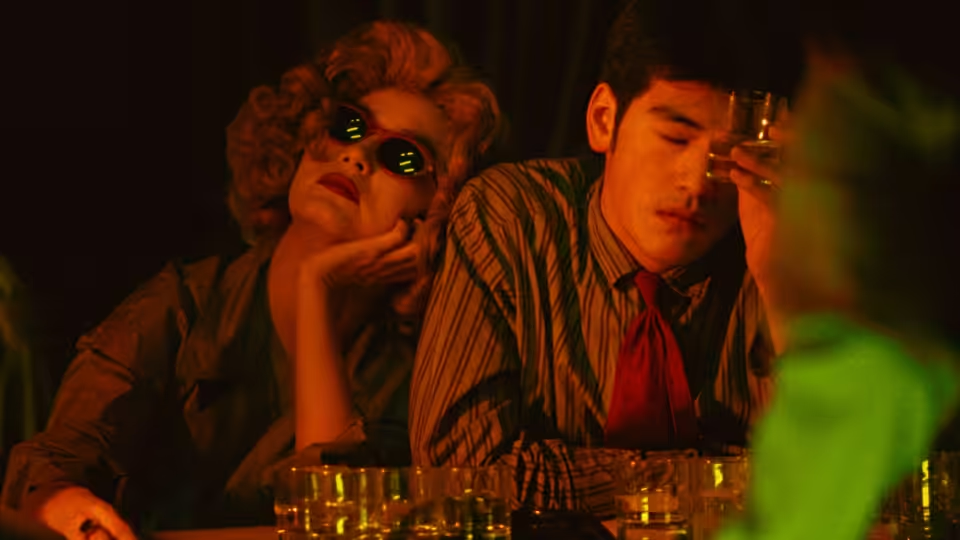
Woman in blonde wig and man in striped shirt at a bar counter
Film review

Chungking Express

1994 · Directed by Wong Kar-Wai · 1h 43m · MPA PG-13

In a sentenceTwo lovelorn policemen and enough pop music to make moping look like a reasonable use of an evening

Two lovelorn policemen move through Hong Kong, where crowded streets and a bustling snack bar bring solitary lives close together. Takeshi Kaneshiro plays He Zhiwu, known as Cop 223, while Tony Leung Chiu-wai plays Cop 663. Brigitte Lin appears as a woman in a blonde wig, and Faye Wong plays Faye. Told in two separate stories, the film follows people dealing with romantic disappointment, passing encounters and the possibility of another connection. Chungking Mansions and the snack bar form part of a city where daily routines continue around private unhappiness.

Plays from YouTube when you press play; nothing loads from them until then.

Fi1m review

Wong Kar-Wai’s two-part Hong Kong romance is funny, restless and unexpectedly affecting. Some scenes coast on music and colour, but the performances make its lonely policemen worth spending an evening with.

Romantic films often ask us to believe that two people belong together before giving us much reason to enjoy their company. Chungking Express starts with loneliness and makes the company worth having, even when its characters are being ridiculous. Wong Kar-Wai, who writes and directs, gives two lovelorn Hong Kong policemen separate stories, letting humour interrupt their unhappiness without pretending to cure it. We recommend it warmly, with one warning: anyone waiting for a tidy plot will spend a fair amount of it waiting.

Takeshi Kaneshiro plays He Zhiwu, or Cop 223, and Tony Leung Chiu-wai is Cop 663. They give loneliness different weights: Kaneshiro makes it seem restless and slightly absurd, while Leung suggests how tiring it has become. Brigitte Lin’s woman in a blonde wig brings a harder edge to the film’s romantic wandering. Faye Wong, as Faye, has a playful energy that makes the second story the more engaging of the two. Their self-pity is often funny because the actors let us see the embarrassment beneath it.

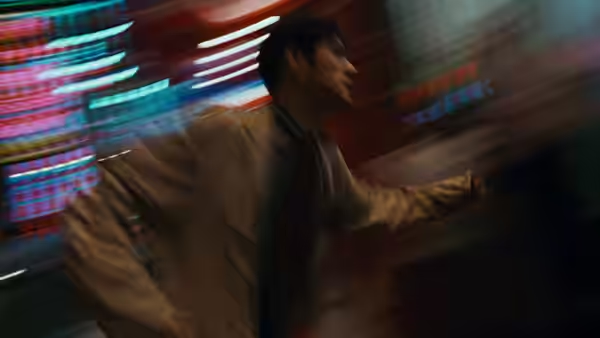
Andrew Lau Wai-Keung and Christopher Doyle’s cinematography keeps Hong Kong moving around them, with handheld images and bold colour that make the city feel busy without reducing it to scenery. We felt unexpectedly lonely watching these policemen surrounded by so much bustle. The camera gives us the crowds as well as the solitary faces, so their unhappiness never seems exceptional or grand. That makes the feeling more recognisable, and it gives the comic moments room to arrive without cancelling the sadness.

The editing, by William Chang Suk-Ping, Eric Kwong Chi-Leung and Hai Kit-Wai, gives the divided story its quick, unsettled rhythm. Jump cuts keep us alert to a change of mood instead of smoothing every transition for us. Chang also handles production design and costumes, and the snack-bar setting gives the film a welcome everyday centre. Fast food belongs in this account of city life as much as glamour does. Having that ordinary place to return to helps the film stay approachable while Wong experiments with how to tell it.

Roel A. García, Frankie Chan Fan-Kei and Michael Galasso contribute music that helps sustain this movement, though the American pop songs are the sounds that linger. They let the characters’ romantic self-absorption be cheerful, even danceable, without making us stop believing in it. The music also supplies continuity when the stories wander. Occasionally it does too much of the persuading: we are enjoying the sound and colour while waiting for a scene to give us another reason to care. Wong can prolong a mood beyond what the situation earns.

That matters in a film whose situations are sometimes too slight for the attention they receive. At 103 minutes, it could lose a few stretches without losing much that hurts or amuses. Still, romantic comedy need not prepare every misunderstanding or explain every attraction to earn our affection. Wong’s willingness to follow uncertain, distracted people is part of the pleasure, particularly with performers this comfortable allowing their characters to look foolish. Give it an evening when getting straight to the point is not the priority.

Critical consensus AI synthesised

79
Positive
8
Mixed
1
Negative
0
The Guardian
14 September 1995
90*

The film offers a cosmopolitan, inside view of Hong Kong through fast food, glamour and new wave style, centering on two lovelorn cops and women in a bustling snack bar and Chungking Mansions. It is praised as the director's most distinctive work yet, with dynamic handheld camerawork and an off-the-cuff, improvisational energy.

Read the full review →
Time Out
3 May 2011 · TR
90*

The critic describes two loosely connected stories of lovelorn Hong Kong cops entangled with the wrong women—one involving a drug smuggler and another a woman secretly redecorating an apartment. It praises the film as fast, hand-held, funny, catchy, and the year’s zingiest visit to Heartbreak Hotel.

Read the full review →
Los Angeles Times
8 March 1996 · Kevin Thomas
85*

Wong’s film is as fresh as falling rain, a pair of love stories full of pain and humor that exude the immediacy of everyday life through fluid camerawork, bold color, and American pop music. It showcases unpredictable style akin to Tarantino and Jarmusch, with strong performances and a larger view on fate and missed connections.

Read the full review →
Slant Magazine
10 April 2025 · Ed Gonzalez
85*

The critic calls Chungking Express one of Wong’s most exciting films and an early precursor to his signature romantic odes, praising its bifurcated narrative, hazy dreamlike visuals with slow motion and step printing, and the way it evokes love’s excitement and heartbreak through imagery, music, and impermanent romance rather than dialogue.

Read the full review →
Empire
1 January 2000 · Kim Newman
80*

The critic praises this elliptical essay on love and mystery from Wong Kar-Wai as a joy to watch. They single out the director's dreamlike tone and Chris Doyle's stunning cinematography.

Read the full review →
RogerEbert.com
15 March 1996 · ★★★/4 · Roger Ebert
75

The film works if you appreciate its style over plot, announcing Wong as a Godard-like director concerned with the materials of storytelling rather than conventional narrative. It may puzzle casual viewers but rewards attention to its visual rhythms, pop culture references, and fractured stories of lonely urbanites.

Read the full review →

Straight answers AI written, from our review

Is Chungking Express worth watching?
Chungking Express is worth watching for anyone who enjoys a restless, funny city romance more than a tidy plot, and we scored it 85. Takeshi Kaneshiro, Tony Leung Chiu-wai and Faye Wong make its lonely policemen good company even when they are being ridiculous. Some stretches coast on music and colour while waiting for the next reason to care.
How long is Chungking Express, and what is it rated?
Chungking Express runs 1h 43m and is rated PG-13 by the MPA in the US. It is a drama and comedy film.
Where can I watch Chungking Express in the US?
Chungking Express is streaming on HBO Max and The Roku Channel in the US. Availability is checked daily; the links above go straight to each service.
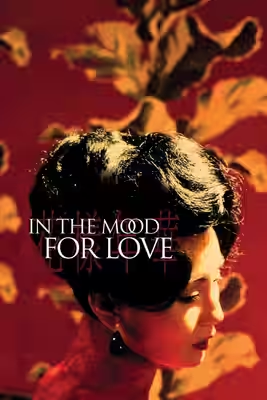
How does Chungking Express compare to In the Mood for Love?
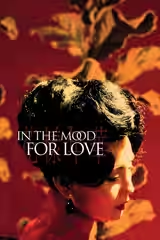
Chungking Express is the looser, funnier and more restless of the two, while In the Mood for Love is slower, sadder and more controlled. Both are Wong Kar-Wai city romances with Tony Leung Chiu-wai, but the later film asks for more patience and rewards it with deeper feeling. Start with Chungking Express if you want energy and jokes, and In the Mood for Love if you want to be hurt by a hesitation.
What should I watch after Chungking Express?
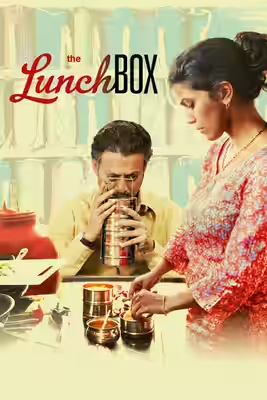
After Chungking Express, try In the Mood for Love (2000, Fi1m 91): For another city romance in which the smallest hesitation can hurt. Then Cléo from 5 to 7 (1962, Fi1m 88): Another restless city walk, with a woman gradually looking beyond herself; and The Lunchbox (2013, Fi1m 75): A quieter connection through food, with tenderness that never needs announcing.

Cast

If you liked this, try…

  1. In the Mood for Love (2000, Fi1m 91)For another city romance in which the smallest hesitation can hurt.

  2. Cléo from 5 to 7 (1962, Fi1m 88)Another restless city walk, with a woman gradually looking beyond herself.

  3. The Lunchbox (2013, Fi1m 75)A quieter connection through food, with tenderness that never needs announcing.

  4. Night on Earth (1991) · not reviewed yetFor nocturnal encounters, passing strangers and humour that survives the loneliness.

  5. Columbus (2017, Fi1m 82)For solitary people finding company, with buildings allowed their share of attention.

Free account

Know what to watch tonight

Two lists that know where things are streaming, collections you can share, your own score beside ours, and Discover that remembers what you have seen.

  • Want to see, sorted by what is streaming now
  • Seen, with your score out of ten
  • No adverts, ever