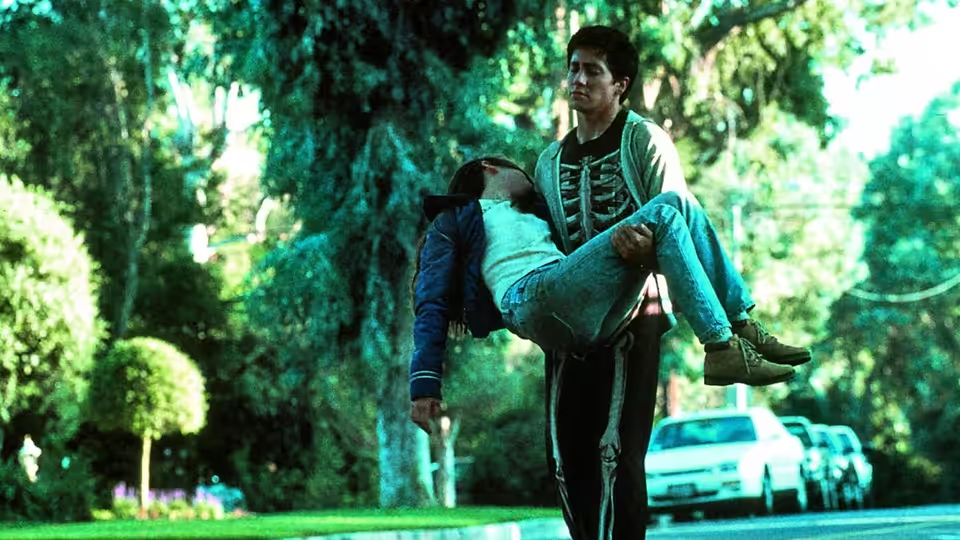
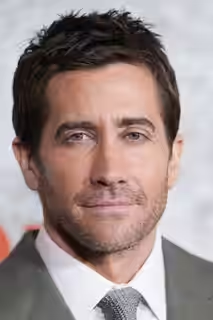
Richard Kelly’s Donnie Darko is a funny, unsettling teenage drama whose science fiction occasionally becomes needlessly difficult. We recommend it for Jake Gyllenhaal, who keeps the distress believable even when the plot becomes hard to follow.
Richard Kelly makes the end of the world feel like a plausible extension of being a miserable teenager, and Donnie Darko is worth the occasional confusion that follows. He takes suburban adolescent unhappiness seriously without treating every adult as an idiot. The science fiction gives that unhappiness an alarming scale, though the plot sometimes asks us to follow more than it makes clear. What holds the film together is Jake Gyllenhaal, whose Donnie remains recognisably young even when the troubles surrounding him become cosmic.
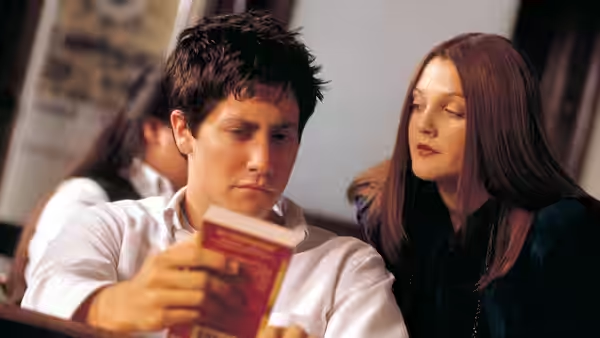
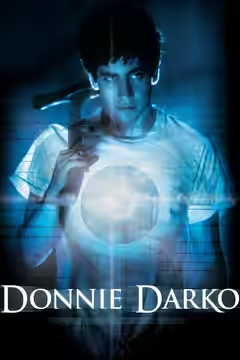
His performance allows Donnie to be awkward, difficult and vulnerable without asking us to choose a single explanation for him. There is no demand that we find him charming. Gyllenhaal makes the teenage unease persist through the strange events, so there is a distressed person to care about while we try to work out what is happening. It matters that the film can also be funny: the suburban satire lets us laugh at some of the certainties Donnie cannot accept.
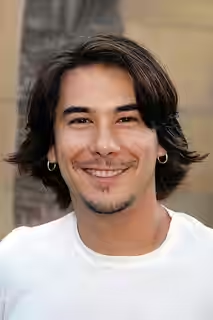
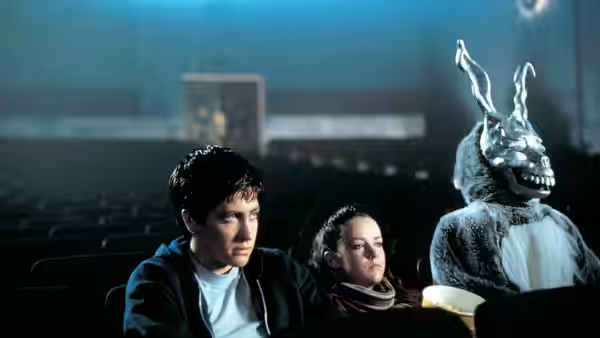
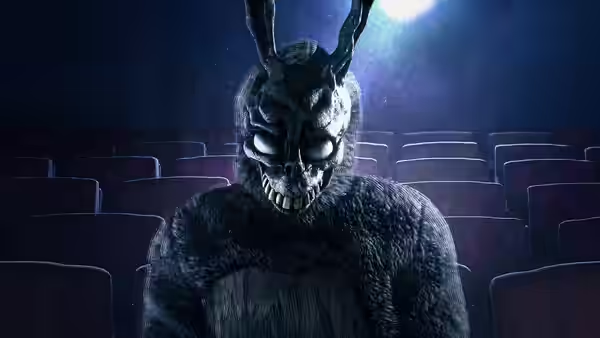
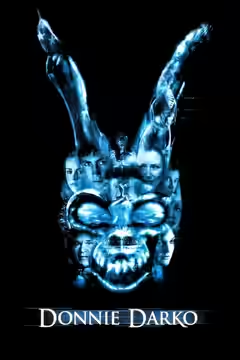
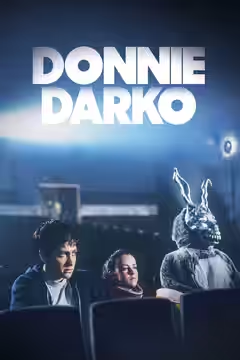
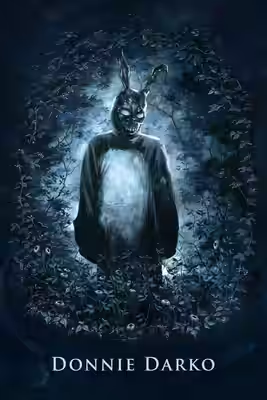
Frank, played by James Duval, is the risk that pays off. A prophetic rabbit is a difficult thing to put on screen without making the surrounding troubles look ridiculous. We were unnerved by the creature because its predictions take Donnie’s adolescent dread with such awful seriousness. Richard Kelly keeps the boy’s vulnerability in view, rather than letting the supernatural visitor turn the film into an elaborate joke.
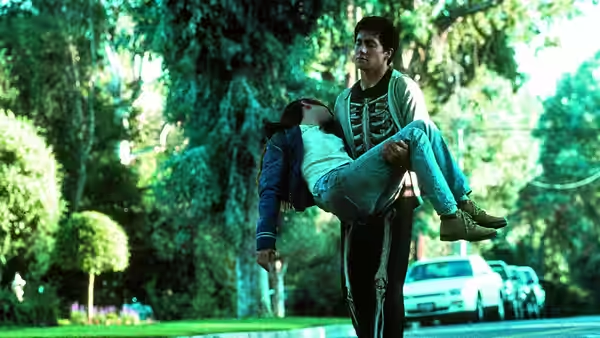
Steven Poster’s cinematography helps by making the suburban setting look clear and familiar instead of obscuring it in portentous murk. Alec Hammond’s production design gives the fantasy somewhere ordinary to happen, and that contrast works. The late-1980s setting feels inhabited rather than displayed as a collection of period references. The soundtrack’s songs are especially useful here: they make the period feel like somebody’s youth, complete with pleasures the darker material might otherwise squeeze out.
Michael Andrews’s music supports the unease without making every stretch feel equally threatening. Editors Sam Bauer and Eric Strand have the difficult job of moving between teenage drama, suburban comedy and science fiction, and the shifts are mostly persuasive. The humour gives the anxious passages a useful break. At 114 minutes, the film has room for its changes of mood without making adolescent misery exhausting to sit through.
The difficulty is Richard Kelly’s writing about time travel, which can make it hard to tell which questions the film expects us to answer. Some uncertainty suits Donnie’s state of mind; some makes it harder to judge what matters. We do not need every mystery solved, but the film occasionally mistakes adding another question for making the existing ones more interesting. Its adults can also become convenient targets for satire, a simplification that sits awkwardly beside the care given to adolescent confusion.
Among coming-of-age films, this earns its place by allowing a young person’s distress to be frightening, embarrassing and funny within the same story. The fantasy is ambitious, and not all of it is equally well explained, but Gyllenhaal gives us enough reason to stay with Donnie. There is tenderness here that the rabbit and the countdown might not lead us to expect. See it for the troubled teenager, and resist the temptation to spend the whole evening taking notes.